
Alright, fellow adventurers and gearheads, strap in! As an ex-Kintetsu conductor who’s traded railway tracks for asphalt, and now runs a JDM rental shop in Osaka, I’m about to reveal a secret about Japan that the bullet trains and crowded tour buses simply can’t touch. Forget what you think you know about Japanese travel. We’re not talking about simply getting from Point A to Point B. We’re talking about an immersive, exhilarating, and surprisingly budget-friendly journey into the soul of Japan, specifically the ancient heartland of Nara, all from behind the wheel of a proper Japanese Domestic Market legend, like the Subaru BRZ or the Toyota 86.
Nara Budget Travel, Savings, Free Spots, Student Travel, Tourism - The Philosophy of Driving in Japan
For years, I guided thousands of passengers through the intricate web of Japan’s railway system. I saw the country unfold through a window, a magnificent tapestry of urban sprawl, rice paddies, and distant mountains. And while Japan's public transport is undeniably efficient, a marvel of engineering and punctuality, it is, by its very nature, a curated experience. It funnels you along predefined routes, deposits you at popular hubs, and often leaves the most authentic, untouched, and utterly breathtaking pockets of the country completely inaccessible.
This is where the car comes in. And not just any car, but a nimble, engaging JDM machine. Imagine the crisp bark of a horizontally opposed engine as you downshift, the precise feedback of a manual gearbox, the feeling of the road through the steering wheel – it's a symphony that public transport simply cannot compose. From my conductor's perch, I’d see glimpses of verdant valleys, ancient village roofs barely visible through dense forests, and winding mountain passes that beckoned with an irresistible allure. These were the 'Secret Japan' spots, tantalizingly close yet utterly out of reach for my passengers.
Kansai, with Osaka as your pulsating starting point, is a goldmine for this kind of exploration. While the trains will whisk you to the bustling streets of Namba or the serene deer parks of central Nara, they won’t take you to the remote temples carved into mist-shrouded peaks, the geological wonders hidden deep within ancient forests, or the local eateries known only to a handful of residents. Driving liberates you. It transforms your journey from a mere transfer into an adventure. You control the pace, the stops, the detours. You can chase the sunset over the Pacific, pull over for a photograph of a forgotten shrine, or simply revel in the sheer joy of a perfectly executed heel-and-toe on a deserted mountain road. It’s not just about reaching a destination; it’s about the visceral, exhilarating act of discovery that each kilometer brings. For students and budget travelers, this freedom isn't just about adventure; it's about smart economics. By accessing free or low-cost natural and historical sites that are off the beaten path, and having the flexibility to choose cheaper accommodations or picnic spots, a car becomes your ultimate savings tool. It’s about experiencing Japan on your terms, with the wind in your hair and the open road ahead, allowing you to craft memories that are uniquely yours, far from the tourist throngs.
Nara Budget Travel, Savings, Free Spots, Student Travel, Tourism - The 2-Day Itinerary: Deep Dive

Get ready to ignite your senses and your spirit of adventure. This isn't just a travel plan; it's an odyssey designed for the intrepid, the budget-conscious, and the driving enthusiast. We're trading the predictable routes for the captivating unknown, leveraging the nimble prowess of a Subaru BRZ (or its twin, the Toyota 86) to uncover Nara's most enchanting, yet affordable, secrets. Our journey begins in the vibrant heart of Osaka, a city that pulsates with an electric energy, before we peel away into the ancient embrace of Nara Prefecture.
Day 1: Unveiling Ancient Secrets and Winding Roads
08:00 AM – The Osaka Escape: Urban Pulse to Open Road
Your adventure begins in Osaka, the kitchen of Japan. Early morning here is a symphony of waking streets, the smell of fresh coffee mingling with the distant aroma of takoyaki stands firing up. We'll pick up our weapon of choice – the BRZ. The moment your hands wrap around its steering wheel, and your foot finds the perfectly weighted clutch, you'll feel it: the anticipation of a genuine driving experience. We'll navigate out of the city's arteries, heading east towards Nara Prefecture. The initial stretch on the Hanshin Expressway will be a rapid transition from urban sprawl to the rolling green hills that define Kansai. Keep an eye out for the subtle shift in architecture, the dense concrete giving way to more traditional tiled roofs as we leave the city limits.
09:00 AM – Ikoma Skyline Drive: A Driver's Paradise
Instead of a direct highway dash, we're taking the scenic, exhilarating route. From Osaka, we ascend the Ikoma Skyline Drive. This isn't merely a road; it's a ribbon of asphalt draped over Mount Ikoma, offering breathtaking panoramic views of Osaka Bay and the surrounding plains. The BRZ will sing here. Its low center of gravity and precise steering make carving through these gentle, yet engaging, curves an absolute joy. Feel the car lean subtly into each bend, the revs climbing as you expertly shift through the gears, the engine’s Boxer rumble a constant, satisfying companion. This road is a geological marvel, formed by volcanic activity eons ago, now softened by time and draped in lush greenery. On a clear morning, the air is crisp, carrying the scent of pine and damp earth. This early, traffic is minimal, allowing you to truly appreciate the flow of the road and the expansive vista unfurling below – a world away from the city just an hour prior. The toll for this road is a small price for such an unforgettable driving experience, easily justifying the budget-friendly core of our trip by setting a tone of adventure.
10:00 AM – Hozan-ji Temple (Ikoma Shoten): Tranquility on the Slopes
After descending Mount Ikoma, we make a short detour to Hozan-ji Temple, often called Ikoma Shoten. This isn't the Nara you see on postcards, but a powerful, ancient temple clinging to the mountainside. The approach, especially the narrow, winding local roads leading up to it, is a taste of 'Secret Japan' driving. Parking, though limited, is usually manageable. Hozan-ji, founded in the 7th century, is famous for its Fudo Myo-o (an immovable Buddhist deity) and its stunning views back towards Osaka. What makes it special for our budget-focused, student-friendly itinerary is that entry is absolutely free. Wander through its sprawling grounds, a labyrinth of stone steps, ancient wooden structures, and serene ponds. The air here is cool and infused with the scent of incense, a stark contrast to the exhilarating drive you just experienced. Geologically, it sits on an ancient fault line, lending a unique energy to the place, a feeling of deep-rooted spirituality. The temple buildings, some dating back hundreds of years, are examples of exquisite traditional Japanese carpentry, weathering centuries of storms and sun. Take your time, soak in the tranquility, and marvel at the craftsmanship, all without spending a single yen.
12:00 PM – Lunch in Tenri: A Taste of Local Life on a Budget
From Hozan-ji, we head south to Tenri, a city often overlooked by tourists but rich in unique culture and local flavor. Our lunch stop will be at a humble, family-run eatery, the kind that thrives on repeat local business rather than tourist footfall. Think 'teishoku' (set meal) or 'ramen-ya' that serve hearty, unpretentious, and incredibly delicious food at student-friendly prices. My former conductor colleagues would frequent these spots, knowing where to find the best value. Imagine a steaming bowl of tonkotsu ramen, rich and creamy, with perfectly chewy noodles, or a crispy tonkatsu teishoku, each bite a revelation of umami. The atmosphere is bustling but welcoming, a genuine slice of everyday Japanese life. The engine of the BRZ, having cooled during our temple visit, hums to life again, ready for the next leg, as the savory aftertaste of a perfectly cooked meal lingers.
01:30 PM – Tenri City and the Origins of Tenrikyo
After lunch, we'll take a brief, fascinating exploration of Tenri City itself. This city is the spiritual center of Tenrikyo, a unique Japanese new religion. The grandeur of their main sanctuary and sprawling complex is awe-inspiring, yet completely free to explore. It's a starkly different architectural experience from traditional Buddhist temples or Shinto shrines, reflecting a modern spiritual movement. The tranquil, impeccably maintained grounds offer a peaceful stroll, providing a unique cultural insight often missed by those sticking to the conventional Nara trail. The scale of the main hall is breathtaking, a testament to devotion and community. It’s an intellectual feast, a chance to ponder belief systems and cultural diversity, all without opening your wallet.
03:00 PM – Byakugo-ji Temple: A Hidden Gem of Ancient Beauty
Leaving Tenri, we journey deeper into the heart of Nara, specifically to the tranquil confines of Byakugo-ji Temple. This temple, nestled in the foothills of Mount Takamado, is a true hidden gem. It’s significantly less crowded than the major Nara Park temples, offering an intimate experience with ancient Japanese history and nature. While there's a small admission fee for some areas, the main grounds and the serene atmosphere are freely accessible. Byakugo-ji is known for its beautiful autumn foliage, but even in other seasons, its moss gardens and ancient cedar trees create a profoundly peaceful setting. Its history dates back to the Nara period (8th century), and walking its grounds feels like stepping back in time. The air is still, punctuated only by the chirping of cicadas in summer or the rustle of leaves in autumn. This is where the BRZ comes into its own, the ability to veer off the main roads and discover such pockets of serene beauty. The drive through narrow country lanes, flanked by traditional farmhouses and fields, is part of the charm, a gentle, flowing experience that highlights the car’s responsive handling.
05:00 PM – Nara Park & Todai-ji (Exterior/Deer Focus): Iconic, Free Experiences
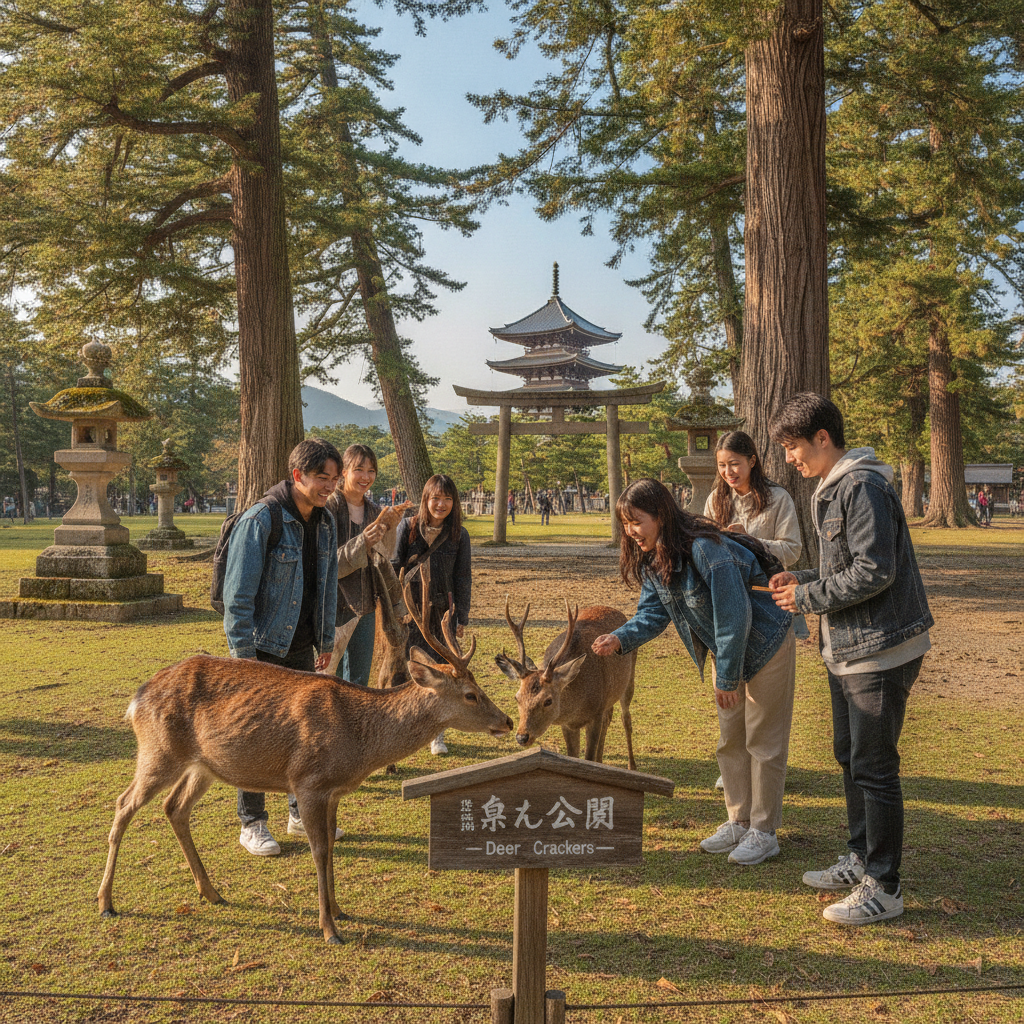
We arrive in central Nara, ready to immerse ourselves in its most famous, yet surprisingly budget-friendly, attraction: Nara Park. Parking around the park can be found in designated lots; arrive slightly later in the afternoon for easier spots. While Todai-ji's Daibutsu Hall requires an admission fee (which can be worthwhile if your budget allows), simply wandering the vast expanse of Nara Park, interacting with its famous bowing deer, and admiring the exterior of Todai-ji (the world's largest wooden structure!) and Kofuku-ji's stunning pagoda from afar, is completely free. The scale of Todai-ji is immense, a testament to ancient Buddhist fervor, and its sheer size, even from outside, is breathtaking. The deer, considered sacred messengers of the gods, are an absolute delight, providing countless photo opportunities and memorable interactions. The late afternoon light bathes the ancient buildings in a golden glow, casting long shadows and enhancing their majesty. The BRZ, parked safely, waits patiently as you wander through this ancient landscape, a vivid contrast between modern engineering and timeless spirituality. This provides that iconic Nara experience without breaking the bank, perfectly aligning with our budget travel ethos.
07:00 PM – Dinner in Naramachi: Budget-Friendly Local Delights
As dusk settles, we head to Naramachi, Nara's old merchant district. This area is a labyrinth of narrow streets, traditional machiya houses (townhouses), and charming, unassuming eateries. For dinner, we’ll seek out a local izakaya or a casual restaurant serving Nara's regional specialties – perhaps some kakinoha-zushi (persimmon leaf sushi) or miwa somen (thin wheat noodles), without the hefty price tag of tourist traps. These places are vibrant, often bustling with locals, offering an authentic taste of Nara. The flavors are clean, fresh, and deeply satisfying, reflecting the rich agricultural heritage of the region. The BRZ will rest for the night, having delivered us safely through a day of diverse discoveries.
09:00 PM – Check into Budget Accommodation: A Well-Earned Rest
Nara offers numerous budget-friendly accommodation options, from cozy guesthouses and hostels to business hotels with compact but comfortable rooms. Opt for a spot with easy access to our next day's departure route and secure parking for the BRZ. A good night's rest is essential, as Day 2 promises even more breathtaking scenery and driving excitement.
Day 2: Mountain Mysteries and Rural Charm
08:00 AM – Departure from Nara: The Call of the Wild
After a simple Japanese breakfast at your accommodation or a nearby convenience store (konbini) – a budget traveler's best friend – we jump back into the BRZ. The morning air in Nara is fresh, often carrying a hint of dew and ancient earth. We set our sights south, towards the more rugged, less-traveled parts of Nara Prefecture, where the true 'Secret Japan' truly comes alive. The Boxer engine hums with a confident readiness as we pull out of Nara’s quiet streets.
09:30 AM – Mount Yoshino: A Sacred Landscape (Beyond Cherry Blossoms)
Our destination is Mount Yoshino, famous worldwide for its spectacular cherry blossoms. However, even outside of spring, Yoshino offers profound beauty and spiritual significance, and its allure as a free spot for hiking and exploration is immense. The drive up to Yoshino itself is a delightful series of switchbacks and ascents, where the BRZ's precise steering and balanced chassis shine. You'll navigate through dense cedar forests, the scent of fresh wood filling the cabin. Yoshino is a UNESCO World Heritage site, central to the Shugendo religion (a blend of Buddhism, Shinto, and animistic mountain worship). The geological formation of Yoshino, with its tiered slopes and deep valleys, creates ideal conditions for its famous flora. You can park in the lower areas (some free parking spots available off-season, or inexpensive paid lots) and explore the area on foot, hiking through ancient pathways that wind past venerable temples like Kinpusen-ji (exterior viewing is free, entry to some halls is paid) and Yoshimizu Shrine. The views from various lookout points are panoramic and soul-stirring, revealing layers of mountains stretching into the hazy distance. This is a journey through sacred landscape, a place where nature and spirituality are deeply intertwined, and it costs nothing to simply absorb its majesty. The experience of driving through these revered mountains, connecting with an ancient spiritual path, is truly unique.
12:00 PM – Lunch in Yoshino: Rural Delights
Lunch in Yoshino will be an authentic rural experience. Seek out local soba or udon noodle shops, often run by generations of families, serving comforting, hearty meals. You might also find shops specializing in Yoshino kuzu, a local starch used in desserts and clear soups, offering a sweet, delicate experience. These places provide excellent value and a genuine taste of regional cuisine, a world away from the fast-food chains. The subtle flavors, often reflecting the pure mountain water used in their preparation, are deeply satisfying. The BRZ will enjoy a well-deserved rest, perched in a scenic spot, its form contrasting beautifully with the ancient wooden buildings and lush greenery.
02:00 PM – Asuka Village: The Birthplace of Japan
From the heights of Yoshino, we descend into the gentle, rolling landscapes of Asuka Village, widely considered the birthplace of the Japanese state and Buddhism. This area is a vast, open-air museum, filled with ancient burial mounds (kofun), enigmatic stone monuments, and the remnants of Japan's first capital. The best way to explore Asuka on a budget is by car, driving between the various sites, and then exploring on foot. Many sites, like the Ishibutai Kofun (a massive, open-air stone burial chamber), are free to view from the outside, or have minimal entry fees. The road network here is delightful for the BRZ – sweeping rural roads, flanked by rice fields and traditional farmhouses, punctuated by gentle curves. The geology of Asuka is characterized by low, volcanic hills, which provided the materials for the megalithic structures. Imagine the engineering prowess of ancient peoples carving these massive stones. The atmosphere is serene, almost pastoral, a stark contrast to the grandeur of central Nara. The Kitora Tumulus and Takamatsuzuka Tumulus (reproductions are free to see, original murals require timed entry or special viewing) offer glimpses into Japan's earliest imperial court. It’s a place to ponder origins, to walk in the footsteps of emperors and empresses from over a millennium ago, all without a hefty admission fee.
04:30 PM – Scenic Drive Back Towards Osaka: Sunset and Serenity
As the afternoon mellows, we begin our return journey towards Osaka, but not without one last dose of scenic driving. Instead of the fastest route, we'll seek out local routes that wind through rural Kansai, perhaps catching glimpses of distant mountains bathed in the soft glow of the setting sun. The BRZ will feel like an extension of yourself on these unhurried roads, the landscape slowly transforming from ancient villages to more contemporary towns. The engine, having performed flawlessly, will purr contentedly. The experience is one of quiet contemplation, reflecting on the day’s discoveries, the feeling of accomplishment from having truly explored. The sky overhead might explode in a canvas of fiery oranges and deep purples as the sun dips below the horizon, painting a final, indelible memory of your Nara adventure.
06:30 PM – Arrival Back in Osaka: A Satisfied Return
We ease the BRZ back into the bustling embrace of Osaka. The transition from the serene landscapes of Nara to the vibrant city lights is always striking. As you navigate the familiar streets, a sense of satisfaction washes over you. You haven't just visited Nara; you've experienced its soul, its hidden corners, its ancient whispers, all on your own terms, and on a budget, thanks to the freedom of the open road and the agile JDM companion you’ve commanded.
Nara Budget Travel, Savings, Free Spots, Student Travel, Tourism - Expert Advice & Cultural Nuances
Driving in Japan isn't just about the mechanics; it's about immersing yourself in a unique road culture. From my days on the rails, observing the constant flow of people and goods, and now from behind the wheel, I've gleaned insights that will elevate your journey beyond the ordinary.
The 'Michi no Eki' Phenomenon: Beyond a Rest Stop
Think of a 'Michi no Eki' (道の駅), or 'Roadside Station,' not just as a rest stop, but as a microcosm of local culture. These aren't your sterile highway service areas. Each Michi no Eki is a celebration of its region's unique produce, crafts, and cuisine. You’ll find stalls laden with freshly picked vegetables and fruits directly from local farms – often at prices far lower than city supermarkets. Imagine vibrant, sun-ripened tomatoes, sweet daikon radishes, or seasonal specialties like plump strawberries. Many also feature local artisans selling handmade goods, from ceramics to textiles, perfect for unique, budget-friendly souvenirs. The food courts often serve delicious, regional dishes that you won't find anywhere else, making them perfect for an inexpensive, authentic lunch or snack. As a former conductor, I knew the trains bypassed these invaluable community hubs, leaving travelers oblivious to these local treasures. A stop at a Michi no Eki is more than a break; it’s an experience, a chance to interact with locals, and a deep dive into the true flavors and spirit of rural Japan. The parking lots are often buzzing with all kinds of cars, from Kei-trucks to custom JDM rides, a true reflection of Japan's automotive diversity.
Hidden Local Gems: Beyond the Guidebook
To truly unlock 'Secret Japan' and stay within a student budget, you need to think like a local. Forget the Michelin stars; seek out the unassuming 'shokudo' (diner) tucked away on a side street or the tiny ramen shop where the owner greets regulars by name. My conductor routes often took me through small towns, and I learned from the local station masters and train drivers where to find the best, cheapest eats. Look for places with handwritten menus (often a sign of authenticity), a bustling lunch crowd of workers, or simply follow your nose to the most enticing aromas. Don't be afraid to point at dishes or use a translation app. These are the places where you'll taste Japan's true culinary heart, where a hearty bowl of udon or a perfectly grilled fish set meal costs a fraction of what you'd pay in tourist centers. These aren’t just meals; they’re cultural interactions, glimpses into the daily rhythm of Japanese life that public transport simply can't deliver.
Driving Etiquette and Road Culture: The Unwritten Rules
Driving in Japan is a remarkably polite experience. Lane discipline is generally excellent, and drivers are patient. Here are a few pointers: Always yield to pedestrians. They have absolute priority. Be mindful of narrow roads, especially in older towns and rural areas. Japanese drivers are incredibly considerate; if you're struggling to back into a tight spot, someone will often appear to guide you with hand signals. Overtaking on solid yellow lines is strictly forbidden, and speed limits are rigorously enforced, often by subtle cameras. Parking, especially in cities, can be a challenge, so look for designated 'coin parking' lots or underground garages. The BRZ, being compact and nimble, makes navigating these tight spots much easier. On winding mountain roads, be aware of slow-moving vehicles and always take corners with caution. The respect for rules and fellow road users is paramount and contributes to a remarkably stress-free driving experience, allowing you to fully enjoy the thrill of your JDM machine.
Nara Budget Travel, Savings, Free Spots, Student Travel, Tourism - Detailed Logistics & Pre-Trip Tips
To truly maximize your JDM adventure, especially in 2026, a bit of foresight goes a long way. This isn't just about driving; it's about mastering the logistical nuances that transform a good trip into an unforgettable one, allowing you to focus on the pure exhilaration of the drive and the wonders of Nara.
ETC Card: Your Expressway Express Pass
The Electronic Toll Collection (ETC) system is an absolute game-changer for driving in Japan. It’s like an automatic payment system for expressways, allowing you to zip through toll gates without fumbling for cash or tickets. For foreign visitors renting a car, you can usually rent an ETC card directly from the car rental company (for a small daily fee). This is highly recommended. Not only does it save time, but some expressway passes, like the Japan Expressway Pass, are only available to foreign visitors using an ETC card and can offer significant savings if you plan extensive highway travel. Imagine cruising effortlessly through the toll gates in your BRZ, the small 'beep' confirming payment, as cash-paying vehicles queue up. It's a small detail that dramatically smooths the flow of your journey, keeping the momentum and the driving pleasure going.
Japanese Gas Stations: 'Mantan' and Fuel Types
Pulling into a Japanese gas station can be a unique experience. Many are full-service, where attendants will direct you, fill your tank, clean your windows, and even dispose of your trash, all with incredible courtesy. When you pull up, simply say "Mantan" (満タン – meaning "full tank") and specify your fuel type: "Regular" (レギュラー / regyuraa) for standard unleaded, or "High-Octane" (ハイオク / haioku) for premium. The BRZ or 86, being performance vehicles, typically benefit from high-octane fuel for optimal performance, so remember 'haioku mantan'! Attendants will often bow as you drive off, a testament to Japan's legendary service culture. Self-service stations (セルフ / serufu) are also common; these are clearly marked and usually have instructions in English. Payment is typically by cash or credit card at the pump. Don't be shy; the attendants are generally very helpful and accustomed to foreign drivers.
Parking Prowess: Navigating Tight Spots
Parking in Japan, especially in cities or popular tourist spots, requires a bit of strategy. Coin parking (コインパーキング / koin paakingu) lots are ubiquitous. These are usually unmanned, automated lots where you take a ticket upon entry and pay at a machine before exiting. Rates vary widely, so check the signs (often in Japanese, but the numbers for yen per hour/day are usually clear). In Nara, especially around popular areas like Nara Park, there are larger, manned parking lots. Arriving early or later in the day can help avoid peak congestion. In rural areas, parking is generally easier, with more free options, especially near hiking trails or less-visited temples. The compact dimensions and excellent maneuverability of the BRZ or 86 make navigating tight multi-story car parks and street-side spots surprisingly easy, a huge advantage over larger vehicles.
The Thrill of JDM (MT Car) Driving: A Visceral Connection
Now, let's talk about the heart of this adventure: driving a JDM car with a manual transmission. This isn't just transport; it’s an art form. The BRZ or 86 is purpose-built for driving pleasure. Feel the reassuring heft of the clutch pedal, the precise, mechanical click as you slot the short-throw shifter into gear. Hear the Boxer engine’s distinctive thrum as the revs climb, the surge of power as you perfectly match revs for a seamless downshift before a hairpin turn. This visceral connection to the machine, the constant engagement required to extract its full potential, transforms every kilometer into a captivating dance between driver and road. It's a symphony of engine noise, tire grip, and pure mechanical feedback. As an ex-conductor, I know the difference between being a passive observer and an active participant. Driving an MT JDM car isn't just participating; it's orchestrating your own unique travel experience, a symphony of speed, precision, and passion that forever etches the roads of Japan into your memory.
Nara Budget Travel, Savings, Free Spots, Student Travel, Tourism - Comprehensive FAQ
Planning an international driving adventure naturally brings questions. Here are the answers to some of the most common concerns for our intrepid JDM explorers:
Q: What kind of driver's license do I need to drive in Japan?
A: To legally drive in Japan, you will need an International Driving Permit (IDP) issued by a country that is a signatory to the 1949 Geneva Convention on Road Traffic. Crucially, you must carry your IDP, your original driver's license from your home country, and your passport at all times while driving. Without all three, your IDP is invalid. Ensure your IDP is valid for the duration of your trip, as they typically expire one year from the date of issue.
Q: Is car rental insurance necessary? What kind should I get?
A: Absolutely, comprehensive car rental insurance is essential. While basic liability insurance is usually included, I strongly recommend opting for full coverage (often called "CDW" or "Collision Damage Waiver" with a zero-deductible option). This covers accidental damage to the rental car and provides peace of mind. Driving in a foreign country, even with Japan's safe roads, always carries a small risk, and you want to be fully protected against unforeseen circumstances.
Q: I'm worried about driving a manual transmission (MT) car. Is it difficult in Japan?
A: If you're comfortable driving an MT car in your home country, you'll likely adapt quickly to driving one in Japan. The BRZ or 86 offers a fantastic manual gearbox – precise, forgiving, and incredibly engaging. Japan drives on the left side of the road, and the steering wheel is on the right, which means you'll be shifting with your left hand. This can take a little getting used to, but most drivers adapt within an hour or two. If you're a bit rusty or nervous, practice in a quiet area like a large, empty parking lot for 30 minutes before heading out onto the main roads. The thrill of mastering a JDM MT car on Japan's scenic routes is unparalleled!
Q: What about winter road conditions? Will I need special tires for Nara?
A: For most of the year, including autumn and spring, standard all-season tires are perfectly fine for Nara and the surrounding areas. Winters in the lower elevations of Nara Prefecture are generally mild, with snow being infrequent and usually melting quickly. However, if you plan to visit higher mountain regions like parts of Yoshino, or travel during the peak of winter (late December to February), especially after heavy snowfall, it's wise to consider renting a car equipped with snow tires or carrying snow chains. Always check local weather and road conditions before heading into mountainous areas during winter. Your rental company can advise on tire options if you're traveling in winter months.
Q: How can I save money on this trip, beyond what's already mentioned?
A: Beyond leveraging free attractions and Michi no Eki for food, consider packing a portable water bottle (many public places have water fountains), utilizing convenience stores (konbini) for cheap snacks and drinks, and looking for 'business lunch' specials which offer excellent value. Booking accommodations slightly outside the absolute city center of Nara can also yield significant savings without sacrificing too much convenience thanks to your car.
Nara Budget Travel, Savings, Free Spots, Student Travel, Tourism - The Final Call: CTA
You’ve seen the possibilities. You’ve felt the pull of the open road, the allure of ancient secrets, and the thrill of a precision-engineered JDM machine. This isn't just a dream; it’s a fully attainable adventure waiting for you. The conventional paths will show you one side of Japan, but the open road, especially behind the wheel of a nimble BRZ or 86, will reveal its true, beating heart – a heart filled with hidden wonders, historical echoes, and an exhilarating sense of freedom.
My journey from railway conductor to JDM rental owner wasn’t just a career change; it was a profound realization of how much more there is to discover beyond the tracks. I want you to experience that same revelation. Stop dreaming about it. Stop planning for a predictable trip. Start planning for an unforgettable odyssey. The winding roads of Nara, the ancient mountains of Yoshino, and the vibrant culture of Kansai are calling your name, promising an experience that will ignite your senses and invigorate your spirit.
Your JDM adventure, your key to unlocking Secret Japan, begins now. Don't just travel; drive. Don't just see Japan; feel it. Don't just save money; invest in memories that will last a lifetime. Secure your very own 86 or BRZ, and let the journey begin. Visit Omoshiro Rent-A-Car Osaka Chuo today and turn this incredible itinerary into your own vivid reality. The road awaits. Are you ready to answer its call?
