
1. Driving a Subaru BRZ through Hyogo and Ako: The Philosophy of Driving in Japan
To truly understand Japan, you must first unlearn how most tourists experience it.
For nearly a decade, I worked as a conductor for Kintetsu Railway, one of Japan’s most expansive private railway networks. Day after day, I stood at the rear of sleek commuter and express trains, watching the rhythmic silver rails slice through Osaka’s urban sprawl, cut across the fertile plains of Nara, and thread through the misty mountain passes of Mie. I know the Japanese train system intimately. It is a miracle of civil engineering—clockwork punctuality, immaculate cleanliness, and breathtaking speed.
Yet, as a former insider of the rail network, I will be the first to tell you a fundamental truth: the train only shows you what Japan wants you to see.
When you travel by rail, you are trapped in a predetermined linear trajectory. You move from major hub to major hub, elevated above the landscape, staring through double-paned glass at scenic vistas that flash past at 100 kilometers per hour. You alight at stations designed to process thousands of human beings efficiently, surrounded by franchised convenience stores, uniformed crowds, and standardized signage. You see the public face of Japan—orderly, pristine, and curated.
"Secret Japan"—the Japan of ancient coastal salt roads, forgotten mountain passes, fishing hamlets tucked into fjord-like inlets, and family-run seaside grills where the day’s catch never touches a distribution center—is completely invisible from a train platform. It exists in the quiet spaces between the tracks. It lies at the end of narrow asphalt roads that hug the craggy coastlines of the Seto Inland Sea, where the train tracks veer inland to avoid the topography.
To unlock this hidden realm, you do not need a rail pass. You need a driver's seat, three pedals underfoot, a crisp six-speed manual gearbox, and the purr of a naturally aspirated boxer engine.
Starting a road trip from Osaka is the ultimate strategic maneuver for the discerning traveler. Osaka is the beating, energetic heart of Western Japan. But within thirty minutes of clearing the urban expressways, heading west toward Hyogo Prefecture, the concrete jungle gives way to rolling coastal hills, dramatic suspension bridges, and roads carved directly into cliffs above the Seto Inland Sea.
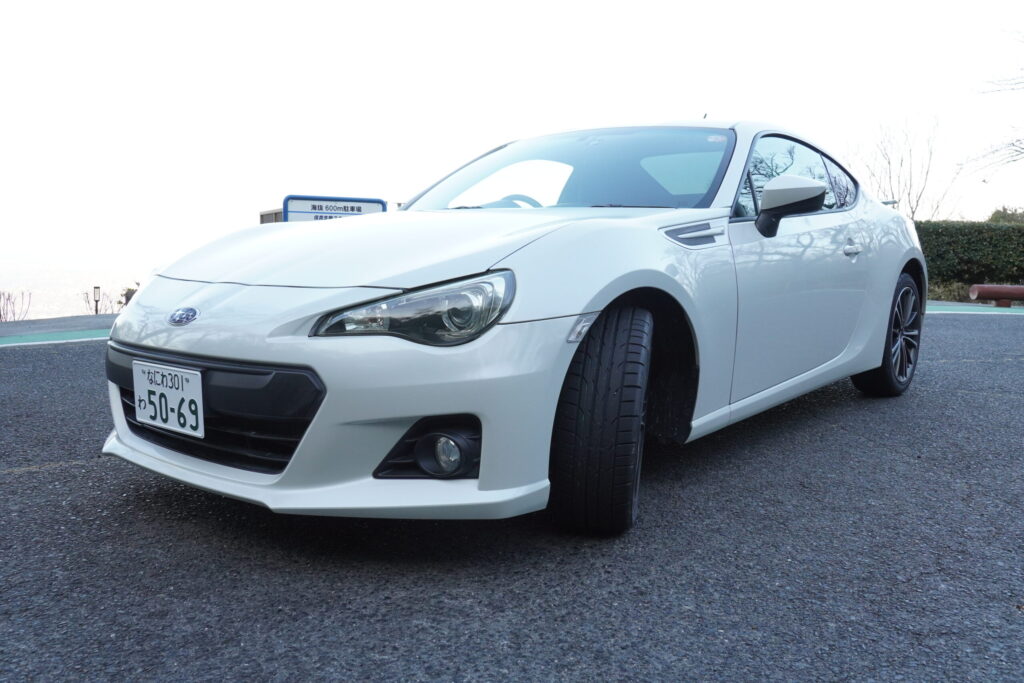
Choosing a driver's car like the Subaru BRZ transforms the journey from mere transportation into an intimate conversation with the Japanese landscape. The low center of gravity afforded by the 2.4-liter horizontally opposed FA24 engine, the communicative steering chassis, and the mechanical feedback of a true manual transmission allow you to feel every nuance of Japan’s immaculate asphalt. As the revs climb and you drop down a gear to clip the apex of a seaside hairpin in Ako, you realize that the drive itself is the destination.
2. Driving a Subaru BRZ through Hyogo and Ako: The 2-Day Itinerary: Deep Dive
Day 1: The Western Escape, Ancient Salt Roads, and the Coastal Sunset
08:00 AM – Departure from Central Osaka: The Urban Launch
Your journey begins in the early morning air of Osaka. As you fire up the Subaru BRZ, the boxer engine settles into a steady, resonant rumble. You slip the leather-wrapped shifter into first gear, feeling the mechanical notchiness of the short-throw box, and ease off the clutch. Leaving the metropolis behind, you merge onto the Hanshin Expressway Route 3 (Kobe Line).
At this hour, the urban highway weaves between high-rise office towers and elevated residential blocks. The BRZ’s tight suspension keeps the body perfectly flat as you navigate the sweeping elevated curves over Osaka Bay. To your left, the industrial docks recede into the morning haze; to your right, the Rokko Mountain range looms as a jagged green backdrop. The objective today is to bypass the standard tourist traps of Kobe and head deep into the historic coastal region of Harima and Ako in western Hyogo Prefecture.
09:30 AM – Akashi Kaikyo Bridge & Sunset Line Coastal Warm-Up
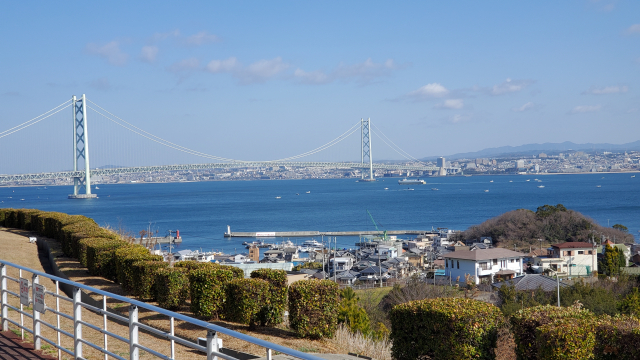
As you bypass central Kobe via the Sanyo Expressway or the coastal Route 2, the landscape dramaticizes rapidly. You approach Akashi City, famous for its treacherous sea currents and world-renowned seafood. Pulling off at the Akashi-Kaikyo Park area, you are greeted by the gargantuan steel towers of the Akashi Kaikyo Bridge—once the world's longest suspension bridge—spanning the roaring Naruto Strait toward Awaji Island.
Here, we take a brief respite at the waterfront promenade. The air smells sharply of salt and sea spray. The sound of cargo ships pushing through the channel mixes with the low idle of your BRZ cooling down. From this vantage point, you catch your first glimpse of the Seto Inland Sea (Setonaikai). Unlike the rough, open Pacific Ocean, the Inland Sea is protected, dotted with hundreds of tranquil, pine-clad islands floating like emeralds on calm, turquoise waters.
11:00 AM – Route 250 (The Harima Seaside Highway): The Ultimate Coastal Winding
Leaving Akashi, you turn onto National Route 250, locally known as the Harima Seaside Highway. This is where the drive transitions from an interstate transfer to a world-class motoring experience.
As Route 250 winds past Himeji toward Tatsuno and Aioi, the road drops directly down to the waterline. The pavement is pristine, expertly banked, and sculpted along the contours of the jagged coastline. In the BRZ, this road is absolute bliss. You downshift into 3rd gear, blipping the throttle with a clean heel-and-toe maneuver. The revs jump to 4,000 RPM, the engine note crisp and eager.
The chassis of the BRZ shines here: as you sweep through a series of S-bends hugging the cliff edge, the steering wheel communicates every tiny variation in surface texture. You feel the front tires load up, holding an unwavering line just inches from the concrete sea wall. To your left, the Seto Inland Sea glimmers under the mid-day sun, dotted with wooden oyster cultivation rafts floating in calm inlets.
01:00 PM – Tatsuno & Mitsu: Oyster Feast by the Sea
By mid-day, you arrive in the Mitsu district of Tatsuno City, nestled directly along Route 250. This stretch of coast is legendary throughout Japan for Mitsu-no-Kaki (Mitsu oysters). Because the rivers flowing from the rich forests of Hyogo deposit mineral-rich nutrient runoff into the calm, sheltered bays, the oysters here grow plump, sweet, and extraordinarily rich in flavor.
You park the BRZ at a traditional seaside oyster shack (Kaki-goya). The aroma of hardwood charcoal smoke and sizzling seafood fills the air. Sitting on a wooden bench overlooking the water, you order a bucket of fresh, live oysters grilled right at your table over open embers.
As the shell pops open with a burst of steam, you drizzle a drop of local fresh ponzu citrus over the plump oyster meat. The first bite is extraordinary—creamy, brine-rich, delicately sweet, with a distinct smokiness from the charcoal. Alongside the grilled oysters, you sample Kaki-meshi (savory rice cooked in oyster dashi broth) and crisp oyster fritters. It is an unpretentious, deeply authentic culinary experience that no high-end city restaurant can match.
03:00 PM – Arrival in Ako: The City of Samurai and Salt
Re-boarding the BRZ, you continue west along Route 250, passing over low coastal passes until you descend into the historic city of Ako.
Ako occupies a sacred place in Japanese cultural history. It is the hometown of the 47 Ronin—the legendary samurai who avenged their master's forced suicide in the early 18th century, an event immortalized in Japanese theater and literature. Furthermore, Ako’s unique shallow tidal flats and high-evaporation climate made it the premier salt-producing center of feudal Japan for centuries. Ako no Shio (Ako Salt) was coveted by shoguns and remains a gold standard in Japanese culinary art.
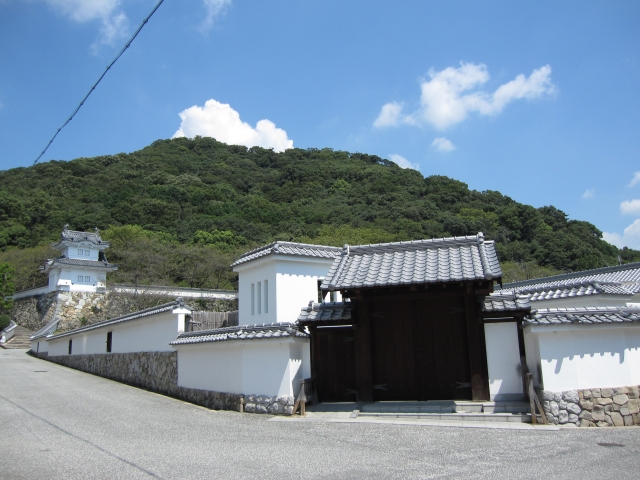
Your first stop in Ako is the Ako Castle Ruins (Ako-jo). Unlike mountain fortresses, Ako Castle was built on flat coastal land with a unique shoreline defense moat system that allowed boats to enter directly from the sea. Parking in the quiet gravel lot, you walk through the reconstructed Otemon Gate. The stone walls, crafted using precision Uchikomi-hagi masonry, stand against immaculate pine gardens. The air is peaceful, carrying a faint tang of sea salt and pine resin.
04:30 PM – Kirakira-zaka and Ako Misaki: Mediterranean Charm on the Japanese Coast
From Ako Castle, you drive ten minutes south to Ako Misaki (Cape Ako), a dramatic peninsula jutting directly into the Seto Inland Sea.
As you ascend the sweeping coastal road leading up the cape, you arrive at Kirakira-zaka ("Sparkling Slope"). This famous cobblestone pedestrian walkway descends steeply down to the sea, lined with whitewashed Italianate buildings, artisan pottery shops, and glass art studios. The stone stairs are inlaid with colorful ceramic tiles that reflect the brilliant sunlight, creating a scene that feels like a surreal fusion of the Amalfi Coast and traditional Japan.
At the base of the slope sits Iwatsuhime Shrine, an ancient Shinto shrine dedicated to the goddess of the sea and romantic matchings. The iconic wooden Torii gate of Iwatsuhime Shrine stands right on the rocky shoreline, framing the vast expanse of the Seto Inland Sea between its red pillars. Standing here as the gentle waves lap against the volcanic rock, you feel an overwhelming sense of tranquility.
05:45 PM – The Sunset at Cape Ako: A Masterpiece in Gold and Amber
This is the crescendo of Day 1. Cape Ako is officially designated as one of Japan's Top 100 Sunset Spots, and experiencing it from the vantage point of your sports car is unforgettable.
You park the BRZ at the cape’s scenic outlook. The low-slung, aggressive silhouette of the car catches the warm, golden light of the setting sun. The sky transitions from fiery orange to deep plum and indigo. The calm waters of the Seto Inland Sea turn into a liquid mirror, reflecting the silhouettes of distant islands—Shodoshima, Ieshima, and Awaji.
You lean against the fender of the BRZ, sipping a warm green tea purchased from a nearby vendor. The silence is absolute, broken only by the rhythmic whisper of gentle waves and the faint cooling clicks of your car’s exhaust manifold. It is a moment of pure stillness that standard group tours, tied to rigid bus timetables, never get to experience.
07:30 PM – Evening Indulgence: Onsen & Ako Salt Cuisine
Check into a traditional Ryokan (Japanese inn) perched along the cliffs of Ako Onsen. Ako's hot springs are rich in minerals and salt, earning them the nickname "Bihada no Yu" (Skin-Beautifying Springs).
After soaking in an outdoor infinity bath (Rotenburo) that seems to spill directly into the ocean beneath a canopy of stars, you sit down for a multi-course Kaiseki dinner. The meal highlights local sea bream (Tai) baked in a thick crust of Ako salt—a traditional local culinary technique that seals in all the natural juices, producing fish so tender and flavorful it melts on your tongue.

Day 2: Mountain Passes, Feudal Heritage, and the Return Loop
08:30 AM – Morning Coastal Fog and Mountain Ascent
Wake up to the soft morning light breaking over the Inland Sea. After a traditional breakfast of grilled mackerel, miso soup, and local rice, you load your bags into the BRZ's surprisingly practical rear trunk and fire up the engine.
Today, we trade the ocean breeze for forested mountain hairpins, turning northernly inland toward the mountainous heart of Hyogo Prefecture before looping back toward Osaka.
09:30 AM – Route 373 & Chusa Pass: The Touge Experience
Leaving Ako behind, you connect to National Route 373, climbing northward along the Chikusa River valley. The air thins and cools rapidly. Coastal pines give way to dense forests of towering Japanese cedar (Sugi) and cypress (Hinoki).
Here, you encounter true Japanese Touge (mountain pass) driving. The road narrow into tight, technical curves that test the balance and agility of the BRZ. In a heavy AWD vehicle or a bulky SUV, these narrow roads can be intimidating. But in the lightweight, rear-wheel-drive BRZ, it is an absolute joy dance.
You maintain a smooth rhythm: brake hard in a straight line, shift down into 2nd gear, turn in with crisp steering input, let the chassis settle as the car rotates effortlessly around the tight bend, and gently roll onto the throttle to blast out toward the next short straight. The mechanical feedback through the pedals and steering gear connects you directly to the road surface, delivering an intoxicating driver high.
11:30 AM – Tatsuno Castle Town: The "Little Kyoto" of Harima
Descending from the mountain passes, you make a stop at the historic castle town of Tatsuno. Often called the "Little Kyoto of Harima," Tatsuno remains delightfully untouched by mainstream international tourism.
The town is famous for two things: historic white-walled samurai residences (Buke-yashiki) and traditional soy sauce production. Tatsuno is the birthplace of light-colored soy sauce (Usukuchi Shoyu), which is essential to Kansai-style cuisine because it imparts rich umami without darkening the color of delicate broths.
Park the BRZ in the designated public lot near the river and wander through the narrow, pristine alleys lined with wooden Edo-period buildings. You can visit the Higashimaru Soy Sauce Museum, housed in a preserved 19th-century timber brewery, where the air still carries a warm, fermented aroma of roasted wheat and soybeans.
01:00 PM – Lunch: Tatsuno Somen Noodles (Ibo no Ito)
For lunch, visit a traditional noodle house in Tatsuno to taste Ibo no Ito, Japan's premier hand-stretched Somen noodles.
Hand-crafted in this specific river valley using ancient techniques since the 14th century, Ibo no Ito noodles are pulled extremely thin—less than a millimeter in diameter—and aged to perfection. Served cold on a bed of crushed ice over a bamboo mat, accompanied by a chilled dipping sauce infused with local Usukuchi soy sauce and fresh ginger, the noodles have an incredible, bouncy texture (Kosh) that is immensely refreshing after a morning of spirited mountain driving.
02:30 PM – Himeji Castle: The White Heron Citadel
Before returning to Osaka, no driving tour of Hyogo would be complete without visiting the grandest surviving original castle in Japan: Himeji Castle (Himeji-jo), a UNESCO World Heritage site.
Driving the BRZ along Himeji's broad main avenue, the colossal white fortress appears on the horizon like a soaring bird, earning its nickname "White Heron Castle" (Shirag鷺-jo). Park in the spacious underground parking area near the main gate.
Unlike most Japanese castles that were destroyed in WWII and rebuilt with modern concrete, Himeji Castle is a 100% authentic wooden masterpiece constructed in 1609. As you climb up through the labyrinthine defensive keeps, steep wooden staircases, and hidden gun ports, you gain a deep appreciation for feudal military architecture. From the top floor of the six-story main keep, you get a panoramic 360-degree view of the entire Harima Plain stretching all the way to the Seto Inland Sea where you were driving yesterday.
05:00 PM – Sanyo Expressway to Osaka: Sunset Highway Run
Leaving Himeji in the late afternoon, you merge onto the Sanyo Expressway for the return leg back to Osaka.
As the sun begins to dip below the horizon once again, the highway opens up. Setting the cruise control or letting the 2.4L boxer engine hum smoothly in 6th gear at 100 km/h, the BRZ settles into a comfortable, refined grand tourer. The cockpit glows with soft amber ambient lighting.
Reflecting on the past two days, you realize how much ground you covered: from the bustling urban grids of Osaka to coastal cliffside highways, ancient salt flats, serene shrines, mountain passes, samurai towns, and grand castles. None of this seamless, spontaneous exploration would have been possible on a rigid train schedule.
07:00 PM – Arrival in Osaka
You return to central Osaka in time for a late dinner in the vibrant nightlife district of Namba or Dotonbori, bringing your ultimate Hyogo and Ako driving adventure to a triumphant close.
3. Driving a Subaru BRZ through Hyogo and Ako: Expert Advice & Cultural Nuances
Driving through rural and coastal Japan is a deeply rewarding cultural experience, but it comes with its own unique etiquette, unspoken rules, and hidden treasures that every traveler should know.
The Culture of "Michi-no-Eki" (Roadside Stations)
One of the greatest joys of driving in Japan is discovering the network of government-designated roadside rest stops known as Michi-no-Eki. Far more than basic gas station service areas, these are vibrant community hubs designed to showcase local agriculture, regional crafts, and fresh culinary specialties.
Along Route 250 and around Ako, you will encounter several outstanding Michi-no-Eki, such as Michi-no-Eki Mitsu. Here, local fishermen bring their morning catches directly to the market inside the station. You can purchase fresh seafood, local sea salt, seasonal citrus, and artisanal soy sauce directly from the producers. They also feature immaculately clean public restrooms, local tourist information desks, and soft-serve ice cream stands featuring hyper-local flavors like Ako Sea Salt soft-serve (a delicious sweet-and-salty treat) or local citrus sorbet.
Driving Etiquette on Narrow Roads & Mountain Passes
Japan's road infrastructure is world-class, but outside major highways, roads can become surprisingly narrow—often referred to as Koku-do (a play on words meaning "national roads that feel like tight paths").
- Passing Etiquette: On narrow coastal or mountain roads where two vehicles cannot pass easily, pull-off cutouts (Yuzuri-ai) are placed periodically. If a local vehicle approaches from the opposite direction or trails behind you, pull safely into a cutout and flash your hazards once to let them pass.
- The Hazard Light "Thank You": When another driver yields the right of way to let you merge or pass on a narrow street, give two quick blinks of your hazard lights. This universal Japanese driving courtesy translates to a warm "Thank you!" and fosters immense goodwill on the road.
- Pedestrian Crossings: Japanese drivers are extremely respectful of pedestrian crosswalks (Odan-hodo), particularly in rural towns. Always stop completely when a pedestrian is waiting at an uncontrolled crosswalk.
Finding Hidden Local Culinary Gems
When driving, avoid standard western fast-food chains or large highway service plaza buffets. Instead, look for small roadside restaurants with a Noren (fabric curtain) hanging over the front doorway and local mini-cars (Kei-cars) parked outside. A heavy presence of local license plates is a guaranteed sign of incredible quality, fair prices, and authentic local recipes passed down through generations.
4. Driving a Subaru BRZ through Hyogo and Ako: Detailed Logistics & Pre-Trip Tips
Planning a JDM road trip in Japan requires zero stress when you understand the modern transportation ecosystem.
Toll Roads & The ETC Card Advantage
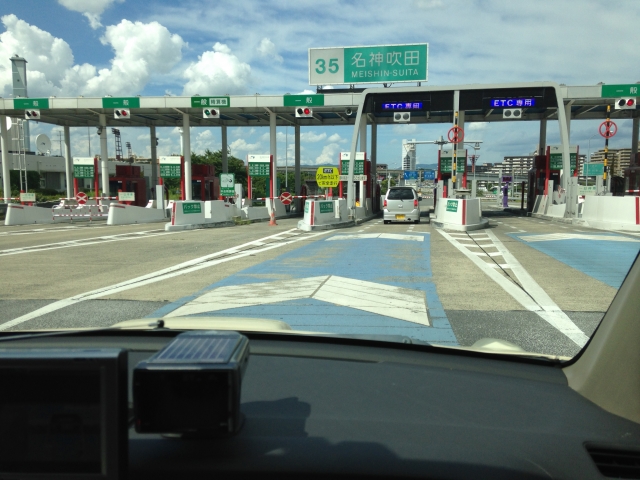
Japan’s highway system (Expressways operated by NEXCO) is smooth, efficient, and heavily toll-based. While you can technically pay tolls with cash or credit cards at manual lanes, doing so is slow and inconvenient.
When renting your vehicle, always request an ETC (Electronic Toll Collection) Card. The rental agency will insert the ETC card into the vehicle's built-in reader unit (usually located in the glovebox or center console). As you approach toll gates on the highway, simply enter the purple "ETC Only" lane at a speed of 20 km/h. The barrier gate will automatically lift, and all toll charges are electronically recorded. When you return the vehicle to the rental branch, the agency scans the card and settles the total toll bill in a single quick transaction.
Navigating Japanese Gas Stations ("Mantan!")
Fueling your vehicle in Japan is straightforward once you know the basic vocabulary and procedures. Gas stations are divided into Full Service (Furu) and Self Service (Serufu).
At a Full-Service Station:
An attendant in a uniform will direct you to a pump. Roll down your window and state three key details:
- Fuel Type: The Subaru BRZ requires Premium High-Octane gasoline.
- Say: "High-Octane" (pronounced Hai-oku). (Regular gas is "Regura"; Diesel is "Keiyu").
- Amount: To fill up the tank completely:
- Say: "Mantan" (Full tank).
- Payment Method:
- Say: "Kado" (Credit card) or "Genkin" (Cash).
Example Sentence: "Hai-oku, mantan, kado de onegaishimasu!" (High-octane, full tank, by credit card please!)
The friendly attendants will often wash your windshield, clean your side mirrors, and hand you a damp towel to wipe down your dashboard while the fuel pumps—an incredible level of service!
Parking Rules in Japan
In Japan, street parking is virtually non-existent and strictly enforced. Always park in designated parking lots (Coin Parking or municipal structures).
- Coin Parking: These automated lots feature small metal flaps that rise beneath the car after you park. To leave, go to the central payment machine, enter your parking spot number, pay the displayed fee in cash or IC card, and the metal flap will lower, allowing you to drive away smoothly.
- Reverse Parking Culture: In Japan, it is standard practice to back into parking spaces. It ensures safe, clear visibility when exiting into traffic later.
The Pure Joy of Driving a JDM Manual (MT) Sports Car
Driving a modern JDM sports car like the Subaru BRZ or Toyota 86 on Japanese roads provides an emotional connection that standard rental commuter cars simply cannot match.
The BRZ’s naturally aspirated 2.4-liter flat-four engine delivers linear power with zero turbo lag. Weighing just under 1,270 kg, it feels nimble, reactive, and organically connected to your driving inputs. Heel-and-toe downshifting through tight coastal bends, listening to the crisp mechanical intake note, and sitting low in supportive sports bucket seats elevates a simple vacation into an unforgettable bucket-list driving memory.
5. Driving a Subaru BRZ through Hyogo and Ako: Comprehensive FAQ
Q1: What documentation do I need to legally drive in Japan?
To drive legally in Japan, you must present three essential documents at the rental desk:
- Your Original Valid Driver’s License from your home country.
- An International Driving Permit (IDP) issued strictly under the 1949 Geneva Convention on Road Traffic.
- Your Passport.
Crucial Note: Ensure your IDP is explicitly issued under the 1949 Geneva Convention. IDPs issued under the 1968 Vienna Convention or other treaties are not accepted in Japan. Citizens from specific countries like Switzerland, Germany, France, Taiwan, Belgium, and Monaco require an official Japanese translation of their domestic license provided by the Japan Automobile Federation (JAF) or their respective embassies instead of an IDP.
Q2: Is driving in Japan difficult for first-timers?
Not at all. In Japan, vehicles drive on the left side of the road, with the steering wheel situated on the right side of the car. Japanese drivers are remarkably polite, patient, and law-abiding. Speed limits are strictly adhered to, horn-honking is rare, and road signage is universally dual-language (Japanese characters accompanied by clear English Romanization).
Q3: What insurance coverage should I select?
It is strongly recommended to opt for full comprehensive zero-deductible insurance coverage, including Non-Operation Charge (NOC) waiver protection. NOC covers the operational business loss for the rental store if the car requires cleaning or repairs due to an accident. Full coverage gives you complete peace of mind while navigating narrow rural streets.
Q4: Can I rent a manual transmission (MT) sports car if I'm rusty?
Yes! Modern JDM sports cars like the Subaru BRZ feature smooth clutch engagement, hill-start assist, and forgiving gear engagement. As long as you possess a valid license authorized for manual vehicles and basic familiarity with clutch control, you will quickly adapt within fifteen minutes of driving.
6. Driving a Subaru BRZ through Hyogo and Ako: The Final Thoughts
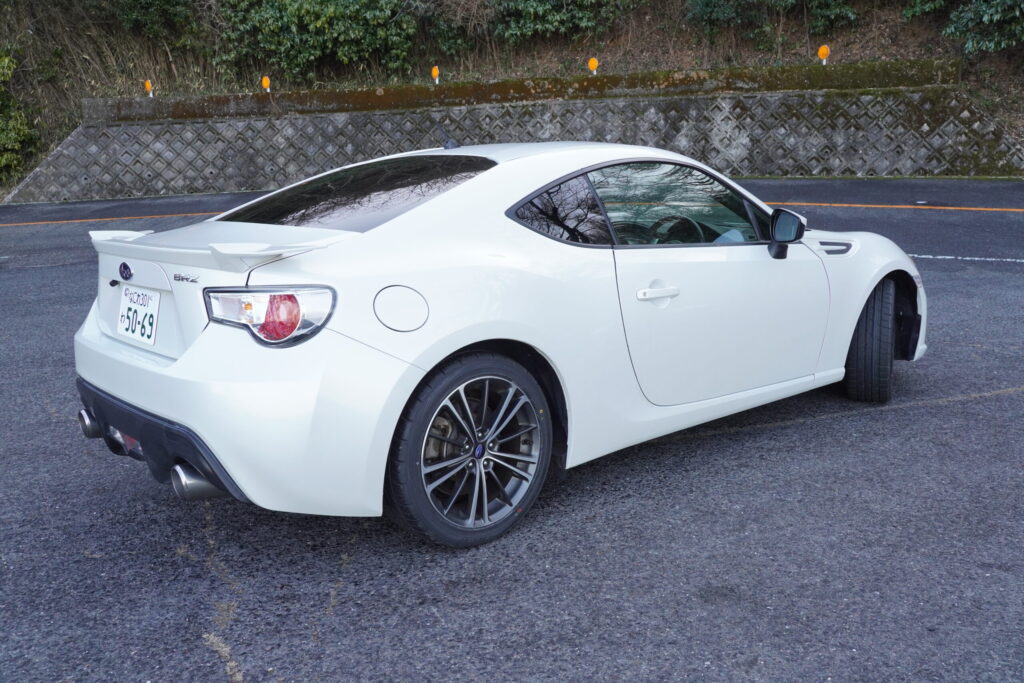
Japan is waiting to be discovered, but it will not reveal its true magic from the window of a crowded train car.
The real soul of Japan lies along the winding asphalt of Route 250, in the sea breeze sweeping across Cape Ako at dusk, in the aroma of fresh oysters sizzling over charcoal embers, and in the mechanical symphony of a crisp gearshift as you climb a solitary mountain pass.
If you are ready to trade rigid public transport timetables for absolute freedom, your journey begins with Omoshiro Rent-a-Car Osaka Chuo.
Located conveniently in the heart of Osaka, Omoshiro Rent-a-Car Osaka Chuo specializes in pristine, enthusiast-grade JDM sports cars—including the legendary Subaru BRZ and Toyota 86 manual transmission models. Run by passionate automotive experts who live and breathe Japanese car culture, they provide flawless English customer service, full ETC card rentals, detailed driving tips, and top-tier maintained vehicles tailored for international travelers.
Don't just visit Japan—drive it. Book your Subaru BRZ at Omoshiro Rent-a-Car Osaka Chuo today, turn the key, and embark on the ultimate Seto Inland Sea coastal road trip of a lifetime!