
There is a precise moment when the relentless rhythm of Osaka’s urban sprawl gives way to something ancient, wild, and intoxicating. You feel it in your hands before you see it with your eyes. The heavy, precise mechanical feedback of a six-speed manual gearbox; the immediate, naturally aspirated throttle response as the boxer engine breathes in the salty Pacific air; the crisp turn-in of a low-slung, rear-wheel-drive sports car as the asphalt begins to curve against the towering cliffs of the Kii Peninsula.
For years, travelers have experienced Japan through the window frame of a train. As a former conductor for Kintetsu Railway, I spent a lifetime on the rails. I know the Japanese train network intimately—its unmatched punctuality, its hypnotic mechanical hum, its effortless precision. Railways are the circulatory system of modern Japan, carrying millions through concrete corridors and urban arterial lines. But railways are inherently linear. They dictate where you go, when you arrive, and what you see. They keep you inside a curated bubble, moving past the landscape rather than through it.
When you step off the platform, leave the timetable behind, and strap into a pure driver’s car like the Subaru BRZ, Japan transforms completely.
This is the philosophy of driving in Japan: the search for "Secret Japan." The true soul of the country does not reside within the neon labyrinth of Dotonbori or along the heavily trodden footpaths of Kyoto’s Gion district. It hides in the dramatic topography of the Kii Peninsula, where dense pine forests cascade down steep mountain valleys into the crystalline turquoise waters of the Pacific Ocean. It is found along winding coastal bypasses where the smell of burning incense from centuries-old shrines merges with the tang of sea salt, and where small, family-run roadside eateries serve seafood caught just hours prior.
Osaka is the ultimate launchpad for this revelation. While most international tourists board the Haruka Express or the Shinkansen, true adventurers head south on the Hanshin Expressway toward Wakayama. Within sixty minutes, the sky opens up, the concrete towers disappear, and the landscape fractures into dramatic mountain chains and jagged sea cliffs.
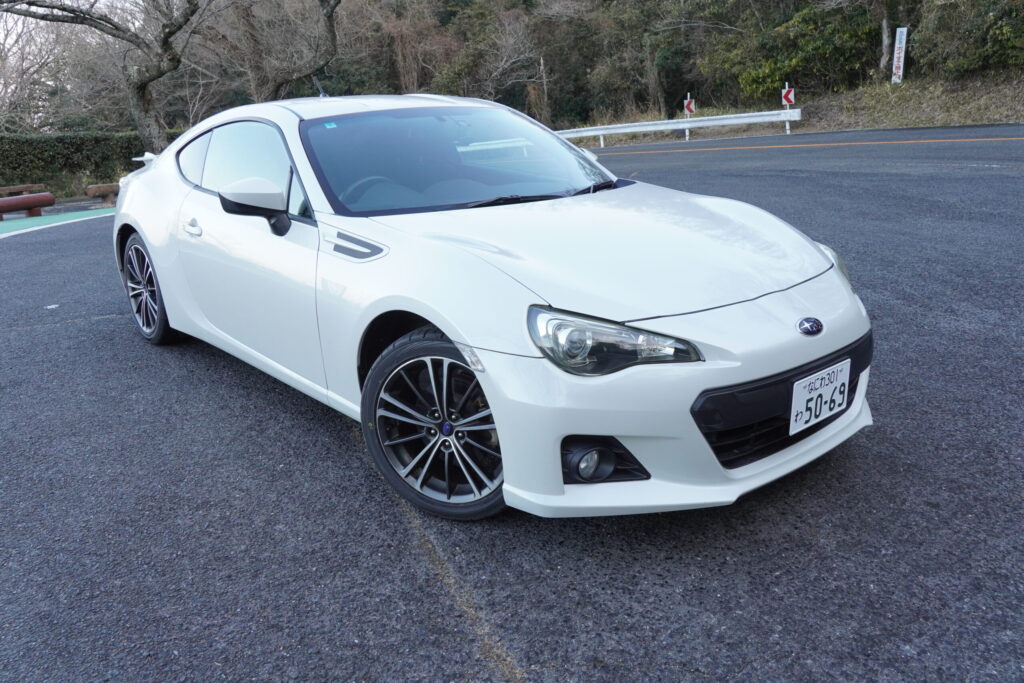
The Kii Peninsula, anchored by Wakayama Prefecture and the famed coastal paradise of Shirahama, was made for driving. Its geology is raw and unapologetic—formed by tectonic uplift and sculpted by millennia of relentless ocean waves. Navigating these roads requires a machine that communicates directly with the driver. A heavy, oversized SUV or an automated hybrid commuter muted from the road surface simply will not do. You need a car built with low mass, a low center of gravity, perfect 50:50 weight distribution, and a lightweight chassis that dances through apexes. You need a Subaru BRZ.
Through this comprehensive guide, we will explore the coastal wonders, deep historic passes, and unrefined culinary treasures of Wakayama and Shirahama—a journey that no rail pass could ever purchase.

The Ultimate 2-Day Wakayama & Shirahama Coastal Itinerary
Day 1: The Coastal Run to the White Sands of Shirahama
08:00 AM — Departure from Central Osaka
10:00 AM — The Gateway to Wakayama: Yuasa Town
12:30 PM — Minabe Coastal Ridge & Plums
03:00 PM — Arrival in Shirahama: Sen畳敷 (Senjojiki) & Sandanbeki
06:00 PM — Golden Hour at Engetsu-to Island
08:30 PM — Seafood Feast & Shirahama Onsen Immersion
08:00 AM — Osaka Launch & The Transition to Freedom
Your journey begins in the heart of Osaka as the city awakens. Merging onto the Hanshin Expressway Route 15 (Sakai Route) heading south, the early morning sun reflects off the glass facades of Namba’s skyscrapers. As you slide the short-throw shifter of the BRZ into 5th gear, the 2.4-liter naturally aspirated boxer engine hums smoothly beneath the aluminum hood.
Navigating through the urban interchange onto the Hanwa Expressway, the city slowly releases its grip. Within 40 minutes, the concrete jungle dissolves into rolling green hills as you cross the border into Wakayama Prefecture. The air changing inside the cabin is palpable; the humidity softens, carrying a distinct mountain coolness. The Hanwa Expressway cuts directly through the northern backbone of Wakayama’s mountain ranges, offering long, sweeping high-speed bends that highlight the BRZ’s remarkable high-speed stability and aerodynamic ground effect.
10:00 AM — Yuasa Town: The Birthplace of Soy Sauce
Take the Yuasa-Gobo Road exit toward Yuasa Town. Long before modern highways existed, Yuasa flourished as a crucial post town along the Kumano Kodo pilgrimage route. More importantly, it is historically recognized as the birthplace of Japanese soy sauce (shoyu).
As you downshift into 3rd gear to enter the historic district, the road narrows down to stone-paved lanes flanked by traditional Edo-period machiya wooden houses with dark timber facades and delicate lattice windows (koshi). The acoustic resonance of the BRZ’s dual exhaust bounces crisply off these centuries-old structures.
Park the car at the designated town lot and wander through the Preservation District for Important Buildings. Visit Kadocho, a soy sauce brewery operating since 1841. Inside, the deep, rich, fermented aroma of roasted soybeans and wheat fills the air, emerging from massive cedar barrels bound with bamboo hoops. Sampling traditional, unpasteurized tamari here reveals a complex depth of flavor—savory, umami-rich, and slightly sweet—completely foreign to mass-produced commercial soy sauces.
11:30 AM — The Coastal Twist: Route 42 & The Minabe Pass
Leaving Yuasa, bypass the modern expressway and join National Route 42. This is where the true driving experience begins. Route 42 is the coastal artery of the Kii Peninsula, hugging the jagged contours of the coastline.
The BRZ truly comes alive here. As you approach Minabe, famous throughout Japan for producing the highest quality Kishu Nanko-ume (Japanese plums), the road begins a series of technical S-curves climbing over coastal ridges before plunging back down toward the crashing ocean waves. Heel-and-toe downshifting from 4th to 3rd gear entering a tight right-hand sweeper, the pedals are perfectly spaced for driver precision. The steering is direct, communicative, and immediate; you can feel the exact grip levels of the front tires through the leather-wrapped wheel as the mechanical limited-slip differential locks up, driving you cleanly out of the turn.
01:00 PM — Minabe Seafood Lunch: Fresh Coastal Treasures
Pull over near Minabe along a seaside stretch of Route 42 for a local lunch at a traditional oceanfront shokudo (diner). Order a bowl of fresh Kaisendon (seafood rice bowl) topped with locally caught Shirasu (young whitebait), red sea bream, and fatty tuna, accented with a single salted Nanko-ume plum. The tart acidity of the plum cuts through the rich oils of the fresh fish perfectly. Eating lunch while watching the waves crash against the concrete tetrapods along the sea wall, with your low-slung sports car parked right outside the window, is pure coastal freedom.
+-------------------------------------------------------------------+
|               DAY 1 DRIVING HIGHLIGHTS & DISTANCES                |
+-------------------------------------------------------------------+
| Route Segment             | Distance | Driving Time | Road Type   |
+---------------------------+----------+--------------+-------------|
| Osaka Central -> Yuasa    | 85 km    | ~75 mins     | Expressway  |
| Yuasa -> Minabe Pass      | 45 km    | ~50 mins     | Coastal R42 |
| Minabe -> Shirahama Coast | 35 km    | ~40 mins     | Scenic R42  |
+-------------------------------------------------------------------+
02:30 PM — Arrival in Shirahama: Sen畳敷 (Senjojiki)
Continuing south along Route 42, the coastal views become increasingly dramatic as you enter the bounds of Shirahama. Your first primary destination is Senjojiki, which translates to "One Thousand Tatami Mats."
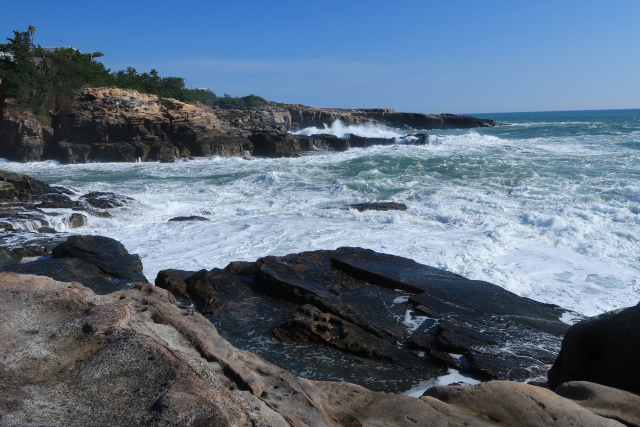
This geological wonder is a massive tier of multi-layered, soft tertiary sandstone protruding directly into the Pacific Ocean. Formed millions of years ago by underwater volcanic activity and relentlessly eroded by power-packed ocean swells, the flat, pale-yellow rock sheets cover an expansive area of nearly 4 hectares.
Park the BRZ in the coastal lot, step out into the bracing ocean wind, and walk out onto the vast stone tables. Standing on the edge of these ancient rock layers with the roaring Pacific churning violently below offers an humbling perspective on Japan’s geological history.
04:00 PM — The Precipice of Sandanbeki Cliffs
A mere two-minute drive along the coastal rim brings you to Sandanbeki Cliffs, a sheer wall of dark basalt and sandstone rising 50 meters vertically above the boiling sea. Stretching for two kilometers along the coast, Sandanbeki presents a stark, imposing contrast to the smooth rock sheets of Senjojiki.
Take the elevator buried deep inside the rock face, descending 36 meters down into the dark belly of the cliffs to access the Sandanbeki Cave (Sandanbeki Dokutsu). Historically, this hidden sea cavern served as a covert naval outpost for the Kumano Navy (Kumano Suigun) during the Heian period (794–1185). Inside, the ocean surge violently rushes into the cavernous chamber, roaring with thunderous acoustics as waves slam against the dark inner stone walls. An altar dedicated to Benzaiten, the Buddhist deity of water and music, sits shrouded in sea spray within the cavern darkness.
05:30 PM — Sunset at Engetsu-to Island
As late afternoon turns to early evening, navigate the BRZ toward the coastal loop road surrounding Kanayama Bay to reach the iconic icon of Shirahama: Engetsu-to Island (officially named Takashima).
Engetsu-to is a tiny, uninhabited islet carved out of sandstone, characterized by a distinct, perfectly round sea cave (full-moon hole) pierced directly through its center by marine erosion. Drive slowly along the shoreline perimeter road, finding a roadside parking bay facing west.
As the sun descends toward the horizon, the sky transforms through a stunning gradient of fiery orange, deep crimson, and indigo. During clear weather, the setting sun aligns precisely within the circular hole of Engetsu-to Island, casting a blinding golden beam across the ocean surface straight toward the shore. The silhouetted shape of the BRZ against this iconic, burning horizon is the quintessential Japanese automotive photo opportunity.
07:30 PM — Izakaya Dining & Shirahama Onsen
Check into your local ryokan or coastal hotel, change into a casual yukata, and venture out to sample Shirahama’s night atmosphere. Visit a local izakaya near Shirahama Beach to feast on local specialties:
- Kue (Longtooth Grouper): A rare, deep-water luxury fish known for its gelatinous, collagen-rich skin and delicate, sweet white meat, usually served in a bubbling nabe (hot pot).
- Kumano Beef: High-grade local Wagyu marble beef, flash-seared on a hot stone with local sea salt and fresh horseradish.
- Katsuoware (Bonito): Freshly seared skipjack tuna dressed with sliced green onions, ginger, and ponzu sauce.
End your evening by soaking in one of Shirahama’s ancient hot springs. Shirahama Onsen is officially recognized alongside Dogo and Arima as one of Japan’s Three Ancient Springs, mentioned in the 8th-century Nihon Shoki chronicle. Submerging into the hot, mineral-rich, sulfurous waters of an outdoor oceanfront bath (rotenburo) like Saki-no-yu—where the salt spray from crashing ocean waves literally splashes over the edge of the stone bath—relieves all muscle tension from the day’s drive.

Day 2: Mountain Passes, Sacred Shrines, and Coastal Geology
07:30 AM — Early Sunrise Stroll on Shirahama Beach
09:00 AM — Coastal Highway Run to Kushimoto & Hashiuiwa Rocks
11:30 AM — Cape Shionomisaki: The Southernmost Point
02:00 PM — Driving the Mountain Passes: Kumano Kodo Foothills
05:00 PM — Sunset Run on the Hanwa Expressway back to Osaka
07:30 AM — Morning Light at Shirahama Beach
Begin day two early with a quiet stroll along Shirarasuna Beach (Shirahama Beach). Famous throughout East Asia, this 600-meter arc of brilliant, snow-white quartz sand feels almost tropical, flanked by green palm trees and shallow, translucent turquoise waters. In the early morning, before daytime beachgoers arrive, the silence is broken only by the rhythmic lapping of the tide.
08:30 AM — The South Coast Blast: Route 42 to Hashiuiwa
Load your bags back into the rear seat of the BRZ, start the engine, and let it warm to operating temperature. Today’s drive pushes deeper south along the raw, rugged underbelly of the Kii Peninsula toward Kushimoto.
This stretch of Route 42 is an absolute driver's paradise. The road hugs the contours of the jagged coastline, featuring double-apex corners, fast sweeping curves, and elevation changes that test chassis dynamics. With the BRZ’s low seating position and excellent forward visibility over the front fender arches, picking your driving lines through technical corners becomes second nature.
After roughly 60 kilometers of engaging driving, you arrive at Hashiuiwa Rocks (Hashiuiwa Iwa) near Kushimoto.
Hashiuiwa is a surreal geological spectacle: a straight, 850-meter-long line of roughly 40 monolithic, pillar-like basalt rocks standing like giant bridge piers aligned toward Oshima Island. According to local folklore, the great Buddhist monk Kobo Daishi (founder of Shingon Buddhism) attempted to build a bridge across the sea to Oshima in a single night after being challenged by an ogre. Science tells us these rocks are the durable remains of a volcanic quartz porphyry dike that intruded into softer mudstone layers 15 million years ago; the softer stone eroded away, leaving only these majestic stone spires standing in the sea.
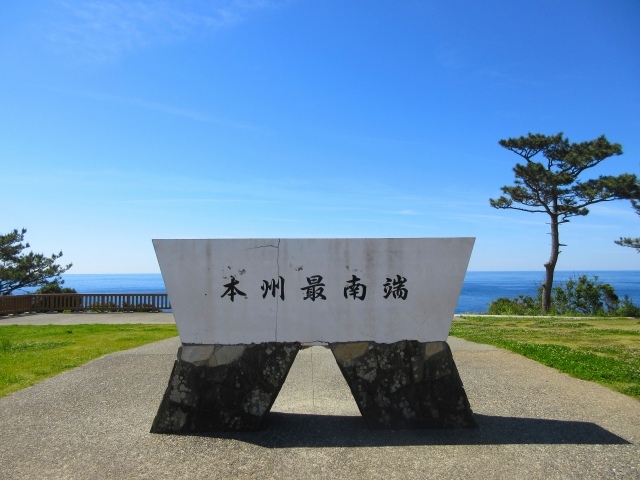
11:30 AM — Cape Shionomisaki: Standing at Honshu's Edge
Drive 15 minutes further south to reach Cape Shionomisaki, the absolute southernmost point of Japan’s main island of Honshu.
The road leading out onto the cape curves smoothly through a vast, grassy coastal plateau known as Shionomisaki-megumi. Park near the historical white brick lighthouse built in 1878 by British engineer Richard Henry Brunton.
Climb to the top of the lighthouse or step out onto the cliffside observation deck. Before you stretches a unobstructed, 180-degree panoramic view of the deep blue Pacific Ocean. Looking out at the ocean, you can distinctly perceive the gentle curvature of the Earth along the horizon. Standing here at the true southern edge of the mainland, with your trusted JDM sports car parked behind you, brings an undeniable sense of geographic accomplishment.
For lunch at the cape, try Maguro-don (fresh bluefin tuna bowl) at a nearby coastal diner. The waters off nearby Nachi-Katsuura harbor land the largest catches of fresh, non-frozen bluefin tuna in all of Japan. The ruby-red fish melts in your mouth with an incomparable buttery texture.
01:30 PM — The Mountain Assault: Route 311 & The Kumano Sacred Backbone
It is time to turn the nose of the Subaru BRZ inland, leaving the ocean behind to conquer the deep, forested mountain spine of Wakayama along National Route 311.
If Route 42 was a sweeping coastal ballet, Route 311 is a technical mountain pass. Route 311 follows the ancient valley routes of the Kumano Kodo, a UNESCO World Heritage-designated network of sacred pilgrimage trails that have drawn emperors, samurai, and monks for over a thousand years.
Here, the BRZ’s mechanical balance shines brightest. The mountain road climbs sharply through dense, towering canopy forests of Japanese cedar (sugi) and cypress (hinoki). Shadows and beams of light filter down onto the dark asphalt. The road surface is immaculate—tight hairpin turns lead into technical switchbacks, flanked by moss-covered stone walls and rushing mountain streams.
Switching the BRZ into Track Mode reduces traction control intervention, allowing subtle, controlled rotation through tight turns. The steering wheel vibrates with tactile feedback, informing you of every minor change in surface grip. Downshifting for a tight 2nd-gear left turn, the revs match smoothly, the rear tires bite firmly into the tarmac, and the car launches out of the corner toward the next elevation rise.
03:30 PM — Kumano Hongu Taisha: Spiritual Sanctuary in the Forest
Deep within the mountains along Route 311 lies Kumano Hongu Taisha, one of the three Grand Shrines of Kumano (Kumano Sanzan).
Park the car at the riverbed parking area and walk up the stone steps flanked by towering cedar trees and fluttering white prayer flags. The main shrine pavilion, constructed with natural, unpainted timber and traditional bark thatch roofs (hibadabuki), blends seamlessly into the surrounding primeval forest. The shrine is dedicated to Ketsumiko no Okami, the deity of forestry and storms.
A short walk from the main shrine complex brings you to Oyunohara, the original location where the shrine stood for centuries before a massive flood in 1889 forced its relocation. Today, Oyunohara is marked by the majestic Otorii—the largest Torii gate in the world, standing an imposing 33.9 meters tall and 42 meters wide against a backdrop of quiet green rice paddies and misty mountains. Standing beneath this colossal black structure, feeling the cool mountain breeze pass through the valley, offers a moment of profound serenity.
+-------------------------------------------------------------------+
|               DAY 2 DRIVING HIGHLIGHTS & DISTANCES                |
+-------------------------------------------------------------------+
| Route Segment             | Distance | Driving Time | Road Type   |
+---------------------------+----------+--------------+-------------|
| Shirahama -> Hashiuiwa    | 55 km    | ~60 mins     | Coastal R42 |
| Hashiuiwa -> Shionomisaki | 10 km    | ~15 mins     | Coastal     |
| Shionomisaki -> Hongu     | 65 km    | ~75 mins     | Mountain R311|
| Hongu -> Osaka Central    | 160 km   | ~130 mins    | R311/Express|
+-------------------------------------------------------------------+
05:00 PM — The Express Return: Mountain Descent to Osaka
Leaving Kumano Hongu Taisha, follow Route 311 west down through the valleys of Tanabe to reconnect with the Hanwa Expressway. As the sun begins to dip behind the Western Wakayama mountain range, painting the sky in deep shades of violet and crimson, merge back onto the northbound expressway.
Set the BRZ to a steady cruise in 6th gear. The interior cabin settles into a calm rhythm as you trace your path back toward the glowing neon skyline of Osaka. By 07:30 PM, you are back in the heart of the metropolis—your soul enriched by two full days of coastal ocean air, historic mountain passes, and driving freedom.
Driving Etiquette, Michi-no-Eki, and Road Culture
To truly master the art of road trips in Japan, one must understand the unique nuances of Japanese automotive culture and highway logistics.
The Wonder of Michi-no-Eki (Roadside Stations)
Japan’s highway network features two distinct resting facilities: PA/SA (Parking Areas / Service Areas) on toll expressways, and Michi-no-Eki (Roadside Stations) on public national routes.
Michi-no-Eki are far more than mere gas stations with restrooms; they are vibrant community hubs celebrating local agriculture, culture, and cuisine. When driving through Wakayama, stopping at a Michi-no-Eki is essential.
- Michi-no-Eki Inami: Famous for freshly made plum ice cream and dried Nanko-ume snacks.
- Michi-no-Eki Kushimoto Hashimoto: Located directly opposite Hashiuiwa Rocks, serving fresh local seafood bowls, citrus marmalades, and local artisan crafts.
- Michi-no-Eki Kii-Nagashima: Ideal for buying regional citrus varieties like Mikan (satsuma mandarin), Sanbokan, and Yuzu.
These stations offer clean, free public restrooms, 24/7 parking, local tourist information maps, and fresh, high-quality local food products at honest prices.
Driving Rules and Local Etiquette
Driving in Japan is safe, polite, and orderly, provided you respect local driving customs:
- Drive on the Left: Japan drives on the left side of the road with the steering wheel on the right. The Subaru BRZ’s excellent forward visibility makes adjusting to this seamless.
- The "Thank You" Hazard Light Flash: When another driver yields to let you merge or turn, it is customary to flash your hazard lights twice (dank-you hazards) as a polite gesture of gratitude.
- Train Crossings (Fumikiri): As a former Kintetsu conductor, this rule is near to my heart: In Japan, you MUST come to a complete stop before any railway crossing, regardless of whether the barrier is open or closed, and look both ways before proceeding.
- Narrow Mountain Passages (Koku-do): Some mountain roads can narrow into single-lane passages with occasional passing bays (daishosho). If you see an oncoming vehicle, pull into the nearest left-hand bay to let them pass.
Logistics, JDM Dynamics, and Practical Travel Tips
Planning a smooth road trip through Japan requires attention to practical details, particularly regarding toll systems, fueling, and vehicle selection.
Toll Expressways and the ETC System
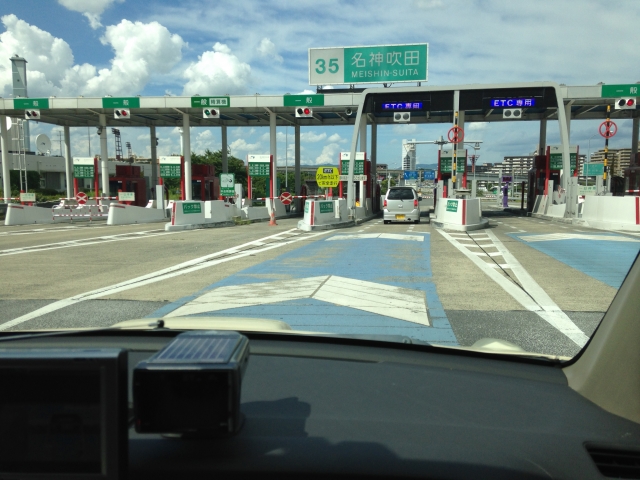
Japan’s high-speed expressway network uses an electronic toll collection system known as ETC (Electronic Toll Collection).
- Expressway tolls in Japan are relatively expensive compared to Western standards (expect roughly ¥3,000 to ¥5,000 each way between Osaka and Shirahama).
- Using an ETC Card: Inserting an ETC card into the vehicle's built-in reader unit allows you to pass through dedicated ETC Only purple lanes at toll plazas without stopping, with tolls automatically recorded and paid when returning your rental car. This saves significant time compared to stopping at manual cash lanes.
Navigating Gas Stations (Gasorin Susutendo)
Gas stations in Japan come in two varieties: Full Service (Furu) and Self Service (Serufu).
Full-Service Etiquette:
When you pull into a full-service station, an attendant will guide you to a pump waving bright banners.
- Roll down your window and state your fuel type, amount, and payment method.
- For high-performance JDM cars like the Subaru BRZ, you MUST specify Premium High-Octane Gasoline: Say "High-Octane" (Hai-oku).
- Specify a full tank by saying "Mantan" (満タン - Full tank).
- Example Phrase: "Hai-oku, mantan de onegaishimasu" ("High-octane, full tank please").
- The attendant will often wipe your windows, offer to take trash, and guide you safely back onto the main road as you leave.
+-------------------------------------------------------------------+
|                  JDM FUELING QUICK REFERENCE GUIDE                |
+-------------------------------------------------------------------+
| Japanese Term   | Pronunciation | Meaning                         |
+-----------------+---------------+---------------------------------|
| ハイオク         | Hai-oku       | Premium High-Octane Fuel (Req.) |
| レギュラー       | Regyurā       | Regular Gasoline                |
| 満タン           | Mantan        | Fill It Up (Full Tank)          |
| 現金           | Genkin        | Cash Payment                    |
| クレジットカード | Kurejitto     | Credit Card Payment             |
+-------------------------------------------------------------------+
The Magic of the Subaru BRZ / Toyota 86
Why choose a lightweight, rear-wheel-drive sports car like the BRZ over a standard commuter vehicle?
The Subaru BRZ (and its twin, the Toyota 86) represents the purest continuation of traditional Japanese sports car design philosophy. It is not about brute, uncontrollable horsepower; it is about balance, feedback, low mass, and mechanical involvement.
- Low Center of Gravity: Powered by a horizontally opposed boxer engine mounted low and far back in the engine bay, the center of gravity rivals exotic supercars.
- Pure Mechanical Feedback: The short-throw 6-speed manual shifter operates with a satisfying, mechanical clunk into every gear. The pedal placement facilitates seamless heel-and-toe downshifting.
- Balanced Power: The naturally aspirated 2.4-liter engine delivers linear, predictable power across the entire RPM range, allowing you to wring out the engine along mountain roads without exceeding safe limits.
Driving a true JDM manual sports car across Japan turns the transportation aspect of your trip into the absolute highlight of the journey.
Comprehensive Frequently Asked Questions (FAQ)
What documentation is required to rent and drive a car in Japan?
To drive legally in Japan, international visitors must present two primary documents upon vehicle pickup:
- Your valid original driver’s license from your home country.
- A valid International Driving Permit (IDP) issued under the 1949 Geneva Convention.
Critical Note: IDPs issued under the 1968 Vienna Convention or other treaties are NOT accepted in Japan. Visitors from specific nations such as Switzerland, Germany, France, Belgium, Monaco, and Taiwan require an official Japanese translation of their native license issued by the Japan Automobile Federation (JAF) or their respective embassy, rather than an IDP. Always verify your country's driving treaty status before departure. (For full details on licensing requirements, refer directly to official rental guidelines provided by your rental operator).
Is driving a manual transmission (MT) car in Japan difficult for visitors?
If you already know how to operate a manual transmission, driving a JDM sports car like the BRZ in Japan is remarkably straightforward. The clutch pedal on modern BRZ/86 models is light and forgiving, with an easily identifiable friction point. The primary adjustment for foreign drivers is operating the shift lever with your left hand (since Japan is right-hand drive). Most drivers adapt fully within 15 to 30 minutes of driving.
How safe are the coastal and mountain roads around Wakayama?
Wakayama's road infrastructure is exceptionally well-maintained. National Routes like Route 42 and Route 311 feature smooth asphalt, clear road markings, and frequent safety barriers. However, mountain passes can be narrow with tight blind curves—always maintain safe speeds, keep to your lane, and stay alert for local utility vehicles or cyclists.
Is winter driving in Wakayama dangerous?
The coastal regions of Wakayama, including Shirahama, Kushimoto, and Yuasa, enjoy a mild subtropical coastal climate and virtually never experience snow or ice, making them ideal year-round driving destinations. However, high-elevation inland mountain passes (such as deep routes leading to Mount Koya) can occasionally experience sub-zero temperatures and brief snowfall between late December and February. If traveling in deep winter, check weather advisories beforehand.
The Final Thoughts: Begin Your Secret Japan Journey Today
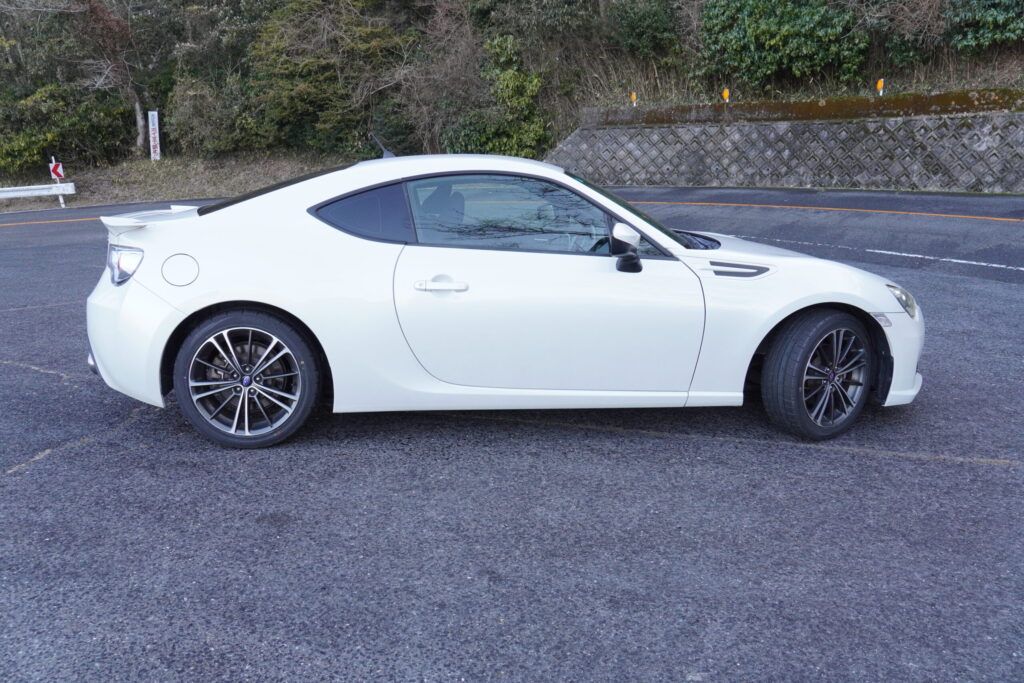
Travel is ultimately defined by choices. You can choose to sit inside a crowded train carriage, peering through scratched glass as scenic mountain passes flash past at high speed, bound strictly to rigid schedules and predetermined tourist stops.
Or you can choose freedom.
You can choose to grab the leather-wrapped steering wheel of a pure JDM sports car, fire up a responsive boxer engine, drop the clutch, and carve your own path along the dramatic coastal cliffs of Shirahama and the sacred, forested mountain passes of Wakayama. You can choose to stop at forgotten seaside lookouts, feast on freshly caught seafood at quiet harborside diners, and immerse yourself in centuries-old thermal hot springs as the ocean tide rolls in.
This is the Japan that visitors rarely get to see. This is "Secret Japan."
Your key is waiting in Osaka. At Omoren (Omoshiro Rent-a-Car) Osaka Chuo, we specialize in providing automobile enthusiasts and adventurous travelers with impeccably maintained, high-performance JDM sports cars—including the iconic Subaru BRZ and Toyota 86. Located conveniently in central Osaka, our shop serves as the ultimate starting point for your dream Japanese road trip.
Stop spectating Japan from a train window. Reserve your Subaru BRZ at Omoren Osaka Chuo today, strap in, and experience the unfiltered thrill of the open road. Your coastal Wakayama adventure begins the moment you turn the key.