
You’ve seen the iconic images: the bustling streets of Tokyo, the serene temples of Kyoto, the majestic deer of Nara Park. But what if I told you that beyond these well-trodden paths lies a Secret Japan, a Japan whispering tales of ancient empires, cradling therapeutic hot springs, and serving culinary masterpieces in settings only reachable by those who dare to venture beyond the rails?
Nara's Best Ryokans, Luxury Stays, Onsen & Cuisine - The Philosophy of Driving in Japan
For years, my life revolved around the rhythm of steel on steel, the precise timings of the Kintetsu train lines. I was a conductor, guiding countless passengers through the Kansai region, witnessing the landscape flash by through a conductor’s window. I mastered the network, the schedules, the efficient ballet of public transport. And while Japan's rail system is, without a doubt, a marvel of engineering and punctuality – a symphony of precision – it inherently dictates your journey. It channels you along specific arteries, allowing glimpses of the countryside but rarely inviting you to truly immerse yourself.
My years on the tracks showed me the beauty of Kansai, yes, but it was my personal drives, my escapes on weekends, that truly unveiled the region’s soul. It was then, behind the wheel of my own machine, that I discovered the profound, almost spiritual difference between being transported and truly exploring. The train delivers you to a station; a car, particularly a spirited one like the Toyota 86 or Subaru BRZ, delivers you to discovery.
Consider the allure of setting your own pace. No rigid schedules, no crowded platforms, no missed connections. Just you, the open road, and the exhilarating hum of a finely tuned engine. This isn't merely about convenience; it's about sovereignty over your adventure. From the vibrant energy of Osaka, our starting point, the real magic of Kansai truly blossoms when you venture off the bullet train routes. We're talking about verdant mountain passes cloaked in ancient cedars, sapphire rivers snaking through forgotten valleys, and hamlets so steeped in history they feel like living museums.
This is where the concept of "Secret Japan" takes tangible form. These are the places that are not on the typical tourist map because, frankly, public transportation simply doesn't reach them with ease or grace. Imagine stumbling upon a secluded ryokan, nestled deep within a forest, its private onsen bubbling with mineral-rich waters drawn from the earth's core, offering views of misty valleys that only you and a handful of intrepid travelers will ever witness. Or discovering a family-run soba shop, hidden down a narrow lane, serving a dish perfected over generations, using ingredients harvested from the very soil you're driving over. These are not destinations; they are revelations.
Driving in Japan, especially in a performance car like an 86 or BRZ, transforms travel into an active engagement. The responsive steering, the finely balanced chassis, the gratifying feel of a manual transmission (for those who seek it) – it all becomes an extension of your will. Every curve on a mountain road becomes a dance, every vista a reward for your personal endeavor. You don't just see the landscape; you feel it, you breathe it in, you become part of its unfolding story. This is the Japan that doesn’t flash by your window at 300 kilometers an hour; this is the Japan you intimately experience, one winding road, one breathtaking view, one unforgettable meal at a time. It’s a journey of deep connection, guided by the freedom of the wheel, far beyond what any train could ever offer. This is the true spirit of discovery, the essence of uncovering Nara’s most cherished secrets.
Nara's Best Ryokans, Luxury Stays, Onsen & Cuisine - The 2-Day Itinerary: Deep Dive

Prepare to ignite your senses and your engine. Our journey begins in the vibrant heart of Osaka, steering our trusty 86/BRZ into the lesser-known, profoundly beautiful territories of Nara Prefecture. This isn't just a drive; it's an odyssey designed to tantalize your palate, soothe your soul with restorative onsen, and introduce you to the unparalleled luxury of hidden ryokans, all while carving through some of Japan's most exhilarating roads.
Day 1: From Osaka's Pulse to Nara's Pristine Embrace
8:00 AM – Departure from Osaka: The Dawn of Adventure
The urban sprawl of Osaka still sleeps in a soft, pearlescent haze as we slip away from the city's embrace. The Toyota 86, a beacon of Japanese engineering, waits, its sleek lines hinting at the spirited journey ahead. As the ignition sparks to life, the boxer engine settles into a low, eager thrum, a mechanical heartbeat ready to synchronize with your own. The air is crisp, carrying the faintest scent of pavement and promise. Our route initially skirts the city's eastern fringes, taking us onto the Hanwa Expressway. Here, the 86 stretches its legs, the acceleration smooth and linear, a gentle prelude to the winding roads that await. The city's concrete gives way to increasingly verdant landscapes, the first hints of the mountains appearing like benevolent giants on the horizon. This initial stretch is about shedding the urban skin, allowing the thrill of the open road to wash over you, the city fading into your rearview mirror as the spirit of adventure takes hold.
9:30 AM – Asuka Village: Echoes of an Ancient Capital (Approx. 1 hour drive)
Exiting the highway, we navigate charming prefectural roads that begin to undulate, guiding us into the heart of Asuka Village. This isn't just any village; it's the cradle of Japanese civilization, an open-air museum where history isn’t displayed behind glass but etched into the very landscape. As we approach, the modern world recedes, replaced by sprawling rice paddies, gentle hills, and ancient burial mounds – kofun – rising like grassy pyramids from the earth. The 86 handles the gentle curves with poise, its low center of gravity a joy as we follow the contours of this ancient land. Park the car and take a moment to breathe in the profound quietude. The air here feels different, heavy with the weight of centuries. Walk among the megalithic stone monuments, such as the enigmatic Kameishi (Turtle Stone) or the mischievous Saruishi (Monkey Stones). These aren’t mere rocks; they are the silent sentinels of a bygone era, remnants of a time when emperors ruled from this very valley, shaping the nascent Japanese state. Imagine the grand palaces that once stood here, the political intrigues, the dawn of Buddhism in Japan. The geological formations tell their own story, too, hinting at a landscape shaped by ancient volcanic activity and erosion, now cloaked in rich, fertile soil that has sustained generations. The journey here, twisting through fields and small villages, offers a tangible connection to the past, a feeling you’d never glean from a train window.
11:30 AM – Lunch in Kashihara: A Taste of Local Nara
A short, exhilarating drive from Asuka brings us to the vicinity of Kashihara, a historical city bordering Asuka. Here, away from tourist traps, we seek out a local eatery. Imagine a traditional machiya-style building, its wooden facade weathered by time, a subtle scent of dashi wafting from within. Today's culinary delight could be Kakinoha-zushi, a Nara specialty: bite-sized sushi wrapped in persimmon leaves. The leaves, though not eaten, impart a delicate, earthy fragrance and act as a natural preservative. Each morsel of sushi, typically mackerel or salmon, is a symphony of fresh fish, perfectly seasoned rice, and the subtle aroma of nature. Pair it with a steaming bowl of Nyumen, thin wheat noodles in a clear, umami-rich broth, perhaps topped with seasonal vegetables. The flavors are clean, honest, and deeply satisfying, reflecting the agricultural bounty of Nara. The texture of the noodles, the delicate balance of the broth, the fresh snap of the vegetables – it's a taste of Nara’s soul, a quiet culinary triumph that speaks volumes of its heritage. The simplicity is deceptive; it’s an art form honed over generations. The engine of the 86, now cooled, rests outside, a silent testament to the journey that brought us to this authentic table.
1:00 PM – The Road to Yoshino: Winding Through Verdant Peaks
With appetites sated, our 86 points its nose south, embarking on the most thrilling segment of our drive towards the Yoshino region, renowned for its spiritual landscapes and, yes, its secluded luxury ryokans. This is where the 86 truly comes alive. The roads here are a driver's dream: an intricate ribbon of asphalt coiling up mountainsides, plunging into deep valleys, and offering exhilarating sequences of hairpin turns and flowing S-curves. The engine's eager growl reverberates through the cabin as you downshift for a tight corner, the precise feel of the gearbox a satisfying mechanical click. The scenery transforms dramatically. Ancient cedar and cypress forests, their deep green foliage a stark contrast to the occasional flash of a scarlet torii gate, press in on either side. Sunlight filters through the dense canopy, creating a dappled, almost magical light. The geological story of these mountains is one of ancient sedimentary rock, uplifted and sculpted by millennia of erosion, creating the dramatic peaks and valleys that provide such a thrilling playground for driving enthusiasts. We pass crystalline mountain streams, their waters rushing over smooth stones, a constant, soothing murmur beneath the exhilarating roar of the engine. The air grows cooler, imbued with the scent of damp earth and pine. Every turn reveals a new vista – a distant village clinging to a hillside, a terraced tea plantation, or perhaps a sudden, breathtaking panoramic view of the Yoshino River carving its path far below. This isn’t just a drive; it’s a communion with Japan’s untamed heart, a testament to the joy of piloting a finely tuned machine through a landscape designed for exploration.
3:30 PM – Arrival at the Luxury Ryokan in Yoshino/Uda Area: Sanctuary Found
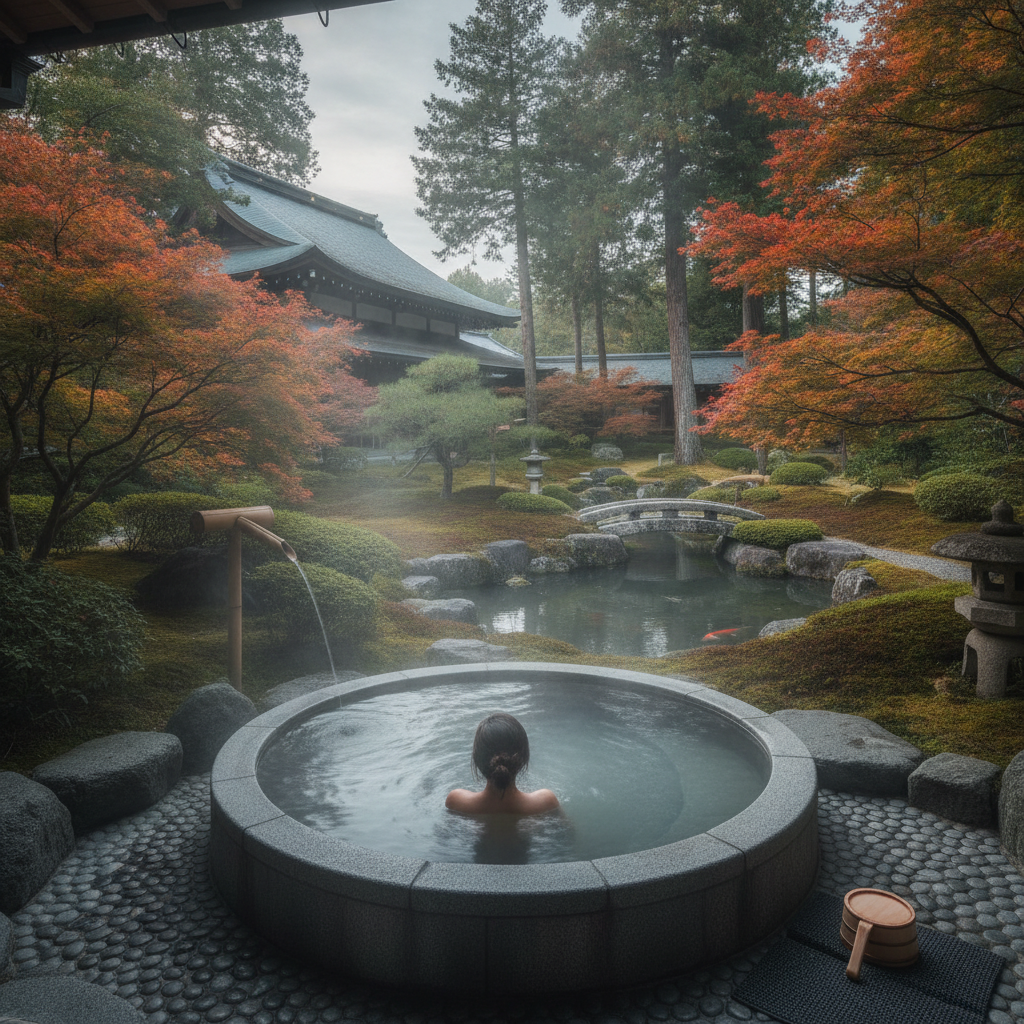
After an exhilarating drive, the 86 glides to a graceful halt at the entrance of our chosen luxury ryokan. Imagine a secluded haven, perhaps nestled on a gentle slope overlooking the Yoshino River, or tucked away amidst a grove of ancient trees in the Uda region. Its architecture seamlessly blends traditional Japanese aesthetics with understated modern comfort: dark wood, paper screens, and minimalist elegance. The quiet hum of the engine ceases, replaced by the gentle rustle of leaves and the distant murmur of a stream. You are greeted with genuine warmth, a level of hospitality that is both meticulous and unobtrusive. Your bags are whisked away, and you are led to your room – a sanctuary of peace. Slide open the shoji screens to reveal a private balcony, perhaps with your own open-air bath, offering unobstructed views of the forested mountains, their peaks often shrouded in a mystical, swirling mist. The room itself is a testament to Japanese design principles: tatami mats underfoot, futons prepared with meticulous care, and a sense of calm that instantly washes away the journey's stresses. The air is pure, carrying the clean scent of wood and nature. This isn’t just accommodation; it’s an immersion into Japanese tranquility, a space designed for contemplation and rejuvenation. The journey to reach this hidden gem, far from any train station, makes its discovery all the more profound.
4:30 PM – Onsen Immersion: Healing Waters, Tranquil Views
The true heart of the ryokan experience awaits: the onsen. Slip into a yukata, the traditional cotton robe, and make your way to the bathhouse. Some ryokans offer a choice of communal baths (segregated by gender, of course), beautifully designed with indoor and outdoor sections, while others boast private onsen attached to each room or available for private booking. The moment your skin meets the mineral-rich waters, a profound sense of relaxation descends. The water, often naturally heated deep within the earth's crust, is silken and therapeutic. Imagine submerging yourself in an outdoor bath, steam rising gently into the cool mountain air, the only sounds being the chirping of cicadas or the distant call of a bird. The colors of the surrounding nature are vibrant and alive: the deep greens of the forest, the rich browns of ancient rocks, the soft blues of the sky above. This is not just bathing; it's a ritual of purification and solace, a direct connection to the geological pulse of Japan. The mineral composition of Nara's onsen often boasts skin-softening and muscle-relaxing properties, a perfect antidote to the exhilarating drive. Let your muscles unwind, your mind clear, and your spirit soar amidst the breathtaking, unobstructed natural beauty. The sensation of the warm water, the cool air on your face, and the panoramic views create a truly unforgettable sensory symphony.
7:00 PM – Kaiseki Dinner: A Culinary Masterpiece
As evening descends, the ryokan's culinary artistry takes center stage. You are invited to dinner, either in a private dining room or a dedicated dining area, where a multi-course kaiseki meal, a true feast for the senses, is meticulously presented. This isn't just food; it's edible art, a reflection of the season, the local terroir, and the chef’s profound skill. Each dish is a delicate tableau, a miniature landscape arranged with precision and aesthetic beauty. You'll begin with a series of small, exquisitely crafted appetizers (sakizuke), perhaps delicate seasonal vegetables, fresh river fish, or a savory custard (chawanmushi). Next, a clear soup (suimono) might arrive, its broth a paragon of umami, followed by a raw fish course (otsukuri) featuring the freshest local catch, perhaps river trout or seasonal whitefish, glistening on ice. The grilled course (yakimono) could be tender Wagyu beef from a local farm, perfectly seared, its marbling melting in your mouth, or perhaps an artisanal grilled fish. The fried course (agemono) might feature tempura of wild mountain vegetables, their lightness a revelation. The rice dish (gohan), often cooked with seasonal ingredients, is served with miso soup and pickles, a comforting anchor amidst the culinary adventure. Desserts (mizumono) are typically light and seasonal, showcasing local fruits or traditional Japanese sweets. The tastes are subtle yet profound, celebrating the natural flavors of each ingredient. The colors are vibrant and harmonious, drawing from nature’s palette. The textures range from silken smooth to satisfyingly crisp. Every dish is a story, a poetic expression of Nara's bounty, paired perfectly with local sake or green tea. The gentle clinking of porcelain, the soft murmur of conversation, the profound satisfaction of each bite – it's an experience that transcends mere sustenance, cementing the day's journey into an unforgettable memory.
Day 2: Ancient Paths, Hidden Gems & The Return Journey
8:00 AM – Traditional Japanese Breakfast: A Morning Renewal
Awakening to the soft light filtering through the shoji screens, the scent of fresh tatami and mountain air invigorates. Breakfast at the ryokan is as refined as dinner, though designed to be a gentle start to the day. It’s a beautifully arranged spread, often featuring grilled fish (yakizakana), fluffy tamagoyaki (rolled omelet), miso soup, steamed rice, pickles, and perhaps local mountain vegetables. Each item is thoughtfully presented, a testament to the Japanese philosophy of valuing every meal. The flavors are clean and balanced, providing nourishing energy for the day ahead. The quiet serenity of the dining room, perhaps with views of the morning mist lifting from the valley, offers a peaceful moment of reflection on the previous day's discoveries and the adventures still to come. The subtle flavors, the warmth of the tea, the perfect balance of savory and sweet – it's a calm and contemplative start, contrasting beautifully with the spirited drive that brought you here.
9:30 AM – Morning Exploration: Discovering Yoshino's Spiritual Core (Approx. 1 hour drive)
With breakfast savored, we embark on a brief drive to explore the spiritual heart of the Yoshino region. While Yoshino is internationally famed for its cherry blossoms, its beauty and historical significance extend far beyond springtime. We navigate the 86 through the lower slopes of Mount Yoshino, its agile handling making light work of the winding ascent. Our destination could be a lesser-known, yet deeply significant, temple or shrine that offers a profound sense of history without the crowds. Imagine a visit to a sub-temple of Kinpusen-ji, perhaps one tucked away in a quiet grove, accessible only by a narrow, curving road that your 86 navigates with ease. The air here is cool and reverent, filled with the scent of ancient wood and incense. The temple grounds, often housing centuries-old structures, exude a powerful spiritual energy. Explore the moss-covered stone pathways, admire the intricate carvings, and listen to the silence broken only by the chirping of birds and the distant clang of a temple bell. This is where Shugendo, a syncretic religion combining elements of Buddhism, Shintoism, and animism, has been practiced for centuries. The geological landscape, with its steep cliffs and ancient trees, is intrinsically linked to these spiritual practices, considered sacred by generations. The perspective from these quiet sanctuaries, looking out over the layered mountains, offers a profound sense of continuity and peace. It’s a stark contrast to the bustling city, a deep dive into Japan’s enduring spiritual heritage, made possible by the freedom of your own vehicle.
12:00 PM – Lunch in Uda City: Rural Delights
Our journey continues, a scenic drive from the Yoshino mountains leading us towards Uda City, another hidden gem in Nara Prefecture. This drive offers a different character: rolling hills, open farmland interspersed with small, traditional villages, and often glimpses of rural life unchanged for decades. The 86 eats up the miles effortlessly, its engine singing a contented tune as we cruise through the gentle landscape. For lunch, we seek out a local restaurant known for its regional specialties. Uda is particularly famous for its medicinal herbs and fresh produce. Imagine a charming, rustic restaurant, perhaps a converted farmhouse, serving Botan Nabe (wild boar hot pot) in the colder months, or a refreshing set meal featuring local vegetables and perhaps chicken from a nearby farm. The wild boar, often hunted locally, is lean yet incredibly flavorful, simmered in a rich miso-based broth with an abundance of fresh vegetables. The taste is robust, hearty, and deeply comforting, a true reflection of the mountainous terrain and the connection to nature. In warmer months, lighter fare showcasing seasonal vegetables and fresh tofu might be on offer. The vibrant colors of the freshly prepared ingredients, the savory aromas, and the satisfying textures of country cooking provide another authentic taste of Nara, a world away from mass-produced fare. This is food born of the land, honest and delicious, enjoyed in a setting that epitomizes rural Japanese charm.
2:00 PM – Scenic Drive Back to Osaka: A Final Flourish
With memories and stomachs full, it’s time to begin our return journey towards Osaka, but not without one last scenic flourish. Instead of retracing our steps, we choose an alternate route, perhaps traversing a different mountain pass or following a meandering river valley that leads us back towards the urban landscape. The 86, having proven its mettle on winding roads and expressways alike, continues to be a superb companion. This return drive is a chance to reflect on the journey, to savor the changing landscapes as they transition from pristine wilderness to agricultural plains, and eventually, to the distant haze of the city. The sun, now lower in the sky, casts long shadows across the fields, painting the scene in warm, golden hues. The engine's steady drone becomes a comforting soundtrack as you navigate the final curves, the precise steering and responsive brakes instilling confidence. We might choose a route that offers expansive views of the Kansai plain as we descend from the higher elevations, a stunning panoramic tableau stretching out to the horizon. The journey back is not merely a means to an end; it is an integral part of the adventure, allowing for a contemplative farewell to the serene landscapes we've explored. Each curve, each change in elevation, offers a slightly different perspective, solidifying the mental map of our adventure. This is where the machine truly feels like an extension of yourself, a seamless blend of engineering and exploration.
4:30 PM – Michi-no-Eki Stop: Souvenirs and Local Flavors
As we get closer to Osaka, but before fully re-entering the urban grind, we make a quintessential Japanese road trip stop: a Michi-no-Eki, or "Roadside Station." These aren't your typical highway rest stops. They are vibrant hubs of local culture and commerce. Pulling into the busy car park, the 86 fits right in amongst a diverse array of vehicles. Inside, the Michi-no-Eki is a hive of activity. The air is filled with the mingled scents of freshly baked goods, regional produce, and hot local snacks. Explore the aisles brimming with unique souvenirs, artisanal crafts, and agricultural products directly from nearby farms. You might find jars of homemade pickles, local sake, specialty teas, or unique confectionery that you won’t find anywhere else. Perhaps indulge in a final regional snack – a freshly grilled dango (sweet mochi dumplings) or a creamy, locally sourced soft-serve ice cream. It's a final, delightful immersion into the local flavors and craftsmanship of Nara, a chance to gather tangible memories of your journey. The lively chatter, the vibrant displays, the palpable sense of community – it’s a microcosm of the regional identity we've explored, a perfect transitional stop before returning to the city's pulse.
5:30 PM – Arrival in Osaka: Journey Complete
As dusk begins to settle, painting the sky in hues of orange and purple, our 86 gently navigates the familiar approaches to Osaka. The city lights begin to twinkle, a vibrant counterpoint to the natural grandeur we’ve just experienced. The transition from serene mountain roads to bustling city streets is smooth, a testament to both your driving skill and the versatile nature of the 86. The engine, having carried us through ancient lands and exhilarating passes, now purrs contentedly. You return not just with souvenirs, but with a trove of unforgettable memories: the crisp mountain air, the therapeutic embrace of the onsen, the exquisite artistry of kaiseki cuisine, the thrill of carving corners, and the profound connection to a Japan rarely seen. The journey has been more than just a trip; it has been a profound exploration, a sensory indulgence, and a testament to the unparalleled freedom that only driving can offer. The two days have revealed Nara’s hidden depths, proving that the most luxurious and authentic experiences often lie off the beaten path, waiting for those who choose their own adventure.
Nara's Best Ryokans, Luxury Stays, Onsen & Cuisine - Expert Advice & Cultural Nuances
Embarking on a Japanese road trip isn't just about the destination; it's about embracing the journey with an understanding of its unique cultural tapestry. As a former conductor who transitioned to a passionate driver and now runs a JDM rental car service, I've seen both sides, and I can tell you, the road offers nuances you won't find anywhere else.
Understanding the Michi-no-Eki: More Than Just a Pit Stop
We touched upon Michi-no-Eki, or "Roadside Stations," earlier, but their cultural significance warrants a deeper dive. These aren't merely places to fill up on gas or grab a generic snack; they are vibrant community hubs, each reflecting the unique character and produce of its region. Think of them as localized cultural showcases. As you pull off the main road and into a Michi-no-Eki, the air immediately shifts. You’re enveloped by the aromas of freshly prepared local delicacies – perhaps grilled sweet potatoes in autumn, or freshly picked strawberries in spring. The stands overflow with a kaleidoscopic array of seasonal fruits and vegetables, often picked that very morning by local farmers. You’ll find exquisite artisanal crafts, from pottery to textiles, created by local artisans who take immense pride in their heritage. Many Michi-no-Eki also feature small museums detailing local history, onsen facilities, or even observation decks offering panoramic views. They are a celebration of local pride and an essential part of the Japanese road trip experience, offering an authentic glimpse into regional Japan that train travel simply bypasses. Engage with the vendors, sample the unique regional treats, and soak in the vibrant, welcoming atmosphere. It's a pause in your journey that enriches it profoundly, connecting you directly to the heart of the community.
Unearthing Hidden Gems: The Art of Serendipitous Discovery
The true magic of driving in Japan lies in the unexpected detours, the spontaneous turns that lead to unforeseen wonders. Public transport adherence dictates a path; the car offers the freedom to deviate. How do you find these hidden gems? Often, it’s about allowing for serendipity. Keep your eyes open for small, weathered signposts in Japanese that might indicate a local shrine, a waterfall, or a historic site not listed in any guidebook. Follow narrow country lanes that seem to beckon you into a deeper connection with the landscape. Chat with locals at a Michi-no-Eki or a small town café – even a few words of Japanese, or a simple gesture, can lead to invaluable recommendations for a hidden eatery or a particularly scenic viewpoint. The 86, with its nimble handling, is perfect for these impromptu explorations, allowing you to confidently navigate narrow paths that would intimidate larger vehicles. These aren't destinations you plan for; they are discoveries earned through curiosity and the freedom of the wheel. The joy isn't just in the finding, but in the feeling of being an authentic explorer, stumbling upon a slice of Japan untouched by the masses. These are the moments that transform a trip into an unforgettable adventure, moments where you truly feel you've unearthed a secret.
Navigating with Respect: Essential Japanese Driving Etiquette
Driving in Japan is generally a safe and pleasant experience, thanks to well-maintained roads and a culture of respect and precision. However, a few cultural nuances are good to keep in mind. Firstly, road signs are predominantly in Japanese, but major routes and points of interest often have English translations. Nonetheless, it’s wise to rely on a good GPS system (many rental cars come with English options, or use Google Maps). Speed limits are strictly enforced, especially in urban areas and tunnels. While local drivers might sometimes exceed them slightly on open highways, adherence is paramount, not just for safety but for showing respect for local laws. You'll notice very little honking; Japanese drivers use their horns sparingly, usually only for emergencies or to gently signal a blind turn on a mountain road. Courtesy is key: if someone lets you merge, a brief flash of your hazard lights is a common way to say "thank you." When driving through small villages, be particularly mindful of pedestrians and cyclists, and always yield. Parking can be tight, so practice your parallel parking! These aren't restrictive rules; they are facets of a culture that values harmony and consideration, contributing to an overall smooth and respectful driving environment. Embracing these nuances elevates your experience, making you not just a driver, but a considerate guest on Japan’s roads.
Nara's Best Ryokans, Luxury Stays, Onsen & Cuisine - Detailed Logistics & Pre-Trip Tips
To truly maximize your adventure into Secret Japan, understanding the practicalities of driving is key. By 2026, Japan’s excellent infrastructure continues to evolve, making road trips smoother than ever, especially for those in tune with their vehicle, like the 86/BRZ.
Traffic Flow and Road Conditions (circa 2026)
Japan’s roads are renowned for their impeccable maintenance, a testament to the nation’s infrastructure pride. Highways are generally multi-lane and smooth, while prefectural and local roads, even in remote mountain areas, are typically well-paved, though they can narrow significantly in villages or on older mountain passes. Traffic in major cities like Osaka can be congested during peak morning and evening rush hours (7 AM-9 AM, 5 PM-7 PM), but our itinerary is designed to avoid these by departing early and returning after the worst of the evening rush. Once outside the urban centers, traffic becomes remarkably light, especially on the scenic routes we’ve highlighted. Be aware of occasional construction zones, which are always clearly marked and managed efficiently. For mountain passes, especially after heavy rain, always check local road conditions via a navigation system or local news, though closures are rare and well-communicated. The 86/BRZ's compact size and agile handling are perfectly suited for navigating both the bustling city exits and the tight, winding country lanes.
The ETC Card: Your Key to Seamless Toll Roads
Navigating Japan's extensive network of toll roads is made effortlessly smooth with an ETC (Electronic Toll Collection) card. This is an absolute must-have for any serious road tripper. Instead of fumbling for change or waiting in line at toll booths, the ETC system allows you to pass through dedicated lanes wirelessly. Your rental 86/BRZ will likely come equipped with an ETC card reader. All you need to do is ensure you rent the ETC card along with your vehicle (it's usually a small, one-time rental fee). As you approach an ETC gate, simply slow down, and the system automatically deducts the toll fee. The gates are clearly marked in green. Not only does it save time, but it also often offers discounts on tolls, making your journey more economical. It transforms what could be a minor hassle into a seamless, high-tech experience, keeping the flow of your drive uninterrupted and enjoyable, allowing you to focus on the road ahead and the stunning scenery.
Fueling Up: The Art of the Japanese Gas Station
Japanese gas stations are a blend of efficiency and unique cultural quirks. You'll encounter two main types: self-service (セルフ or "self") and full-service (フルサービス or "full service"). At full-service stations, attendants will greet you, direct you to a pump, and even ask how much gas you need. The magic phrase you’ll want to know for a full tank is "Mantan" (満タン, pronounced "MAHN-tahn"). They’ll also often offer to clean your windows or check your tires – a delightful touch of Japanese hospitality. For fuel types, "Regular" (レギュラー – Regyuraa) is standard, while "High-Octane" (ハイオク – Haioku) is available for performance cars like the 86/BRZ, which often performs best on higher octane. Payments can be made with cash or credit card. At self-service stations, the process is similar to Western countries, but the touch screens might require a basic understanding of Japanese or reliance on visual cues. Don't be shy to ask for help; even at self-service stations, attendants are usually on hand to assist. The overall experience is clean, safe, and surprisingly polite, often ending with a cheerful "Arigato gozaimasu!" (Thank you very much!).
Parking with Precision: Mastering the Compact Space
Japanese parking spaces, particularly in urban areas or at popular attractions, can be notoriously compact. This is where the nimble dimensions of the 86/BRZ become a distinct advantage. You’ll find a variety of parking options: multi-story car parks with automated systems (some even stack cars vertically!), coin-operated parking lots (コインパーキング – koin paakingu), and designated spaces at attractions. Always pay close attention to parking signs; illegal parking is strictly enforced and can result in significant fines. Many coin-operated lots have a barrier that rises after you park, which lowers only after payment. When maneuvering into tight spots, the 86’s excellent visibility and precise steering make it surprisingly easy. It becomes a mini-challenge, a test of skill that adds another layer of engagement to your Japanese driving adventure. Embrace the precision required; it’s part of the unique fun of driving in this country.
The Thrill of JDM (MT Car) Driving: The 86/BRZ Experience
For the true enthusiast, choosing a JDM car, especially one with a manual transmission (MT), transforms the entire journey. The 86/BRZ isn't just a car; it's a driver’s companion, designed for engagement. The moment your hand closes around the smooth, precise gear lever, and your foot finds the perfectly weighted clutch pedal, you understand. This isn't appliance driving; this is a conversation between driver and machine. On Japan's winding mountain roads, the 86/BRZ truly shines. Each downshift into a corner is a ballet of footwork and hand-eye coordination, the engine's revs matching perfectly as you exit with a surge of power. The direct, communicative steering tells you exactly what the road is doing beneath you, allowing for incredibly precise placement through a series of S-curves. The lightweight, balanced chassis provides an unparalleled sense of connection to the asphalt, making every turn a joy. It heightens every sensation: the engine's eager growl as you accelerate, the subtle feedback through the steering wheel, the exhilarating feeling of being in complete control. Driving an 86/BRZ with a manual transmission through Japan's stunning landscapes isn't just about getting from A to B; it's about the pure, unadulterated joy of driving, of mastering the machine, and experiencing the road in its most authentic form. It amplifies every aspect of your adventure, turning a simple journey into an unforgettable performance.
Nara's Best Ryokans, Luxury Stays, Onsen & Cuisine - Comprehensive FAQ
Planning an international road trip always comes with questions. Here are answers to some of the most common inquiries to ensure your Nara driving adventure is seamless and stress-free.
Q: What kind of driver's license do I need to drive in Japan?
A: To legally drive in Japan, you will need an International Driving Permit (IDP) based on the 1949 Geneva Convention. This IDP must be issued by an authorized organization in your home country (e.g., AAA in the USA, AA in the UK) and must be valid for one year from its issue date. You must carry your IDP, your national driver's license, and your passport at all times while driving. It's crucial that your IDP is based on the 1949 Convention, as other conventions are not recognized in Japan. For citizens of certain countries (like Germany, Switzerland, France, Belgium, and Taiwan), a Japanese translation of your national license, along with your original national license and passport, is required instead of an IDP. Always ensure you have all three necessary documents (IDP/translation, national license, and passport) with you.
Q: What about car insurance?
A: When renting a car in Japan, basic compulsory insurance is typically included in your rental fee. This covers third-party liability for bodily injury and property damage, as well as passenger injury. However, I highly recommend opting for additional, optional insurance coverage, often referred to as a Collision Damage Waiver (CDW) or "exempting compensation system" (免責補償制度 - menseki hosho seido). This reduces or eliminates your financial liability for damages to the rental car itself in case of an accident. Some rental companies also offer "Non-Operation Charge (NOC) Insurance" which covers the lost revenue for the rental company if the car is out of service due to an accident. While Japan's roads are safe, having comprehensive coverage provides invaluable peace of mind, allowing you to fully enjoy your adventure without worrying about unexpected costs.
Q: I'm nervous about driving a manual transmission (MT) car. Is it really worth it?
A: Absolutely! While it's true that driving an MT car requires more active engagement than an automatic, the reward, especially on Japan’s fantastic driving roads, is immense. The Toyota 86/Subaru BRZ manual transmission is renowned for its smooth, precise shifts and forgiving clutch, making it an excellent choice even if you haven't driven an MT in a while. If you have some manual experience but feel a bit rusty, consider practicing in your home country before your trip. The heightened connection to the car, the exhilarating feeling of perfectly executing a downshift into a corner, and the sheer satisfaction of mastering the machine will elevate your road trip experience beyond anything an automatic could offer. It transforms the journey from passive transportation to an active, joyful art form. Trust me, the thrill is worth it.
Q: What are winter road conditions like in Nara and the surrounding areas?
A: While major cities like Osaka and central Nara generally experience mild winters with infrequent snow, the mountainous regions of Nara, especially areas like Yoshino, can receive significant snowfall from late December through February. If you plan to travel during these months, it's crucial to check local weather forecasts and road conditions daily. Rental cars can be equipped with snow tires (スタッドレスタイヤ – sutaddoresu taiya) or snow chains (タイヤチェーン – taiya cheen) upon request, which are essential for driving on snowy or icy mountain roads. Always inform your rental company of your winter travel plans so they can ensure your vehicle is appropriately equipped for safety. Outside of peak winter in the high mountains, you can generally expect clear, well-maintained roads. However, always be prepared for sudden changes in mountain weather.
Q: How do I handle navigation in Japan?
A: Modern navigation in Japan is highly efficient. Most rental cars come equipped with built-in GPS systems, many of which offer English language options. These systems are incredibly accurate and often provide real-time traffic updates. Additionally, using your smartphone with Google Maps or other navigation apps is highly effective. Ensure you have a reliable data plan or a portable Wi-Fi device (often available for rent) to utilize these services fully. It's helpful to enter destination phone numbers or map codes (available for many points of interest) into the car's navigation system for pinpoint accuracy. With these tools, you'll find navigating Japan's roads, even through complex intersections or winding country paths, remarkably straightforward and stress-free.
Nara's Best Ryokans, Luxury Stays, Onsen & Cuisine - The Final Call: Your JDM Adventure Awaits
You’ve journeyed with me through ancient landscapes, felt the exhilaration of winding mountain roads in a performance 86/BRZ, tasted the exquisite artistry of kaiseki cuisine, and submerged yourself in the healing waters of hidden onsen. You’ve seen how to escape the well-worn tourist paths and truly uncover the "Secret Japan" – a realm of unparalleled beauty, profound history, and sensory indulgence that only the freedom of the road can unlock.
This isn't just about seeing Japan; it's about experiencing it. It's about forging your own path, dictating your own destiny, and creating memories that resonate far beyond a fleeting photograph. The hum of the engine, the scent of the forest, the taste of a meal prepared with generations of love, the therapeutic warmth of an onsen under a starlit sky – these are the indelible marks of a truly authentic Japanese adventure.
As a former Kintetsu conductor, I understood the efficiency of the rails. But as a JDM enthusiast and long-time explorer of Japan by car, I know that the true heart of this nation reveals itself to those who choose the open road. If you’re ready to trade the predictable for the profound, the crowded for the captivating, and the ordinary for the extraordinary, then your chariot awaits.
Your journey into Secret Japan, driving a meticulously maintained, high-performance JDM car, starts at Omoshiro Rent-a-Car Osaka Chuo branch. We don't just rent cars; we provide the keys to an unforgettable adventure. With a fleet of cherished JDM vehicles, including the spirited 86 and BRZ, many available in manual transmission, we cater to those who seek more than just transport. We offer the precision, the passion, and the unparalleled thrill that only a true driver's car can deliver. Come and experience the difference that our deep knowledge of Japanese roads and our genuine love for JDM culture can make. Don't just visit Japan; drive Japan. Your ultimate road trip, curated with passion and expertise, is just a booking away.
