
Nara Traditional Crafts and Brush Making: The Ultimate Recommended Drive Course through Ancient Japan
For over a decade, my life was measured by the rhythmic clicking of wheels on steel rails. As a conductor for the Kintetsu Railway, I watched the Japanese landscape blur past my window in a series of scheduled stops and rigid timetables. I knew the Kansai region better than anyone, but I was a prisoner of the tracks. It wasn't until I traded my conductor’s hat for the steering wheel of a high-revving JDM (Japanese Domestic Market) machine that I truly discovered the soul of Nara. Today, I operate a specialized car rental service in the heart of Osaka, and I am here to tell you that to see the real Nara—the one where history isn't just a museum exhibit but a living, breathing craft—you must leave the station behind. You need a car that communicates with the asphalt, and you need the freedom to follow a winding road into the mist-covered mountains. Welcome to the definitive guide to a Nara Traditional Crafts and Brush Making recommended drive course.
The Philosophy of Driving in Japan: Why the Road Beats the Rail
Public transportation in Japan is a marvel of engineering, a testament to punctuality that I once took great pride in. However, for the traveler seeking the essence of "Secret Japan," the train is a filter that removes the most vital parts of the journey. When you are on a train, you are a passenger in someone else's story. When you are behind the wheel of a Toyota 86, dancing through the elevation changes of Nara’s hinterlands, you are the protagonist.
Nara is often overshadowed by its neighbor, Kyoto. While tourists flock to the Golden Pavilion, the true seeker of Japanese culture heads south to the cradle of Japanese civilization. Nara was the terminal of the Silk Road, the place where writing, religion, and art first took root in the archipelago. But many of these treasures are tucked away in valleys that the Kintetsu lines simply don't reach. To reach the master brush makers (Fude-shi) and the hidden workshops of traditional craftsmen, you need a vehicle with a low center of gravity and a soul that matches the ancient surroundings.
Driving in Nara is a sensory overload. It is the smell of aged cedar (Yoshino Sugi) in the air, the sight of morning fog clinging to the thatched roofs of village houses, and the tactile feedback of a manual gearbox as you downshift into a hairpin turn. This isn't just a trip; it's a pilgrimage of craft and speed. We aren't just going to look at Nara; we are going to feel it through the steering rack and the tip of a calligraphy brush.

The 2-Day Deep Dive: A Symphony of Ink and Asphalt
Day 1: The Birth of the Written Word
08:00 AM – Departure from Osaka
Our journey begins in the neon-soaked streets of Osaka. You slide into the bucket seat of a Toyota 86. The cabin is snug, designed for the driver. You press the start button, and the 2.0-liter boxer engine barks to life. This isn't a soulless commuter car; it’s a precision instrument. We head east, leaving the skyscrapers behind as we aim for the Ikoma mountains. Instead of the mundane expressway, we take the Hanshin Expressway Route 13, feeling the car’s balance as we transition onto the winding mountain passes that separate the urban sprawl from the ancient capital.
09:30 AM – Entering Nara: The City of Deer and Ink
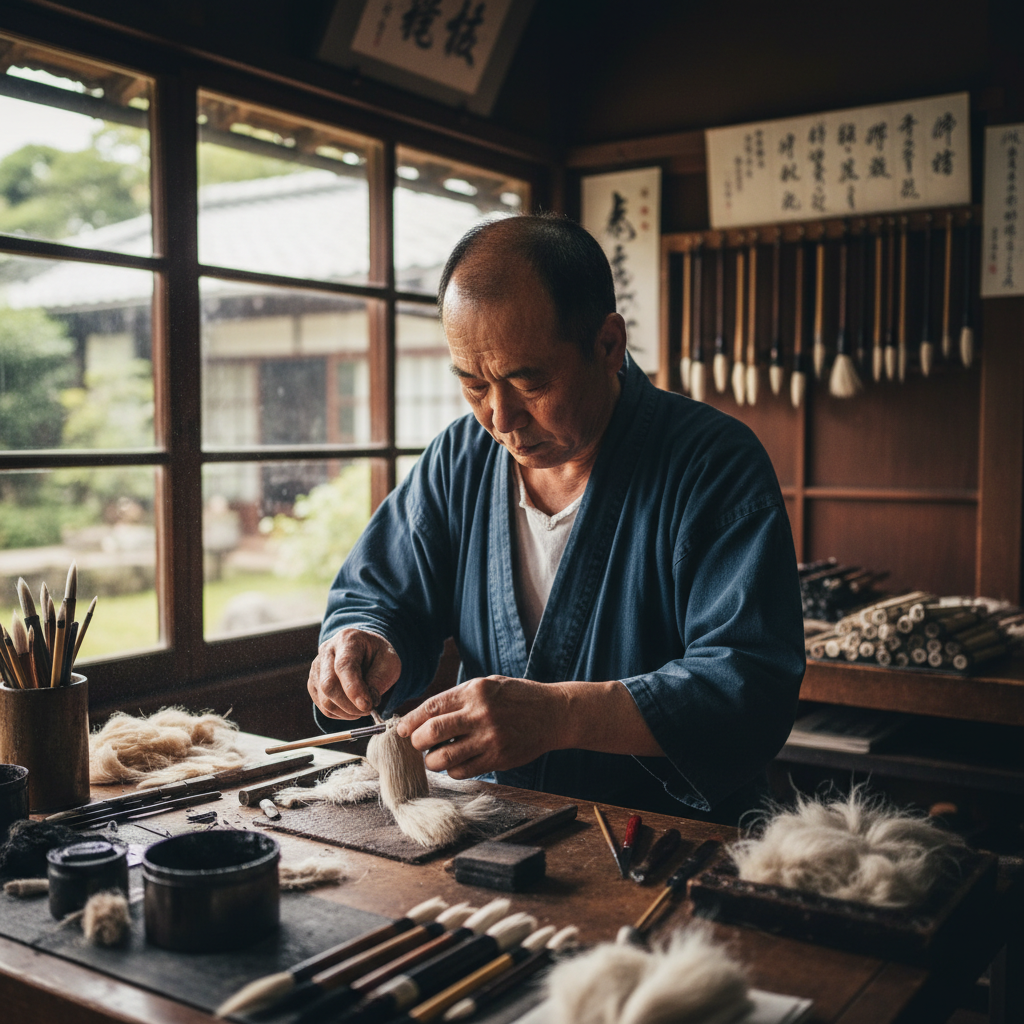
As we descend into Nara City, the atmosphere shifts. The air feels heavier with history. Our first stop is a small, unassuming workshop in the Naramachi district. This is the heart of Nara Fude (Nara Brush) making. For over 1,300 years, Nara has been the premier producer of calligraphy brushes in Japan. The craft began when the monk Kukai (Kobo Daishi) returned from Tang China with the secrets of brush making, which he then passed on to the craftsmen of Nara.
10:30 AM – The Master’s Touch: Nara Fude Experience
Inside the workshop, the world slows down. You meet a master who has spent fifty years perfecting a single skill: *Nerimaze*. This is the process of mixing different types of animal hair—goat, horse, deer, even raccoon dog—to create a brush that holds the perfect amount of ink and provides the exact tension required for high-level calligraphy. You don't just watch; you sit. Under the master’s guidance, you try your hand at selecting the hairs and combing them. The tactile nature of the work is incredible. It’s about microns of difference. You begin to see the parallel between the craftsman’s precision and the mechanical harmony of the 86 you drove to get here.
01:00 PM – Lunch: The Taste of Time
After the delicate work of brush making, your hunger will be significant. We drive to a local spot known only to residents, specializing in *Chayu* (tea gruel) and *Miwa Somen*. These are the staples of Nara. The Somen noodles are thinner than a strand of hair, yet they possess a resilient snap. It is a reminder that in Nara, even food is a traditional craft requiring immense patience and climate-specific techniques.
02:30 PM – The Nara-Okuyama Driveway: A JDM Paradise
Now, we let the 86 stretch its legs. The Nara-Okuyama Driveway is a private toll road that winds through the primeval forests of Mount Kasuga. This is a UNESCO World Heritage site, and driving through it is like traveling back to the Nara period. The road is narrow, draped in greenery, and features sections that are unpaved but well-maintained, allowing you to feel every vibration through the steering wheel. The Toyota 86 shines here. Its lightweight chassis and rear-wheel-drive layout make every corner an opportunity to practice the art of the perfect line. We stop at the summit of Mount Wakakusa to look over the entire city, the Great Buddha Hall of Todai-ji appearing like a guardian from the past.
05:00 PM – The Ink Stone Connection
No brush is complete without ink (Sumi). We head to a traditional Sumi workshop. Here, soot from burnt pine or vegetable oil is mixed with animal glue and aromatics, then pressed into molds and dried for years. The scent of a traditional ink workshop is intoxicating—earthy, woody, and ancient. You realize that a single stick of ink can take five years to fully mature. As a former train conductor, I appreciate this patience; Japanese rail safety is built on the same foundation of meticulous, long-term discipline.
07:00 PM – Ryokan Stay: An Evening in the Mountains
We leave the city lights behind and drive south toward the mountain village of Totsukawa or the Uda area. The road becomes a series of high-speed sweepers and tight technical sections. The 86’s headlights cut through the gathering darkness, illuminating the moss-covered stone walls that line the path. We check into a traditional Ryokan. The sound of a nearby stream and the smell of tatami mats replace the hum of the engine. Dinner is *Kaiseki*—a parade of seasonal dishes that mirror the landscape outside.
Day 2: The Deep Nara Circuit
09:00 AM – The Morning Mist Run
Day two begins early. The mountains are often shrouded in a thick, ethereal mist. We fire up the 86. The cold start roar echoes off the valley walls. Our destination is the deeper recesses of Nara, where woodcarvers and lacquerware artists reside. The drive takes us along Route 169, a road that hugs the Yoshino River. This is one of the most scenic drives in all of Japan. The water is a brilliant turquoise, and the road is a masterclass in civil engineering, featuring tunnels carved through solid rock and bridges that span massive gorges.
11:00 AM – The Cedar Artisans of Yoshino
In Yoshino, we visit a woodworker who specializes in *Yoshino Sugi* (Japanese Cedar). These trees are planted with extreme density, forcing them to grow straight and tall without many knots. The result is a wood so fine and aromatic it was used for the barrels of the finest sake in the Edo period. Watching a craftsman shave a piece of cedar into a translucent ribbon is a meditative experience. You start to understand the "Philosophy of Shokunin" (craftsman)—the idea that the object you create contains a piece of your soul.
01:00 PM – The Hidden Winding Roads
We take a detour onto the local prefectural roads. These are the roads that don't appear in the English guidebooks. They are the playground of JDM enthusiasts. The 86 is in its element. We are talking about third-gear sweepers that follow the natural contour of the mountains. There are no guardrails in some sections, just the raw connection between you, the car, and the precipice. The engine sings at 7,000 RPM, the boxer thrum vibrating in your chest. This is why we drive. This is the freedom the train could never provide.
03:00 PM – The Final Craft: Akahada-yaki Pottery
Before heading back, we stop at an Akahada-yaki pottery kiln. This ceramic style is known for its warm, milky glaze and hand-painted scenes of Nara life. You can see the brushstrokes—perhaps made with the very Nara Fude we studied yesterday—depicting the deer of the park or the temples of the valley. It brings the entire journey full circle.
05:00 PM – The Return Journey
As the sun begins to set, casting a golden hue over the rice paddies, we make our way back toward Osaka. The return trip on the Nishi-Meihan Expressway allows for a more relaxed pace. You reflect on the sheer density of culture you've experienced. In just 48 hours, you've touched the tools of 8th-century scholars and felt the precision of 21st-century Japanese engineering.
Expert Advice & Cultural Nuances: Mastering the Nara Road
Driving in rural Nara is an art form in itself. Here are some professional tips to ensure your journey is as smooth as a master’s brushstroke.
1. The Magic of Michi-no-Eki
Japan’s "Roadside Stations" are not your typical gas stations. In Nara, these are cultural hubs. Stop at *Michi-no-Eki Yoshinoji-Ooyodo-i-Center* for local persimmons (Kaki) and specialty crafts you won't find in Osaka. These stations often have the freshest, cheapest local food and provide a glimpse into the seasonal produce of the region. They are also essential for clean restrooms and a quick stretch of the legs.
2. Respect the "Narrowness"
In Nara’s mountain villages, the roads can suddenly narrow to a single lane. This is where the compact dimensions of the Toyota 86 are a godsend. If you encounter an oncoming car, the local etiquette is for the person closest to a turnout to pull over. A small bow or a flash of hazard lights as a "thank you" goes a long way. This is the "Omotenashi" of the road.
3. Hidden Eateries
Look for the sign "Ayu" (Sweetfish). In the summer and autumn, riverside stalls grill these fish over charcoal with nothing but a sprinkle of salt. It is the quintessential taste of the Nara mountains. Don't look for a website; look for the smoke rising from a roadside hut.
Detailed Logistics & Pre-Trip Tips for 2026
Planning a trip to Japan in 2026 requires an understanding of the latest systems. While the country is becoming more digital, the soul of driving remains analog and visceral.
The ETC Card: Your Golden Ticket
Electronic Toll Collection (ETC) is mandatory for a stress-free trip. Most expressways around Osaka and Nara are cashless. When you rent your 86, ensure an ETC card is included. The tolls are automatically recorded, and you pay at the end. This allows you to glide through toll booths without stopping, maintaining the rhythm of your drive.
The Gas Station Ritual
When you pull into a "Full Service" station (which I highly recommend for the experience), the attendants will greet you with a synchronized shout. Simply say, "Regular Mantan" (Regular, full tank). They will often clean your windows and mirrors with a speed that would put a Formula 1 pit crew to shame. In Japan, service is a craft, much like brush making.
Parking with Precision
In Nara City, parking is tight. Always look for the "Times" or "Repark" signs. Use your reverse camera, but trust your mirrors—JDM cars are built for precision parking. Remember, the 86 is a low car; be mindful of steep driveway entrances to avoid scraping the front lip.
The JDM Experience: Why a Manual 86?
Driving a manual Toyota 86 through Nara isn't just about getting from A to B. It’s about the mechanical symphony. The short-throw shifter, the perfectly placed pedals for heel-and-toe downshifting, and the way the chassis rotates in a corner—this is the pinnacle of driver engagement. In an era of electric, self-driving appliances, this is your chance to reclaim the joy of the machine.
Comprehensive FAQ: Preparing for Your Nara Adventure
Q: What do I need regarding a driver's license?
A: To drive in Japan, you must possess a valid International Driving Permit (IDP) issued under the 1949 Geneva Convention, along with your original home-country license and your passport. Residents of certain countries (like Germany, Switzerland, or France) require an official Japanese translation of their license instead of an IDP. Ensure you have these before leaving your home country; you cannot obtain an IDP once you are inside Japan.
Q: I’m nervous about driving a manual car on the other side of the road. Is it difficult?
A: Driving on the left becomes intuitive much faster than you’d expect. The controls in a right-hand-drive 86 are mirrored, meaning the gear stick is on your left, but the pedal layout (Clutch-Brake-Gas) remains the same. The 86 has a very forgiving clutch and precise gearbox, making it one of the easiest manual cars to master.
Q: What about insurance?
A: Always opt for the maximum coverage (CDW and NOC waiver). Japanese repair costs can be high, especially for specialty cars. Complete peace of mind allows you to focus on the curves of the road and the beauty of the crafts.
Q: Is Nara drivable in winter?
A: The city is fine, but the southern mountains (like Totsukawa) can see significant snow in January and February. If you are traveling in winter, we provide cars equipped with studless winter tires to ensure safety on the mountain passes.
The Final Call: Your Journey Begins in Osaka
The tracks of the Kintetsu line will always be there, carrying thousands of people on the same predictable path. But you—you are a seeker of the authentic. You want the smell of the ink, the texture of the brush, and the roar of a boxer engine. You want to see the Nara that exists between the stations.
At **Omoshiro Rent-a-car Osaka Chuo**, we don't just rent cars; we provide the keys to a Japan that most tourists never see. As a former train conductor, I know every corner of this region, and I have hand-selected our fleet of JDM icons—including the legendary Toyota 86 and Subaru BRZ—to ensure your Nara road trip is nothing short of transformative. Our staff speaks the language of both cars and hospitality. We are located in the heart of Osaka, ready to help you map out your route to the hidden workshops and winding peaks of Nara.
Don't settle for a window seat. Take the wheel. Your Nara traditional craft adventure is waiting, and the road is calling. Book your JDM machine today at Omoshiro Rent-a-car Osaka Chuo and discover the Japan you’ve always dreamed of.