
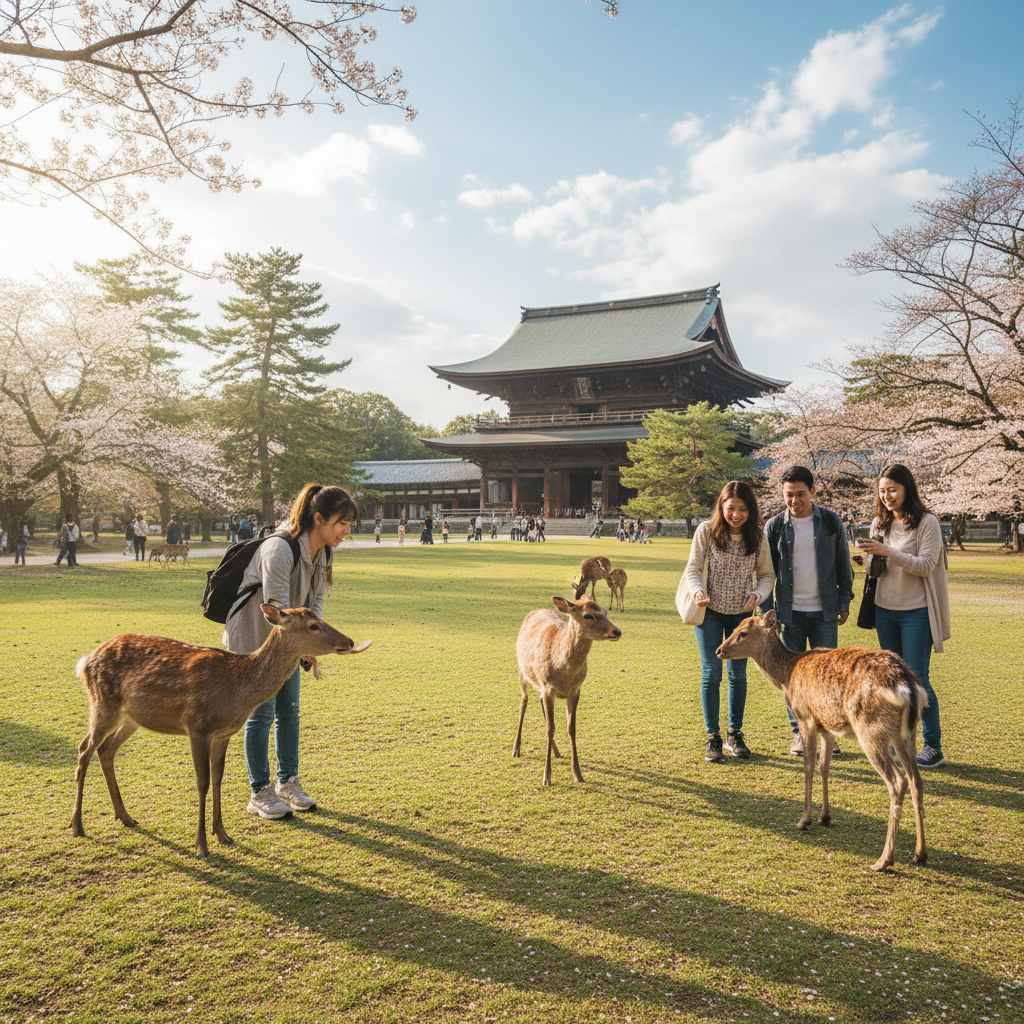
Nara Sightseeing, Todai-ji, Great Buddha, Deer, Nara Park – The Philosophy of Driving in Japan
For years, my world revolved around the rhythmic clickety-clack of the tracks, the precise timing of arrivals and departures, and the comforting predictability of the railway. As a former Kintetsu train conductor, I witnessed the stunning landscapes of Kansai flash by from the confines of a steel carriage, a privileged observer of Japan's intricate tapestry. And while the Shinkansen and local lines are masterpieces of efficiency and engineering, offering unparalleled punctuality, there’s a profound truth I’ve come to embrace: to truly know Japan, to peel back its layers and discover its beating heart, you must drive it.
The train, for all its marvels, adheres to a script. It follows predefined routes, stopping at designated stations, serving the well-trodden paths of tourism. It’s an efficient conduit to popular destinations, but it’s a spectator sport. Driving, on the other hand, is an immersive symphony. It’s about the freedom to deviate, to chase a fleeting glimpse of a distant pagoda on a misty hillside, to follow an unmarked turn that promises an adventure, to stumble upon a local festival unknown to any tourist brochure. From Osaka, the vibrant heart of Kansai, the railway lines fan out like arteries, but the roads? They’re the capillaries, reaching every hidden corner, every breathtaking vista, every authentic encounter that constitutes what I call “Secret Japan.”
This isn't merely about getting from point A to point B. It’s about the journey itself – the winding mountain passes, the coastal roads kissed by the Pacific breeze, the quiet village lanes where time seems to slow. It's about feeling the road through the steering wheel, the engine note rising and falling with your throttle input, the precise engagement of a manual gearbox, connecting you to the very pavement beneath the tires. Public transport, with its fixed schedules and crowded carriages, can never deliver this visceral connection, this profound sense of discovery. It can take you to the doorstep of a grand temple, but it won’t take you through the exhilarating climb of the mountain road that offers its most spectacular approach. It won't lead you to that quaint, family-run soba shop nestled in a valley, its existence known only to locals and those who dare to wander.
To pilot a finely tuned Japanese Domestic Market (JDM) machine like the nimble 86 or the spirited BRZ through these landscapes is to experience Japan in its purest form. It’s an act of communion between man, machine, and country. You are not a passive observer; you are an active participant, charting your own course, forging your own narrative. The rumble of the exhaust, the responsiveness of the chassis, the tactile feedback of a perfect shift – these are the elements that transform a simple trip into an unforgettable odyssey. Forget the crowds, bypass the pre-packaged tours. Get behind the wheel, feel the pulse of the road, and unlock the authentic, untamed spirit of Japan. This is the philosophy that will guide our exploration of Nara, a timeless city that begs to be discovered not just through its iconic landmarks, but through the freedom of the open road.
Nara Sightseeing, Todai-ji, Great Buddha, Deer, Nara Park – The 2-Day Itinerary: Deep Dive
Day 1: Osaka to the Heart of Ancient Nara – A Pilgrimage by Performance Car
The dawn breaks over Osaka, painting the sky with hues of soft orange and pink, a promise of adventure on the horizon. This isn't just any day; it's the beginning of an immersion into ancient Japan, a journey that truly comes alive when you're behind the wheel of a meticulously engineered machine. Today, our chariot will be the legendary 86, its sharp lines and aggressive stance hinting at the precision and exhilaration it's ready to deliver. Its horizontally opposed engine, a marvel of balance, hums with restrained power, eager to stretch its legs on the open road.
Morning (8:00 AM - 12:00 PM): The Thrill of Departure & The Ancient Approach
8:00 AM - 9:00 AM: Osaka Departure & Initial Drive. The crisp morning air crackles with anticipation. Settling into the supportive bucket seat of the 86, the ergonomic layout of the cockpit immediately feels familiar, purposeful. The shift knob, a perfectly weighted sphere, nestles comfortably in your palm. A turn of the key, and the Boxer engine awakens with a low, throaty growl – a distinct note that promises engagement. We pull out of the urban sprawl of Osaka, navigating the initial city streets with a nimble precision that belies the car's sporting intent. The traffic is still light, allowing us to find our rhythm, the clutch biting smoothly, each gear change a tactile joy. We aim for the Hanshin Expressway, a concrete ribbon weaving through the cityscape, offering elevated views of the sprawling metropolis waking up below. The 86 feels utterly composed at speed, its aerodynamic profile slicing through the air with minimal fuss.
9:00 AM - 10:00 AM: Expressway Dash & Scenic Transition. As we transition from the Hanshin to the Kinki Expressway, then onto the Nishi-Meihan, the urban landscape gradually yields to rolling hills and verdant expanses. The exhaust note, a deeper thrum at highway speeds, becomes a constant, reassuring companion. The 86's suspension, firm yet compliant, devours the miles with ease, communicating every nuance of the road without harshness. This is where the true joy of driving a JDM car on Japanese expressways begins to shine. The roads are impeccably maintained, the signage clear, and the flow of traffic, while sometimes dense, is remarkably disciplined. We're not just covering ground; we're soaking in the evolving scenery, the transition from concrete jungle to the lush, ancient heartland of Yamato, the birthplace of Japan. The anticipation for Nara builds with every kilometer, the knowledge that a car offers this uninterrupted, unhurried passage to history.
10:00 AM - 11:00 AM: Winding Roads to Nara Park & Parking. Exiting the expressway, the 86 comes alive on the smaller, more sinuous roads leading into Nara. This is its natural habitat. The steering is surgically precise, allowing us to place the car exactly where we want it on the tarmac. Each curve is an invitation, each elevation change a chance to feel the balanced chassis at work. The brakes are strong and reassuring, scrubbing off speed with confidence before a tight hairpin. The revs climb, the engine note hardens, and then with a flick of the wrist, a perfectly executed downshift, and we surge out of the corner, the tires gripping with tenacious resolve. This isn't just transport; it's an intimate dance with the road. We find parking near Nara Park – a strategic decision that allows us to walk freely through the main attractions while keeping our automotive companion within easy reach for the next leg of our journey. Even finding parking in busy areas like Nara becomes an exercise in skill and spatial awareness, rewarding the attentive driver.
11:00 AM - 12:00 PM: First Encounter with Nara Park & Deer. Stepping out of the 86, the air is instantly different – imbued with the scent of ancient trees, damp earth, and an undeniable wildness. We are immediately greeted by the iconic residents of Nara Park: the deer. These majestic, yet surprisingly docile creatures roam freely, their presence an integral part of Nara's charm. Their soft brown eyes and gentle demeanor are captivating, but remember, they are wild animals. A respectful distance is always advised, and feeding them the special 'shika senbei' (deer crackers) is an endearing ritual, though prepare for them to be quite assertive! The park itself is a sprawling expanse of meticulously manicured lawns, ancient groves, and winding paths. The sheer scale and natural beauty are overwhelming, a serene contrast to the dynamic drive we just completed.
Afternoon (12:00 PM - 5:00 PM): Todai-ji, The Great Buddha, & Culinary Delights
12:00 PM - 2:00 PM: Todai-ji Temple & The Daibutsu-den (Great Buddha Hall). Our journey into the heart of Nara culminates at Todai-ji Temple, a UNESCO World Heritage site and an architectural marvel that stands as a testament to Japan's rich Buddhist history. The sheer scale of the Nandaimon Gate, guarded by two formidable Nio Guardian Kings, is breathtaking. These wooden statues, dating back to the 13th century, seem to pulsate with ancient energy, their muscular forms and fierce expressions a stark warning to evil spirits. Walking beneath their gaze, through the massive wooden gates, feels like stepping through a portal into a different epoch.
Emerging from the gate, the path opens up to a vast courtyard, and then, looming majestically on the horizon, is the Daibutsu-den – the Great Buddha Hall. It is an engineering and spiritual wonder. Though rebuilt several times after fires, its current incarnation, dating from 1709, is still the largest wooden building in the world. Its sheer magnitude is humbling, dwarfing everything around it. The heavy, dark timbers, the intricate roof tiles, the sweeping curves – it's a symphony of traditional Japanese architecture, harmoniously blending with the natural surroundings. To approach it, to feel the ground vibrate slightly with the reverence of centuries, is an experience that transcends mere sightseeing.
Inside, the air is cool, hushed, and fragrant with incense. And then, there it is: the Great Buddha, or Daibutsu, of Nara. Cast in bronze in 746 AD, this colossal statue of Vairocana Buddha sits serenely, a beacon of enlightenment. Its height, nearly 15 meters, is astounding, but it's the peaceful, contemplative expression on its face that truly captivates. The intricate details of its hair, the gentle curve of its lips, the vastness of its lap where children could practically play – it’s a masterpiece of craftsmanship and spiritual devotion. As a former conductor, I've seen countless trains built with precision, but this statue, forged with such intent and dedication, speaks to a different kind of human endeavor, one of profound spiritual aspiration. Take your time here. Walk around the statue, admire the smaller bodhisattvas flanking it, and feel the weight of history and faith that permeates the very air. The soft, diffuse light filtering through the windows gives the bronze a warm, living glow, making the Buddha seem to breathe.
2:00 PM - 3:00 PM: Local Nara Lunch & Refueling. After the awe-inspiring experience of Todai-ji, a hearty lunch is in order. Nara offers a delightful array of local cuisine. We'll seek out a traditional restaurant tucked away just off the main tourist path, a spot known for its authentic Nara-zuke (pickled vegetables) and Kakinoha-zushi (persimmon leaf sushi). Imagine stepping into a cozy, wood-paneled establishment, the aroma of savory dashi filling the air. The Kakinoha-zushi, with its perfectly seasoned rice and delicate slices of mackerel or salmon, wrapped in the aromatic persimmon leaf, offers a subtle, earthy flavor profile that is uniquely Nara. Pair it with a bowl of warm, comforting udon or a delicate tempura set. Each bite is a journey through local flavors, a culinary tradition perfected over centuries. This is the beauty of exploring by car – the freedom to venture beyond the tourist traps and discover the genuine, unpretentious eateries where locals gather. It’s a chance to truly taste the region, to savor the textures and the nuanced tastes that speak volumes about Nara's cultural identity. The quiet murmur of conversation, the clinking of ceramic bowls, the impeccable presentation of each dish – it's a sensory feast that provides a perfect pause before continuing our exploration.
3:00 PM - 5:00 PM: Nigatsu-do, Sangatsu-do & Kasuga Taisha. Refreshed, we continue our exploration of Nara Park, heading east towards the lesser-known but equally captivating temples of Nigatsu-do and Sangatsu-do, perched on the hillside above Todai-ji. The climb up the stone steps to Nigatsu-do (February Hall) is rewarded with breathtaking panoramic views of Nara city, stretching out towards the distant mountains. The wooden structure, with its large veranda, is famous for the annual Omizutori festival. Standing on that veranda, the cool breeze carrying the scent of cedar, you can almost hear the ancient chants echoing through the valley. The view at sunset is particularly spectacular, with the setting sun casting long shadows and painting the sky in fiery hues, illuminating the Great Buddha Hall below. Just nearby is Sangatsu-do (March Hall), Todai-ji’s oldest structure, housing exquisite Buddhist statues from the 8th century. The serene atmosphere here is profound, a stark contrast to the grandeur of the Daibutsu-den, offering a more intimate connection with Nara's ancient past.
From here, a pleasant stroll through a peaceful, deer-inhabited forest path leads us to Kasuga Taisha Shrine. This Shinto shrine, famed for its thousands of bronze and stone lanterns, creates an ethereal atmosphere. The vibrant vermilion columns and white walls stand out against the deep green of the surrounding primeval forest, a designated UNESCO World Heritage site itself. The pathway leading to the shrine is lined with moss-covered stone lanterns, creating a magical, almost mystical tunnel. Inside, hundreds of hanging bronze lanterns glow softly, illuminating the intricate details of the shrine architecture. The intertwining of Shintoism and nature is palpable here, a testament to Japan’s deep respect for the natural world. The quiet clinking of the wind chimes, the rustling leaves, the gentle presence of the deer – it all combines to create an unforgettable sensory experience. The air here feels purer, imbued with centuries of reverence and natural energy. As we wander through its sacred grounds, the architectural harmony, the natural beauty, and the profound sense of history combine to form a truly unforgettable tapestry of Japanese culture and spirituality.
Evening (5:00 PM - 8:00 PM): Dinner & Traditional Stay Near Nara
5:00 PM - 7:00 PM: Traditional Dinner. As dusk settles, we venture slightly out of the immediate park area, but still within easy reach, to a traditional Japanese dinner. This evening, we opt for a kaiseki experience at a ryokan or a specialized restaurant focusing on seasonal Nara ingredients. Kaiseki, a multi-course meal, is not merely food; it's an art form, a symphony of flavors, textures, and visual aesthetics. Each delicate dish, from the intricate sashimi presentation to the perfectly grilled local fish and tender seasonal vegetables, tells a story. The meticulous preparation, the balance of tastes, and the stunning presentation are a feast for all senses. It's an opportunity to slow down, to appreciate the culinary philosophy that underpins Japanese dining, a philosophy that prioritizes freshness, seasonality, and harmony. The quiet elegance of the setting, perhaps overlooking a small, illuminated garden, provides a tranquil end to a day of profound discovery.
7:00 PM - 8:00 PM: Check-in & Relaxation. After a day filled with ancient wonders and exhilarating drives, we check into our chosen accommodation, a traditional ryokan or a comfortable hotel near Nara. The goal is rest and rejuvenation. The traditional tatami rooms of a ryokan, with their minimalist design and comfortable futons, offer a unique Japanese experience. Slipping into a yukata (traditional robe) and perhaps enjoying a warm bath (onsen if available) helps to soothe weary muscles and quiet the mind. The subtle scent of tatami mats and the gentle quietude of the room provide a stark contrast to the buzzing energy of Osaka. It’s an immersion into Japanese hospitality, a tranquil space to reflect on the day’s adventures and prepare for more discoveries tomorrow. The hum of the 86, now resting peacefully, is replaced by the gentle sounds of the night in Nara – a perfect ending to an extraordinary first day.
Day 2: Deeper Nara & The Joy of the Open Road Back to Osaka
Day two dawns, refreshing and invigorating. The soft light filters through the shoji screens of our ryokan room, hinting at another day of exploration. After a traditional Japanese breakfast, featuring steamed rice, grilled fish, miso soup, and various pickles, we're ready to hit the road again, the 86 waiting patiently, a silent promise of precision and performance.
Morning (9:00 AM - 12:00 PM): Hidden Gardens & Scenic Drives
9:00 AM - 10:30 AM: Kofuku-ji Temple & Isuien Garden. We begin our second day by revisiting the core of Nara, but with a fresh perspective. Kofuku-ji Temple, with its iconic five-story pagoda – the second tallest in Japan – is an unmissable sight, particularly enchanting in the morning light. While often seen from the park, a closer inspection reveals intricate details and a sense of enduring history. The pagoda's reflection in Sarusawa Pond is a classic Nara vista. Following this, we seek out the tranquil beauty of Isuien Garden, one of Nara’s most exquisite traditional gardens. This 'borrowed landscape' garden masterfully integrates the Todai-ji Great South Gate and Mount Wakakusa into its design. Strolling through its meticulously arranged ponds, teahouses, and diverse flora is a meditative experience. The subtle art of Japanese garden design, the way every stone and plant is placed to evoke a sense of harmony and natural beauty, is on full display here. It’s a peaceful respite, a place where the clamor of the world fades, and you can truly connect with the quiet artistry of Japan.
10:30 AM - 12:00 PM: A Scenic Loop – The Mount Wakakusa Ascent & Panoramic Views. Now, for the car enthusiasts, the real joy. While Nara Park itself is pedestrian-centric, the surrounding hills offer magnificent driving opportunities. We take the 86 for a scenic loop, specifically focusing on the roads leading up and around Mount Wakakusa. This isn't just a drive; it's a dynamic experience. The initial ascent is gradual, but soon the road begins to tighten, the turns become sharper, and the gradient increases. The 86, with its low center of gravity and precise steering, feels perfectly balanced through these winding roads. The engine, a flat-four Boxer, offers a linear power delivery that allows you to easily manage the throttle through the corners. The exhaust note, a deeper, more resonant sound against the backdrop of the trees, sings as the revs climb. Each downshift, a crisp, satisfying 'thwack' from the gearbox, prepares the car for the next turn, the brakes providing confident stopping power. We climb higher, the views becoming more expansive with every switchback. At the summit, the panoramic vista of Nara city, stretching from the ancient temples to the modern skyline, is breathtaking. On a clear day, you can even discern the distant outlines of the Yamato Sanzan mountains. This is 'Secret Japan' in action – a spectacular viewpoint easily accessible only by car, a true reward for those who seek adventure beyond the main attractions. The combination of thrilling driving and stunning scenery is truly unparalleled, an intimate communion with the landscape.
Afternoon (12:00 PM - 3:00 PM): Last Bites & Souvenirs
12:00 PM - 1:00 PM: Lunch & Local Delights. Descending from Mount Wakakusa, invigorated by the drive, we seek out another local culinary gem for lunch. Perhaps a small café specializing in 'mochi' (rice cakes) with a variety of fillings, or a ramen shop known for its rich, umami-laden broth. Nara is famous for its 'yomogi mochi', infused with mugwort, offering a unique herbal flavor. Watching them pound the mochi by hand is an art form in itself, and the fresh, warm mochi, often filled with sweet red bean paste and dusted with kinako (roasted soybean flour), is a delightful treat. This informal yet authentic meal provides a perfect opportunity to reflect on the diverse tastes of Nara, from sophisticated kaiseki to rustic street food. It’s a moment to recharge before our final leg of the journey, soaking in the local atmosphere one last time.
1:00 PM - 2:00 PM: Souvenir Hunting & Last Glimpses. Before heading back, a final stroll through the more traditional shopping streets near Kofuku-ji or Higashimuki Shopping Street offers a chance to pick up some unique Nara souvenirs. From delicate calligraphy brushes and hand-dyed fabrics to locally produced sake and unique deer-themed crafts, there's something for every taste. This is also an opportunity for one last, lingering look at the deer, the ancient temples, and the serene beauty that defines Nara. The experience is richer now, colored by the knowledge that we explored it not just as tourists, but as adventurers, guided by the freedom of our own vehicle.
2:00 PM - 3:00 PM: Preparations for Departure. We return to our 86, the engine eager to purr to life once more. A quick check of our belongings, ensuring nothing is left behind, and a final adjustment of the seat. The anticipation of the drive back to Osaka, now a familiar route, is tempered with the satisfaction of a journey well spent. The sun is now high in the sky, casting long shadows, and the roads await our return.
Late Afternoon (3:00 PM - 5:00 PM): The Homeward Journey & Reflection
3:00 PM - 4:30 PM: The Return Drive to Osaka. The journey back to Osaka is a chance for reflection. We trace our path, but this time, with the satisfaction of having delved deep into Nara’s mysteries. The 86 eats up the miles, its balanced chassis and responsive engine making even the familiar expressway feel engaging. The rhythm of the road, the subtle hum of the tires, the effortless glide of the car – it all contributes to a sense of contentment. The landscape changes once more, the ancient hills giving way to the urban sprawl of Osaka, but the memories of Nara, of the majestic Great Buddha, the playful deer, and the thrilling drives, are now etched firmly in our minds. The car becomes more than just transportation; it's a time machine, a vessel that allowed us to bridge centuries, to connect with ancient history and experience the vibrant present, all on our own terms.
4:30 PM - 5:00 PM: Arrival in Osaka & Final Thoughts. As the Osaka skyline emerges, shimmering in the late afternoon sun, a sense of accomplishment washes over us. We've conquered the roads, embraced the culture, and forged unforgettable memories. The 86, our faithful companion, has performed flawlessly, its sporting prowess perfectly suited to the diverse roads of Japan. The car's precise feedback and engaging character transformed what could have been a standard sightseeing trip into a deeply personal adventure, a testament to the unparalleled joy of driving a JDM car in its homeland. We navigate back into the city, the urban symphony of traffic and city lights a familiar welcome, our hearts full from the journey.
Nara Sightseeing, Todai-ji, Great Buddha, Deer, Nara Park – Expert Advice & Cultural Nuances
Driving in Japan is an experience unlike any other, a blend of meticulous planning and spontaneous discovery. Beyond the exhilarating drives and iconic sights, a deeper understanding of Japanese culture can enrich your road trip immeasurably. Here's some expert advice, honed from years on the Kintetsu rails and countless kilometers behind the wheel across this incredible nation.
The Michi-no-Eki: More Than Just a Rest Stop
Forget your typical highway rest areas. Japan's “Michi-no-Eki” (Roadside Stations) are cultural hubs, local markets, and culinary havens, all rolled into one. As you traverse the countryside in your 86, keep an eye out for these gems. Each Michi-no-Eki is unique, reflecting the local produce and specialties of its region. They’re perfect for stretching your legs, but also for discovering hyper-local delights – freshly picked fruits and vegetables, artisanal crafts, and prepared foods you won't find anywhere else. Imagine stopping at one just outside Nara, finding freshly baked bread, unique Miso pastes, or even handcrafted pottery, all while enjoying a clean, well-maintained restroom and perhaps a small, scenic park. They often feature observation decks, local history exhibits, and even hot springs. For a weary driver, a Michi-no-Eki is an oasis of authentic Japanese culture, a chance to refuel your body and soul with local flavors and genuine hospitality, far removed from the generic chains. It's a key part of embracing the freedom of the road.
Hidden Local Gems: Beyond the Postcard Views
While Todai-ji and Nara Park are deservedly world-famous, driving allows you to uncover the quieter, more intimate aspects of Nara. Ask locals! Even with limited Japanese, a simple “Oishii resutoran wa doko desu ka?” (Where is a delicious restaurant?) or pointing to a picture on your phone can yield incredible results. Seek out small, family-run cafes tucked away on side streets, serving regional sweets or traditional tea. In Nara, perhaps it's a small shop specializing in *narazuke* (pickled vegetables unique to the region) or a tiny, unassuming eatery serving exceptional *kakinoha-zushi* (sushi wrapped in persimmon leaves). These are the places where the true spirit of Japanese hospitality, *omotenashi*, shines through. The food tastes different, the atmosphere is warmer, and the memories are richer. These are the moments public transport can rarely deliver, moments found only by those with the freedom to explore off the beaten path.
Driving Etiquette & Awareness in Japan
Japan’s roads are among the safest and most disciplined in the world, but they operate on a distinct set of unspoken rules. Always drive on the left. Speed limits are strictly enforced, often by subtle cameras, so resist the urge to push the 86 beyond legal limits. Instead, enjoy its handling prowess within the bounds of the law. Be especially mindful of pedestrians and cyclists, particularly in residential areas and around tourist sites like Nara Park. Japanese drivers are generally courteous; expect little honking and polite yielding. When approaching a blind corner on a mountain pass, a quick, light tap of the horn (narashi-kura) is a common courtesy to alert oncoming traffic. Parking can be a challenge in popular areas, so utilize multi-story parking garages or coin-operated lots. Always ensure you have enough small coins for these. The respect for rules and fellow road users is paramount here. Embrace this etiquette, and your driving experience will be smooth, enjoyable, and safe, allowing you to fully appreciate the dynamic capabilities of your JDM machine without incident.
Nara Sightseeing, Todai-ji, Great Buddha, Deer, Nara Park – Detailed Logistics & Pre-Trip Tips
Embarking on a Japanese road trip, especially in a JDM machine like the 86 or BRZ, requires a little preparation. But fear not, the rewards far outweigh any minor complexities. Here’s a breakdown of the logistical essentials you need to know for your 2026 adventure, ensuring your trip is as smooth and thrilling as the roads you’ll conquer.
Traffic & Tolls: Navigating Japan’s Road Network
By 2026, Japan’s roads continue to be impeccably maintained and generally efficient. While major cities like Osaka can experience rush hour congestion, the expressways leading to destinations like Nara are typically well-flowing. The biggest factor for smooth travel is the extensive toll road network. These expressways are fast, direct, and well-signposted. Payment is primarily handled by the **ETC (Electronic Toll Collection) card system**. This is an absolute game-changer. Renting a car with an ETC card reader, and optionally renting an ETC card itself (often available from rental agencies), means you can glide through toll gates without stopping, avoiding queues and fumbling for cash. The toll fees are automatically deducted. It’s a seamless experience that perfectly complements the fluid driving of an 86 or BRZ, keeping the momentum going and the driving pleasure uninterrupted.
The Art of Refueling: Japanese Gas Stations
Gas stations in Japan are a unique cultural experience. Many are full-service, especially outside major cities. Pulling up in your 86, an attendant will often greet you with enthusiasm and a bow. The key phrases to remember are simple: for a full tank, say “Mantan onegai shimasu” (満タンお願いします). For regular unleaded gasoline (which your 86/BRZ will likely require), specify “Regyura” (レギュラー). The attendant will then efficiently fill your tank, often cleaning your windows and emptying your ashtray (even if you don't smoke!). It's a testament to Japanese service. Payment can be cash or card. While self-service stations (セルフ / *serufu*) are becoming more common, the full-service experience is part of the charm of a Japanese road trip. It’s efficient, polite, and distinctly Japanese, allowing you to quickly get back to enjoying the road.
Parking Prowess: Mastering Japanese Parking
Parking in Japan, particularly in popular tourist spots like Nara or bustling city centers, requires a bit of strategy. Space is at a premium. Multi-story parking garages (*chūsha-jō*) are common and often the best option. These are typically well-lit, secure, and clearly marked. Coin parking lots (*koin pākingu*) are also prevalent – simply drive in, take your ticket, and pay at a machine before you leave. Remember to always park within the designated lines; spatial awareness and precision are highly valued, much like driving an MT car! Never park illegally, as fines are hefty and towing is swift. Having a smaller, agile car like the 86 or BRZ is a distinct advantage in navigating tighter parking spaces and fitting into spots that larger vehicles might struggle with. This nimbleness extends the joy of driving even into the parking lot, a testament to thoughtful Japanese design.
The JDM (MT Car) Thrill: A Symphony of Engagement
Driving a JDM manual transmission car like the 86 or BRZ in Japan is not just about getting around; it’s about experiencing the road with an unmatched level of engagement. The short, precise throws of the shifter, the perfectly weighted clutch, the direct connection to the engine's power band – it’s a symphony of mechanical harmony. Each gear change is an intimate conversation between you and the machine, a tactile feedback loop that elevates every drive. You feel the engine revs climb, anticipating the perfect moment for an upshift, or heel-toeing for a smooth downshift into a corner on a winding road. The direct, unfiltered feedback from the chassis, the communicative steering – these are the hallmarks of a driver's car. It transforms even mundane stretches into an engaging experience. For enthusiasts, it's the ultimate way to connect with Japan's legendary automotive culture, feeling the precise engineering beneath your fingertips, making every kilometer an active, thrilling pursuit of driving excellence.
Nara Sightseeing, Todai-ji, Great Buddha, Deer, Nara Park – Comprehensive FAQ
Planning an international road trip always comes with questions. Here’s a comprehensive FAQ to address your concerns and ensure you're fully prepared for your Japanese driving adventure in an 86 or BRZ.
International Driving Permit (IDP) & Licenses
Q: What do I need to drive in Japan as a foreign visitor?
A: To drive in Japan, you need an International Driving Permit (IDP) issued under the 1949 Geneva Convention, along with your original domestic driving license and your passport. Make sure your IDP is valid for the entire duration of your stay. Permits issued under other conventions (like the 1968 Vienna Convention) or by specific bilateral agreements are not accepted, unless explicitly stated otherwise. Always carry all three documents when driving. If you're from a country that doesn't issue IDPs under the 1949 Geneva Convention (e.g., Belgium, France, Germany, Switzerland, Monaco, Taiwan), you might need an official Japanese translation of your license. It is crucial to verify your specific country's requirements well in advance of your trip.
Insurance Coverage
Q: What about car insurance?
A: All rental cars in Japan come with mandatory basic insurance coverage (Jibaiseki Hoken). However, it's highly recommended to opt for additional comprehensive insurance offered by the rental company. This typically covers damage to the vehicle, third-party liability beyond the basic coverage, and personal injury. While it adds to the rental cost, it provides immense peace of mind, especially when navigating unfamiliar roads in your 86 or BRZ. Always read the terms and conditions of your insurance policy carefully.
Driving a Manual Transmission (MT) Car
Q: I'm not confident driving a manual transmission. Is it difficult in Japan?
A: If you're comfortable with MT driving, then you'll absolutely love the experience in an 86 or BRZ. Japan's roads are generally well-maintained, and traffic flow is disciplined. If you're a bit rusty or new to MT, Japan might not be the ideal place to learn due to left-hand traffic and unfamiliar road signs. However, if you have some experience, the engagement of a manual car significantly enhances the driving pleasure. These cars are incredibly forgiving and communicative, making every shift a joy. Consider refreshing your MT skills before your trip if you're feeling apprehensive. The reward of mastering a JDM MT car on Japanese roads is immense.
Winter Driving Conditions
Q: What are the winter road conditions like for this Nara route?
A: For this specific Nara route, winter conditions (December to February) are generally manageable. Nara city itself and the immediate park area rarely see heavy, sustained snowfall. Roads are usually cleared quickly. However, light snow or icy patches can occur, especially on the winding roads around Mount Wakakusa or early mornings. Always check local weather forecasts and road conditions before you depart. If you plan to venture further into mountainous regions beyond Nara during winter, specialized winter tires (studless tires) are essential, and some roads may even require snow chains. For the core Nara Park area, typically, standard all-season tires are sufficient, but caution is always advised.
Nara Sightseeing, Todai-ji, Great Buddha, Deer, Nara Park – The Final Call: CTA
You’ve traversed ancient paths, stood in awe before the majestic Great Buddha, shared moments with Nara’s iconic deer, and felt the raw, visceral thrill of Japan’s winding roads beneath the tires of a performance machine. This isn't just a trip; it's an awakening, a profound connection with a nation that expertly weaves its deep history with cutting-edge engineering. The crisp exhaust note of the 86 or BRZ, echoing through the serene hills, the precise feedback of the steering wheel on a perfectly banked curve, the freedom to chase a distant pagoda or discover a hidden local eatery – these are the moments that truly define a Japanese adventure.
Forget the limitations of crowded trains and rigid schedules. Embrace the liberation of the open road, the unparalleled immersion that only a JDM car can provide. You’ve envisioned it, you’ve tasted it, you’ve felt it. Now, it's time to make it real. Your personal Japanese odyssey, a fusion of ancient spirituality and modern automotive passion, awaits. Don't just dream of Japan; *drive* Japan. The keys to your ultimate Nara adventure, and indeed, countless other hidden gems across this captivating country, are within your grasp. Ignite your passion for exploration and precision driving. Your journey of a lifetime begins the moment you seize the wheel.
Ready to carve your own path through Japan’s breathtaking landscapes? The meticulously prepared, high-performance JDM machines are waiting for you. Experience Japan like never before. Book your 86 or BRZ today and let the adventure begin.
