
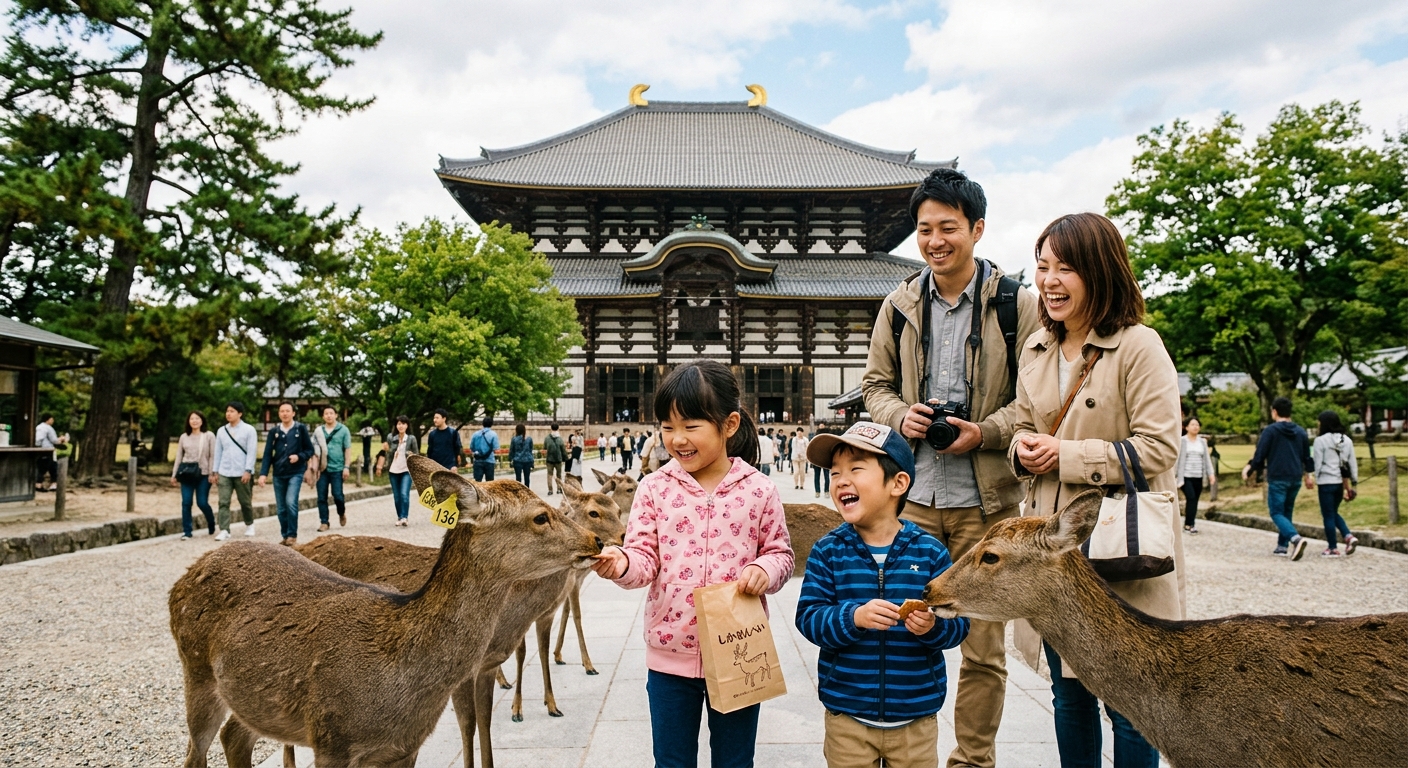
Nara Park, Todai-ji, Deer, Interaction, Family Trip - The Philosophy of Driving in Japan
Ah, Japan. The land of bullet trains, meticulous schedules, and unparalleled efficiency. As a former Kintetsu train conductor, I can attest to the sheer brilliance of Japan’s railway system. It’s a marvel of engineering and punctuality, capable of whisking you from gleaming metropolis to ancient capital in what feels like the blink of an eye. But let me tell you, my friends, for all its undeniable convenience, the train, by its very nature, imposes limits. It dictates your path, confines your view, and, most importantly, keeps you tethered to the well-trodden tourist trails.
For those of you who crave a deeper connection, a more intimate understanding of this magnificent country, I say with every fiber of my being: abandon the tracks and embrace the asphalt! Driving in Japan, particularly from a vibrant hub like Osaka, is not merely a means of transportation; it’s a profound philosophical shift. It's the difference between merely observing a painting and stepping inside its vibrant canvas. From Osaka, the gateway to Kansai, a world of untold beauty unfolds within easy reach, a world that public transport, for all its virtues, can never truly reveal.
The true magic of Japan, its 'Secret Japan,' lies just beyond the station platforms, nestled in the undulating hills, hidden along the serpentine coastal roads, and tucked away in villages where time seems to slow to a tranquil murmur. These are the places where ancient traditions breathe, where the air smells of cypress and clean earth, where local culinary secrets are passed down through generations. You see, the train rushes past these treasures, a blur of green and gray outside your window. But in a car – especially in the driver’s seat of a spirited JDM machine like an 86 or BRZ – you become the master of your own destiny. You dictate the pace, you choose the detours, and you discover the unexpected.
Imagine the sun-drenched winding roads, the scent of fresh mountain air filling the cabin as the precise steering of your 86 guides you through perfectly banked turns. Picture pulling over at a whim to gaze upon a panoramic vista that no guide book ever bothered to print, or stumbling upon a tiny, unassuming eatery where the most authentic flavors of Japan dance on your palate. This is the freedom a car affords: the spontaneity, the ability to chase the setting sun, to follow a mountain stream to its source, or to simply get gloriously, wonderfully lost in the beauty of it all. From my days on the railway, I observed countless passengers, their faces pressed against glass, dreaming of what lay beyond. Now, from the driver’s seat, I live that dream, and I want you to experience it too. This is not just a trip; it’s an odyssey, an exploration of Japan's soul that begins and ends with the open road.
Nara Park, Todai-ji, Deer, Interaction, Family Trip - The 2-Day Itinerary: Deep Dive
Day 1: From Osaka's Pulse to Nara's Ancient Embrace
6:00 AM - 7:00 AM: The Dawn Chorus and the Boxer's Roar in Osaka
The city of Osaka, usually a vibrant symphony of urban life, hums with a softer rhythm in the pre-dawn light. This is the hour of anticipation, the quiet calm before the day’s adventure truly begins. As you make your way to your awaiting chariot – the lean, athletic form of an 86 or BRZ – feel the crisp morning air awaken your senses. Performing a quick walk-around, checking the tires, the lights, you run your hand over the smooth, sculpted lines of the Japanese Domestic Market masterpiece. Slide into the low-slung bucket seat; the ergonomic cockpit wraps around you, a perfect extension of your adventurous spirit. Turn the key, and the boxer engine, a mechanical heart beating with a distinctive thrum, awakens. That deep, guttural growl is not just an engine starting; it's a promise of the spirited journey ahead. An early start isn't just about beating traffic; it’s about capturing the magic of the Japanese sunrise as it paints the sky in hues of soft orange and rose, an exclusive spectacle reserved for those who choose the open road.
7:00 AM - 8:30 AM: Carving the Expressways East: Towards the Ancient Capital
With the 86’s engine singing its eager song, you smoothly merge onto the Kinki Expressway, the first leg of your pilgrimage to Nara. The tarmac is impeccably smooth, a testament to Japanese engineering, allowing the 86 or BRZ to glide effortlessly. The early hour means open lanes, transforming the usually bustling expressway into your private stretch of automotive bliss. The precise steering, a hallmark of these machines, offers immediate feedback, connecting you directly to the road beneath. Each gentle curve is a dance, each straightaway an invitation to feel the balanced chassis come alive. As the city lights slowly recede in your rearview mirror, the landscape begins its subtle transformation, giving way to greener vistas. This is where the journey truly begins – not at a destination, but in the pure, unadulterated joy of the drive. A quick stop at a pristine service area, grabbing some onigiri and a piping hot can of coffee from a vending machine, becomes a small ritual of the road, a chance to stretch and breathe in the fresh Kansai air before continuing your drive. The distant mountains of Nara prefecture begin to appear on the horizon, shrouded in a soft, ethereal mist, beckoning you forward.
8:30 AM - 9:00 AM: Arrival in Nara: First Glimpse of the Sacred
Leaving the Daini Hanna有料道路, the urban sprawl gives way to the tranquil, ancient atmosphere of Nara. The 86/BRZ navigates the city streets with ease, its compact yet powerful form perfectly suited for Japanese urban environments. Parking in Nara requires a bit of foresight, but several large, well-marked parking lots are available near Nara Park. Opt for one slightly away from the immediate entrance for a more serene approach and a short, pleasant walk. As you step out of the car, the air immediately feels different – cleaner, imbued with a sense of history. And then, you see them. Not just a few, but dozens, hundreds of deer, scattered across the verdant expanse of Nara Park. These aren't shy, elusive creatures; they are the welcoming committee, the sacred messengers of the gods, and your family's adventure is about to begin.
9:00 AM - 11:30 AM: An Encounter with Divinity: Nara Park and its Sacred Deer
Stepping into Nara Park is like walking into a living, breathing fairy tale. The meticulously maintained lawns, the ancient gnarled trees, and then, the deer. Oh, the deer! These aren't just animals; they are an integral part of Nara's spiritual fabric, believed to be messengers of the Shinto gods. Your family's eyes will widen in wonder, a universal language of awe. Purchase some 'shika senbei' (deer crackers) from one of the many vendors – a truly unique ritual awaits. Hold out a cracker, and watch as these surprisingly polite (yet often persistent!) creatures bow their heads to you, an ancient gesture learned over centuries of human interaction. The children will squeal with delight, a mixture of trepidation and pure joy, as a gentle deer delicately takes a cracker from their hand. The tactile experience, the soft fur against your palm, the inquisitive gaze in their large, dark eyes – it’s an interaction that transcends language and creates indelible memories. Roam freely, capturing photographs that will become cherished keepsakes. The vibrant greens of the park, framed by the deep blues of the sky, create a stunning backdrop. It's a place where the modern world fades, and the echoes of ancient Japan reverberate, a truly magical immersion for the whole family.
11:30 AM - 1:00 PM: Savory Delights in Ancient Nara
After the exhilarating and surprisingly active deer encounter, your family will undoubtedly have worked up a hearty appetite. Nara offers a delightful array of culinary experiences, from casual noodle shops to elegant traditional restaurants. For an authentic taste of Nara, seek out a spot serving Kakinoha-zushi, a local specialty where bite-sized sushi pieces (often mackerel or salmon) are pressed and wrapped in persimmon leaves. The leaves impart a delicate, earthy fragrance to the rice and fish, a subtle flavor you won't find anywhere else. Another Nara delicacy is Narazuke, a unique form of pickles, often made with gourds or cucumbers, that are fermented in sake lees – a truly acquired taste but a fascinating cultural experience. Choose a restaurant with a traditional ambiance, perhaps one with tatami seating, where the quiet murmur of conversations and the aroma of simmering dashi fill the air. It’s a moment to recharge, reflect on the morning’s wonders, and prepare for the colossal grandeur that awaits.
1:00 PM - 3:30 PM: The Colossal Grandeur of Todai-ji
From the serene expanse of Nara Park, a short, pleasant walk leads you to the awe-inspiring gates of Todai-ji. Even from a distance, the sheer scale of the Nandaimon (Great South Gate) is overwhelming, its twin Nio guardian statues, carved from wood, stand sentinel with ferocious might. As you pass beneath their gaze, a sense of profound history washes over you. Ahead lies the Daibutsuden (Great Buddha Hall), a wooden structure of such immense proportions that it defies belief. Consider its history: commissioned by Emperor Shomu in the 8th century, it was a colossal undertaking, requiring vast resources and countless artisans. The sheer will and devotion required to construct such a monument speak volumes about ancient Japan. Step inside, and prepare to be utterly dwarfed by the Daibutsu itself – the Great Buddha. Standing at nearly 15 meters tall, this bronze masterpiece radiates a serene majesty, its gentle gaze encompassing all who enter. The air inside the hall is thick with the scent of incense and the weight of centuries of prayer. For the children, a moment of playful discovery awaits: one of the massive wooden pillars supporting the hall has a hole carved through its base. Legend has it that if you can squeeze through it, you'll be granted enlightenment. It’s a challenging but hilarious endeavor, often met with cheers and giggles, especially for the little ones! Outside, take a moment to appreciate the geological origins of this place; the very timber that forms these magnificent structures was harvested from the surrounding ancient forests, a deep connection between human ingenuity and the natural world.
3:30 PM - 5:00 PM: Whispers of History & A Glimpse of the Hills
While Todai-ji is undoubtedly the star, Nara has other, quieter treasures. A short climb up to Nigatsu-do or Sangatsu-do offers breathtaking panoramic views of Nara city, stretching out to the distant mountains. It’s a perfect spot for reflection, allowing the family to absorb the vastness of the ancient capital and its surrounding natural beauty. As the afternoon light softens, consider a brief, scenic drive around the periphery of Nara, perhaps heading towards the base of Mt. Wakakusa. This is your chance to reconnect with your 86 or BRZ. The winding, tree-lined roads provide a delightful contrast to the historical sites, allowing you to appreciate the car's balanced handling and responsive engine in a different context. The subtle growl of the boxer engine echoing through the serene landscape, the precise shifts of the manual transmission – it’s a symphony of man and machine, a gentle reminder of the freedom you command. These aren't dramatic mountain passes, but rather charming country lanes that offer a different perspective on Nara's natural beauty, showcasing the subtle geological contours of the region.
5:00 PM - 6:00 PM: Check-in and Relaxation
As dusk begins to settle, it’s time to head to your chosen accommodation in Nara. Whether you’ve opted for a traditional ryokan (Japanese inn) or a modern hotel, the transition from exploration to relaxation is seamless. The drive through Nara’s streets, now illuminated by warm streetlights, offers a different charm. After parking your 86/BRZ securely, the process of checking in is typically efficient and welcoming. Take a moment to unwind, perhaps settle into your room and let the day's incredible experiences wash over you. The peace of Nara at night is a stark, welcome contrast to the bustling energy of Osaka, allowing for a deeper sense of tranquility.
6:00 PM - 8:00 PM: A Taste of Nara's Night
Dinner in Nara is an experience in itself. If you're staying at a ryokan, a multi-course kaiseki ryori dinner, often served in your room, is a culinary highlight. Each dish is a miniature work of art, reflecting the seasonality and local ingredients of Nara. Alternatively, venture out to one of Nara’s charming izakayas or local restaurants. Here, you can sample regional specialties like delicate sashimi, perfectly grilled skewers, and local sake, all in a convivial atmosphere. The quiet streets of Nara at night, occasionally punctuated by the soft chime of a temple bell, create an enchanting backdrop to your family meal. It’s a time for shared stories, laughter, and the deepening bond that only travel can forge.
8:00 PM onwards: Starlit Reflections
With full bellies and hearts brimming with memories, the evening unwinds. If your accommodation boasts an onsen (hot spring), a soothing dip is the perfect way to relax tired muscles and reflect on the day’s adventures. The warm, mineral-rich waters melt away any lingering fatigue, leaving you refreshed and rejuvenated. Even without an onsen, a quiet stroll through a nearby garden or simply gazing at the star-dusted sky from your window offers a moment of profound peace. The ancient capital, now silent and bathed in moonlight, whispers tales of emperors, monks, and sacred deer. You drift off to sleep, the vivid images of colossal Buddhas and gentle deer playing behind your eyelids, already anticipating the hidden wonders that tomorrow’s drive will unveil.
Day 2: Unveiling Nara's Countryside & The Thrill of the Return Journey
7:00 AM - 8:00 AM: Sunrise over Nara & A Traditional Japanese Breakfast
Awaken to the soft glow of a Nara sunrise, painting the sky with gentle hues. The morning air, typically cool and crisp, carries the faint scent of cypress. If you're in a ryokan, a traditional Japanese breakfast awaits: grilled fish, miso soup, fluffy rice, and an array of pickled vegetables. It's a nourishing and authentically Japanese start to the day, providing sustained energy for the driving adventure ahead. Take your time, savoring each delicate flavor, a stark contrast to the quick-paced breakfasts of urban life. The quiet elegance of the meal sets a serene tone for the morning.
8:00 AM - 9:00 AM: A Farewell to Nara's Central Charms
Before truly venturing into the countryside, perhaps a final, leisurely stroll through a quieter section of Nara Park. Without the morning crowds, you might encounter deer grazing peacefully, offering a more intimate farewell. Or, visit a small, lesser-known temple like Kofuku-ji's five-storied pagoda, admiring its elegant silhouette against the morning sky. This hour is for soaking in the last vestiges of central Nara's magic, appreciating its serene beauty before you pivot towards the thrilling, winding roads that lead to 'Secret Japan'.
9:00 AM - 11:30 AM: Unveiling Nara's Countryside: The Winding Roads to Secret Spots
This is where the 86 or BRZ truly comes into its own, and where the 'Secret Japan' reveals itself. Eschewing the main arteries, you’ll steer your spirited JDM machine onto the prefectural roads that snake through Nara's stunning countryside. Imagine routes like those leading towards the Yoshino area or along the foothills to the east. These are not merely roads; they are ribbons of asphalt carved into ancient landscapes, often lined with cedars and cypress trees, opening up to vistas of terraced rice paddies and small, sleepy villages. The thrill of downshifting with the short-throw shifter of your manual 86, hearing the boxer engine bark its approval, as you carve through a series of perfectly judged corners is intoxicating. The precise feedback through the steering wheel connects you intimately to the road, allowing you to feel every nuance of the tarmac. Your family, comfortable and secure, will marvel at the rapidly changing scenery: from dense forest tunnels that momentarily blot out the sun, to panoramic views of mist-shrouded valleys. Perhaps you'll aim for a less-visited spot like Muro-ji Temple, renowned for its beautiful pagoda set amidst a serene forest, a truly hidden gem that cars can access far more easily. Or discover a small waterfall, its silver ribbons cascading over ancient rock formations, a secret known mostly to locals. Geologically, these areas are rich, showcasing ancient volcanic activity and erosion that have sculpted the dramatic landscapes you’re now driving through, a dynamic canvas constantly evolving.
11:30 AM - 1:00 PM: A Culinary Discovery Off the Beaten Path
Your journey into the countryside necessitates a lunch experience that matches its authenticity. Forget the tourist traps; this is about finding a truly local spot. Keep an eye out for small, unassuming restaurants, perhaps a 'shokudo' (diner) or a 'teishoku-ya' (set meal restaurant) in one of the villages you pass through. These are often family-run establishments where the food is prepared with heart, using fresh, seasonal ingredients sourced from the immediate area. Imagine a hearty bowl of udon with locally grown vegetables, or a simple yet perfectly grilled teishoku featuring regional fish or meat. The flavors are honest, unpretentious, and deeply satisfying. The warmth of the welcome, the genuine smiles, and the delicious, wholesome food provide a true taste of rural Japanese hospitality. This is the kind of discovery that only a car-enabled adventure can offer, a culinary memory far richer than any chain restaurant could provide.
1:00 PM - 3:00 PM: The Homeward Journey: Embracing the Open Road
As the afternoon sun begins its descent, it’s time to begin the graceful arc back towards Osaka. To maintain the spirit of exploration, consider taking a slightly different route for your return journey. Perhaps you'll opt for a section of the national highways that offer different scenic perspectives, or if time and inclination allow, seek out more winding prefectural roads that crisscross the countryside. The joy of driving the 86 or BRZ isn't just about the initial thrill; it’s about the sustained engagement with the machine. On the open road, you appreciate its stable cruising capabilities, the comfortable yet supportive seats, and the sheer pleasure of covering ground efficiently yet exhilaratingly. This is a time for reflection – on the majestic deer, the colossal Buddha, the peaceful countryside, and the shared laughter with your family. The bond with your JDM companion deepens with every kilometer, a silent agreement between driver and machine, tackling every curve and straightaway with confidence and joy. The engine’s harmonious hum becomes a soundtrack to your memories, a constant reminder of the incredible journey you're undertaking.
3:00 PM - 4:00 PM: Re-entry into Urban Vibrancy
As you approach Osaka, the landscape gradually shifts from rural tranquility to urban dynamism. The distant skyline of the city emerges, a forest of steel and glass piercing the sky, a stark yet exciting contrast to the ancient serenity you've just left behind. Merging back onto the bustling expressways, the 86 or BRZ, so adept at carving mountain roads, now smoothly navigates the multi-lane arteries of the city. The efficiency of Japan’s infrastructure ensures a relatively seamless return. As you pull into the parking area, the familiar buzz of Osaka envelops you once more. Switching off the engine, the sudden silence feels profound, a moment of transition from the open road to the vibrant city. Stepping out of the car, you feel a sense of accomplishment, not just from completing a journey, but from having truly experienced Japan in a unique and personal way.
4:00 PM onwards: The Lingering Spirit of Adventure
The journey may have concluded, but the memories linger, vibrant and fresh. As you walk away from your trusty 86 or BRZ, you carry with you the laughter of your children as deer bowed for crackers, the awe inspired by the Great Buddha, the thrill of carving winding roads, and the taste of genuine local cuisine. This isn't just a collection of sights; it's a tapestry of sensory experiences, woven together by the freedom of the open road. The spirit of adventure, once ignited, continues to glow brightly, fueling dreams of future Japanese road trips. You've not just visited Japan; you've immersed yourself in its very soul, creating an unforgettable family saga that will be recounted for years to come.
Nara Park, Todai-ji, Deer, Interaction, Family Trip - Expert Advice & Cultural Nuances
Having traversed Japan's diverse landscapes both by rail and road, I've gathered a wealth of insights that can transform your journey from a mere trip into an authentic exploration. Beyond the famous landmarks, it's the subtle cultural nuances and practical advice that truly unlock the heart of Japan. And for the driving enthusiast, these tips are gold.
The Michi-no-Eki: Your Roadside Oasis
Forget the soulless rest stops you might be accustomed to. Japan's 'Michi-no-Eki' (Roadside Stations) are cultural hubs, veritable treasures scattered along the highways and byways. These aren't just places to stretch your legs; they are vibrant marketplaces showcasing the very best of local produce, artisanal crafts, and regional delicacies. Pulling up in your 86 or BRZ at a Michi-no-Eki, you’ll find immaculately clean restrooms, often equipped with Japanese-style bidets (washlets), and a surprising array of culinary delights. Don't just grab a coffee; sample freshly baked goods, seasonal fruit, or a local specialty. Look for unique souvenirs made by local artisans. These stations are an invaluable part of the Japanese road trip experience, offering a window into the regional identity of each area. They’re perfect for a family break, a place where children can safely explore and even play, providing a genuine taste of rural Japan.
Unearthing Hidden Local Gems
The true joy of driving is the ability to deviate, to follow a hunch down an unmarked road. While Nara Park and Todai-ji are magnificent, 'Secret Japan' often reveals itself in quieter moments. Look beyond the main streets. In Nara, perhaps it's a small, family-run soba shop tucked away on a side alley that’s been serving the same perfect noodles for generations. Or a tiny, ancient shrine, shaded by colossal cedars, where the only sound is the rustle of leaves and the distant chime of a bell. The best way to find these? Observe. Look for a line of locals outside an eatery, or a small, hand-written sign that might hint at something special. Don’t be afraid to pull over and explore a charming village on foot. These unscripted discoveries, often found by pure chance in your 86/BRZ, become some of the most cherished memories.
Navigating the Roads: Driving Etiquette and Safety
Driving in Japan, while impeccably organized, has its own set of unspoken rules. Firstly, politeness is paramount. Drivers are generally courteous, rarely honking, and often yielding. Maintain a respectful distance from the car in front. Japanese road signs are largely pictorial, but familiarizing yourself with key kanji characters for 'stop', 'yield', and 'no entry' can be helpful. Speed limits are generally lower than in many Western countries, and strictly enforced, particularly on local roads. Respecting these limits is not just about avoiding fines; it’s about safety and fitting into the local driving culture. Watch out for cyclists and pedestrians, especially in residential areas, as they often have right of way. Remember, the 86 or BRZ is a capable machine, but its capabilities should always be enjoyed responsibly and within the confines of Japanese traffic laws. This respect for order extends to parking as well; always use designated parking spots, as parking illegally, even for a moment, is frowned upon and can result in fines. Your JDM machine will turn heads, but always drive with 'omotenashi' – the Japanese spirit of selfless hospitality – on the road.
Nara Park, Todai-ji, Deer, Interaction, Family Trip - Detailed Logistics & Pre-Trip Tips
To truly unlock the magic of a Japanese road trip, especially one that takes you from Osaka's dynamism to Nara's ancient serenity in an 86 or BRZ, a bit of logistical savvy is key. Let me share some insights from years on Japan's roads, ensuring your adventure is as smooth as the slick shifting of a JDM gearbox.
Traffic in 2026: Navigating the Flow
While Japan's traffic infrastructure is world-class, it's wise to be aware of typical patterns. As of 2026, major metropolitan areas like Osaka can experience significant rush hour congestion, typically from 7:00 AM to 9:00 AM and 5:00 PM to 7:00 PM on weekdays. Planning your departure from Osaka before or after these windows can save you considerable time and frustration, allowing you to enjoy the open expressway in your 86 or BRZ. On weekends, traffic to popular tourist destinations like Nara can also be heavier, but an early start often allows you to bypass the worst of it. Always rely on real-time navigation apps (like Google Maps or Waze, which work excellently in Japan) for the most up-to-date traffic information. These apps will guide you through the quickest routes and provide estimated travel times, essential for an hour-by-hour itinerary.
The Indispensable ETC Card
Driving on Japan's extensive network of expressways is incredibly efficient, but tolls are common. The Electronic Toll Collection (ETC) card is an absolute game-changer. It's a small card inserted into a reader in your rental 86 or BRZ that allows you to pass through toll gates without stopping, making your journey seamless and swift. This is far more convenient than fumbling for cash or credit cards at every toll booth. Most reputable rental companies, including ours, offer ETC cards as an optional extra. I cannot stress enough how much this enhances the driving experience; imagine maintaining your flow on a scenic winding road, only to be seamlessly guided through a toll gate without breaking stride. It’s an investment in convenience and enjoyment, especially when you’re focused on the road and your family.
Fueling Your Adventure: Japanese Gas Stations
Japanese gas stations are a fascinating blend of old-school service and modern efficiency. Many offer full service, where attendants will pump your gas, clean your windows, and even take your payment. When you pull up, simply say "Mantan!" (満タン) which means "full tank!" and specify "Regular" (レギュラー) for unleaded petrol, or "High-Octane" (ハイオク) if your 86 or BRZ requires it (most JDM sports cars appreciate high-octane). Self-service stations (セルフ) are also common and typically cheaper. The pumps are clearly marked with different colors for each fuel type. Don't worry if you don't speak Japanese; a combination of pointing and a cheerful "Arigato gozaimasu!" will work wonders. Always ensure your tank is full before venturing into more rural areas, as gas stations can be scarcer there.
Parking Prowess: Mastering the Japanese Park Spot
Parking in Japan, especially in cities like Nara, often involves multi-story car parks or coin-operated parking lots. Spaces can sometimes be narrower than what you're accustomed to, but the compact design and precise handling of the 86 or BRZ make navigating these spaces a breeze. Look for signs that clearly indicate "P" for parking. Coin parking lots (コインパーキング) are abundant and typically operate on an hourly rate; remember to pay at the automated machine before you leave. Avoid parking in unauthorized areas, even for a short time, as it can lead to hefty fines and potential towing. Patience and a keen eye for designated spots are your best allies.
The JDM (MT Car) Driving Thrill: An Unforgettable Connection
Now, let's talk about the heart of the experience: driving a JDM manual transmission (MT) car like the 86 or BRZ. This isn't just about getting from A to B; it's about connecting with the road, with the machine, and with Japan itself on a visceral level. The short-throw shifter, the precise clutch engagement, the immediate response of the boxer engine as you heel-and-toe downshift for a corner – it's a symphony of mechanical perfection. The 86/BRZ isn't about raw, brutal power; it's about balance, feedback, and driver engagement. Every turn becomes an opportunity to feel the chassis communicate with you, every acceleration a chance to hear that distinctive engine note sing. It transforms a scenic drive into an active, exhilarating experience, making you feel truly alive and immersed in your surroundings. For the car enthusiast, this is the ultimate way to explore Japan, adding an unparalleled layer of thrill and satisfaction to your family adventure.
Nara Park, Todai-ji, Deer, Interaction, Family Trip - Comprehensive FAQ
Planning an international road trip can raise a few questions. Here are the most common inquiries, clarified to ensure your Nara adventure is seamless and stress-free:
Do I need an International Driving Permit (IDP) to drive in Japan?
Yes, absolutely. To legally drive in Japan, if you are from a country that is a signatory to the 1949 Geneva Convention, you will need your International Driving Permit (IDP). This must be accompanied by your original driver's license from your home country, and your passport. It's crucial that your IDP is issued by the same country as your original license. Ensure your IDP is valid for the duration of your trip. For countries not party to the Geneva Convention, specific bilateral agreements or official Japanese translations of your home license may be required. Always carry all three documents (IDP, home license, passport) with you while driving.
What about insurance for the rental car?
Rental car insurance in Japan is comprehensive and typically included in your rental package. However, it's always wise to understand the coverage. Most standard rentals include basic liability insurance (against damage to third parties) and vehicle damage waivers (for damage to the rental car itself), usually with an "exclusion clause" or "deductible" (免責額, mensekigaku). This means you might be responsible for the first portion of repair costs. We highly recommend opting for the "Non-Operation Charge (NOC) exemption" or "full coverage" option offered by rental companies. This waives the deductible and the NOC (a fee charged if the car needs repairs and cannot be rented out), giving you complete peace of mind, especially when traveling with family.
I'm nervous about driving a manual transmission (MT) car in Japan. Is it difficult?
It's completely normal to feel a bit of apprehension, especially if you're not accustomed to driving MT cars regularly or on the left side of the road. However, the joy of driving an 86 or BRZ in manual is unparalleled. Japanese roads are well-maintained, and traffic flow is generally orderly. The 86/BRZ has a forgiving clutch and a smooth, precise shifter, making it an excellent car for enjoying MT. If you're proficient in driving a stick shift, you'll quickly adapt. If you're a bit rusty, practicing in a quiet area before heading onto main roads can boost your confidence. Trust me, the connection you'll feel to the car and the road is worth any initial hesitation, transforming your drive into an active, engaging part of your adventure.
What are the road conditions like in winter, especially around Nara?
While Nara typically doesn't experience the heavy snowfalls seen in northern Japan, winter (December to March) can bring cold temperatures and occasional light snow or freezing rain, particularly in the surrounding mountainous areas or early mornings. Main roads around Nara Park and Todai-ji are usually kept clear. However, if you plan to venture into more remote or higher-altitude regions, especially during deep winter, it’s advisable to check weather forecasts. Rental cars can be equipped with winter tires or snow chains upon request during certain periods, but for a standard Nara Park and immediate surroundings trip, it's generally not a major concern. Always prioritize safety and exercise caution in cold or wet conditions.
Nara Park, Todai-ji, Deer, Interaction, Family Trip - The Final Call: Your Japanese Road Adventure Awaits
As our journey through the ancient wonders of Nara, framed by the exhilarating freedom of the open road in an 86 or BRZ, draws to a close, one truth becomes abundantly clear: Japan is meant to be experienced, not just observed. You’ve journeyed beyond the typical tourist itinerary, diving headfirst into the 'Secret Japan' that only a personal vehicle can unlock. You've forged unforgettable memories with your family, felt the playful nudge of a sacred deer, stood in awe before a colossal Buddha, and tasted the authentic flavors of local Japan.
But more than that, you’ve felt the pulse of Japan beneath your tires, heard the song of its engine on winding country lanes, and breathed in the spirit of adventure. The moments of precise cornering, the perfect gear shifts, the thrill of discovery at every turn – these are the indelible marks of a truly bespoke Japanese adventure. This isn't just a trip; it's a statement. A statement that you seek more than the ordinary, that you crave authentic connection, and that you value the sheer, unadulterated joy of the drive.
Don't just dream about these experiences. Make them a reality. Your ultimate Japanese road trip, complete with the perfect JDM sports car like an 86 or BRZ, is waiting. We understand this passion, because we live it. As former Kintetsu train conductors turned JDM enthusiasts, we know the difference a truly special car makes. We speak the language of the open road and offer a fleet that embodies the spirit of Japanese automotive excellence.
The time for your own epic Nara adventure is now. Ignite your passion for Japan, feel the thrill of the road, and create family memories that will last a lifetime. "Omoshiro Rent-a-car Osaka Chuo" is your gateway to this extraordinary journey. Visit us today, choose your dream JDM machine, and let your Japanese road trip begin!
