
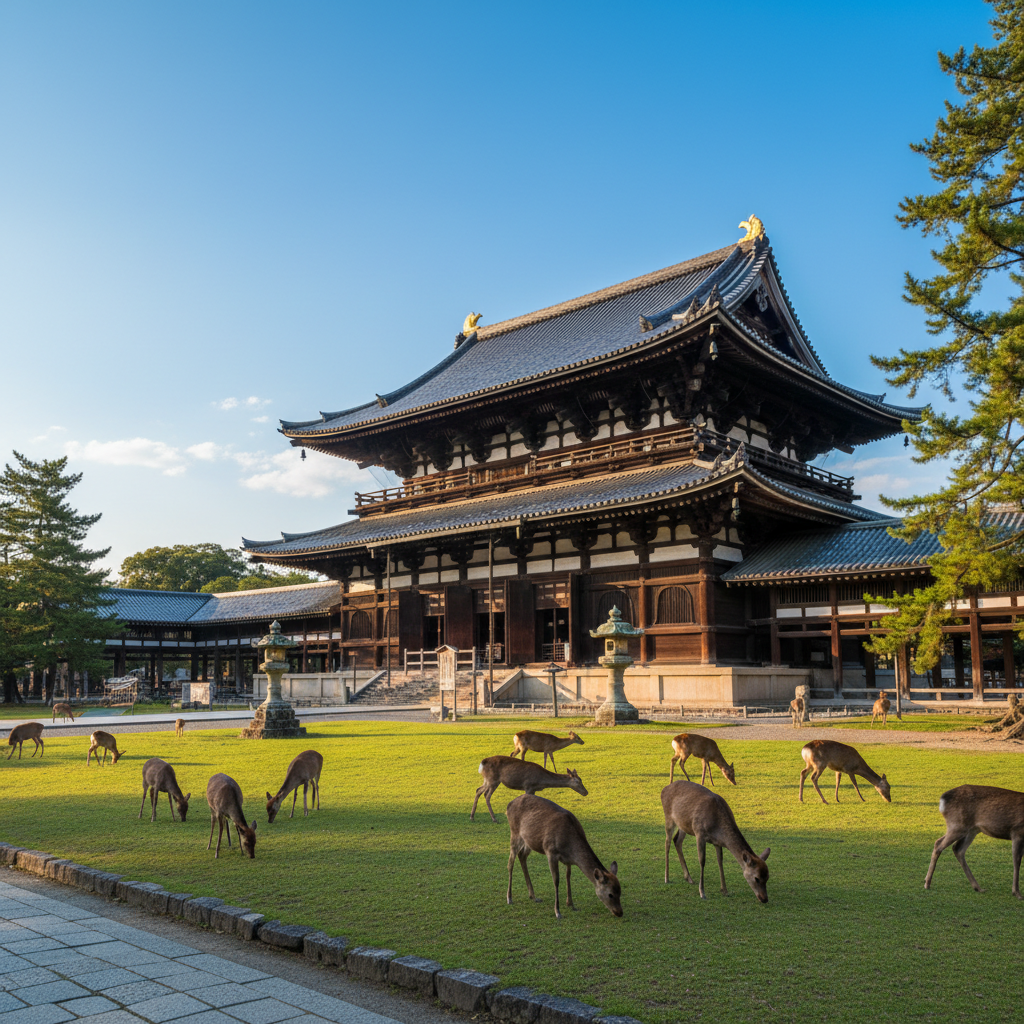
Nara Sightseeing, Day Trip, Classic Course, Todai-ji, Kofuku-ji, Kasuga Taisha - The Philosophy of Driving in Japan
As a former Kintetsu train conductor, I spent countless hours traversing the steel arteries of Japan, the rhythmic hum of the tracks a constant companion. There’s an undeniable efficiency, a graceful precision, to Japan’s rail network. It whisks you from city center to city center, a panoramic window offering fleeting glimpses of a meticulously manicured landscape. But efficiency, I’ve come to realize, is not always immersion. The train, for all its marvel, keeps you on its predetermined path, a silent observer rather than an active participant. It bypasses the soul of Japan, the secret heart of its mountains, its forgotten coastal paths, and its ancient forests that whisper tales only the wind and the road can truly share. For those who seek to truly touch the essence of this enigmatic nation, to feel its pulse beneath their fingertips, there is only one way: behind the wheel of a meticulously engineered Japanese domestic market (JDM) machine.
Osaka, with its vibrant energy and strategic location, is not merely a destination; it is the ultimate launchpad for the discerning adventurer. From its bustling core, an intricate web of expressways and scenic routes fans out like a dragon’s veins, leading to cultural treasures that lie just beyond the reach of the last train stop. Public transport can deliver you to a station, yes, but it can never guide you down a perfect winding road, the engine of a Toyota 86 singing in harmony with your rising exhilaration, leading you to a secluded shrine nestled in a bamboo grove, or a breathtaking vista of mist-shrouded peaks that few tourists ever witness. This is the realm of ‘Secret Japan’—a land of hidden wonders, where the journey itself becomes as profound as the destination. It’s the small, family-run soba shop tucked away in a village where time seems to stand still, the ancient cedar forests that exude a primal tranquility, the untouched stretches of coastline where the Pacific Ocean still carves magnificent sculptures into the rock. These are experiences that cannot be packaged, cannot be scheduled on a train timetable. They demand the freedom, the intimacy, and the sheer joy of the open road.
Imagine the scent of cypress wood carried on a cool breeze as you downshift into a hairpin bend, the tactile feedback of the asphalt through the steering wheel, the satisfying snick of the gear lever as the 86’s precise manual transmission connects you directly to the road’s every nuance. This is not merely transportation; it is a communion. It is the raw, unadulterated pleasure of navigating a landscape that is both ancient and eternally new. The car becomes an extension of your will, an instrument through which you orchestrate your own discovery. This is why, with every fiber of my being, I advocate for the car. It transforms sightseeing into an expedition, a passive observation into an active exploration, allowing you to not just see Japan, but to truly feel it, taste it, hear it, and ultimately, understand it in a way that remains eternally out of reach for those confined to the tracks.
Nara Sightseeing, Day Trip, Classic Course, Todai-ji, Kofuku-ji, Kasuga Taisha - The 2-Day Itinerary: Deep Dive
Prepare yourself, for what follows is not merely an itinerary but a meticulously crafted symphony of discovery, designed for the intrepid traveler whose heart beats in rhythm with the roar of a finely tuned engine. This is a two-day odyssey into the ancient heart of Nara, a journey from the urban pulse of Osaka to the hallowed grounds of Todai-ji, Kofuku-ji, and Kasuga Taisha, all experienced from the cockpit of a sublime JDM machine – the nimble, responsive Toyota 86.
Day 1: Osaka to Ancient Nara's Heart – A Pilgrimage in Performance
7:00 AM – The Awakening in Osaka: The city of Osaka begins to stir, a low hum rising from its concrete canyons. But for us, the day truly awakens with the eager growl of the Toyota 86’s boxer engine. Parked just a stone’s throw from the heart of the city, its sleek lines hint at the adventure ahead. Grab a strong coffee and a freshly baked pastry from a local konbini (convenience store) – a quintessential Japanese start to any day. The morning air is crisp, hinting at the vastness that awaits beyond the city limits.
7:30 AM – 8:30 AM – Urban Escape & Expressway Euphoria: We slip the 86 into gear, its manual transmission a delight of precise engagement. Navigating the initial city streets, the car feels alive, a taut extension of your will. Soon, we merge onto the Hanshin Expressway, then the Kinki Expressway. The rising sun, a fiery orb, casts long shadows over the towering skyscrapers, painting the urban landscape in hues of gold and amber. As we leave the metropolis behind, the concrete jungle gradually gives way to a greener, more undulating terrain. The expressway itself, a marvel of engineering, offers a smooth, exhilarating ride. The 86, with its perfectly balanced chassis, tracks true and steady, a testament to its design. The landscape outside blurs into an impressionistic masterpiece – orderly suburban sprawl transitioning into fields of vibrant green, framed by distant, misty mountains. This is the first taste of liberation, the uninhibited joy of covering ground with purpose and style.
8:30 AM – 9:00 AM – Arrival in Nara: Whispers of Antiquity: The transition from expressway to local roads is seamless. We’re in Nara, the ancient capital, and the air itself seems to thicken with history. The scent of aged wood, damp earth, and something indefinably wild – the deer – permeates the atmosphere. We secure a parking spot; even in this historical city, convenience for drivers is paramount. The 86 rests, its engine cooling, ready for the next leg of our journey by foot.
Kofuku-ji & Nara Park – Sacred Messengers and Soaring Pagodas
9:00 AM – 10:30 AM – Kofuku-ji: The Fujiwara Legacy: Our first stop, Kofuku-ji, immediately transports you back over a millennium. As a former train conductor, I appreciate precision, and the architectural precision of Kofuku-ji is astounding. Founded in 669 AD by the powerful Fujiwara clan, its history is deeply intertwined with that of Nara itself. Walking amidst its grounds, the majestic five-story pagoda dominates the skyline, a slender, elegant sentinel against the azure. This pagoda, rebuilt numerous times throughout its turbulent history, is a testament to Japanese resilience and architectural mastery. Its intricate wooden construction, defying centuries of earthquakes and fires, speaks volumes of the craftspeople who painstakingly recreated it. Imagine the sheer dedication, the artistry involved in each timber joint, each sweeping roofline. The Hokuendo Hall, an octagonal structure, houses invaluable Buddhist statues, each radiating a profound serenity. Here, history isn't just documented; it's palpable, an almost living entity.
10:30 AM – 11:30 AM – Nara Park: The Sacred Deer: Stepping out from Kofuku-ji, we enter the sprawling Nara Park, and a unique, unforgettable experience immediately greets us: the deer. These aren't just any deer; they are considered messengers of the gods, revered and protected for centuries. Approaching them, they bow their heads, a charming, almost human gesture that never fails to enchant. The soft fur, the gentle nuzzle, the expectation in their large, dark eyes – it’s a connection to nature unlike any other. But don't be fooled by their charm; they are masters of persuasion, especially if you possess shika senbei (deer crackers). The geological setting of Nara Park, with its gentle slopes and verdant expanse, provides a picturesque backdrop for these ancient interactions. The contrast between the solemn grandeur of Kofuku-ji and the playful innocence of the deer creates a truly magical atmosphere.
Lunch in Nara: A Taste of Tradition
11:30 AM – 12:30 PM – Culinary Delights: After the morning’s historical immersion and deer encounters, hunger inevitably calls. We seek out a traditional eatery near Nara Park, one that has perfected the local delicacies. The aroma of simmering dashi and toasted rice fills the air. Here, you must try kakinoha-zushi, a regional specialty of sushi wrapped in persimmon leaves, imparting a subtle, earthy fragrance to the delicate fish. Or perhaps a steaming bowl of udon or soba, the noodles handmade, the broth rich with umami. The vibrant green of freshly ground matcha mochi provides a sweet, chewy finish. Every bite is a journey through Nara’s culinary heritage, a taste of its enduring traditions, savored in an ambiance that whispers of centuries past.
Todai-ji & Daibutsu-den: Awe-Inspiring Grandeur
12:30 PM – 2:30 PM – Todai-ji: The Great Eastern Temple: From our lunch spot, a leisurely walk takes us towards the incomparable Todai-ji. Even from a distance, its sheer scale is awe-inspiring. We pass through the Nandaimon Gate, a colossal wooden structure guarded by two fierce Kongo Rikishi statues. These guardian deities, carved with ferocious energy, seem to pulse with ancient power, their muscles bulging, their expressions intense. They stand as a magnificent introduction to the wonders within. As we approach the main hall, the Daibutsu-den, the largest wooden building in the world, rises majestically, its immense roof seeming to touch the clouds. The geological bounty of the region – the vast cedar and cypress forests, the accessible metal ores for tools – made such an ambitious construction possible over a thousand years ago.
Stepping inside, you are confronted by the colossal Great Buddha, the Daibutsu, a bronze masterpiece that commands immediate reverence. Its serene countenance, rising over 15 meters, fills the cavernous hall. Imagine the monumental effort of its casting, a feat of ancient engineering and metallurgy. Conceived in the 8th century, this symbol of Buddhist devotion has withstood wars, fires, and earthquakes, each time meticulously restored to its former glory. Its eyes, gazing out with timeless wisdom, seem to encompass all of history, all of human endeavor. The sheer scale, the intricate details of its lotus pedestal, the surrounding smaller statues – it's an experience that transcends mere sightseeing, touching upon the spiritual core of Japan.
Kasuga Taisha & Kasugayama Primeval Forest: Vermillion and Verdure
2:30 PM – 4:30 PM – Kasuga Taisha: The Lanterns’ Embrace: Our next destination, Kasuga Taisha, presents a striking contrast. Where Todai-ji is grand and imposing, Kasuga Taisha is a vibrant symphony of vermillion and gold, nestled within the embrace of a primeval forest. The approach itself is magical, lined with thousands of moss-covered stone lanterns, each one a silent guardian. Inside the main shrine complex, an equally impressive array of bronze lanterns hangs from the eaves, gleaming softly. The architecture, with its distinctive curved gables and brilliant colors, is a celebration of Shinto aesthetics. The atmosphere is one of serene sanctity, a spiritual sanctuary where the boundaries between the human and the divine seem to blur. The history here is equally rich, having been established by the Fujiwara clan in the 8th century for the protection of Nara.
Kasugayama Primeval Forest: Beyond the vibrant shrine lies the Kasugayama Primeval Forest, a UNESCO World Heritage site and an ancient, untouched expanse that has been protected for over a millennium. This sacred forest is a living museum of biodiversity, its ancient trees towering towards the heavens, their roots intertwined with the very history of Nara. Taking a short, meditative walk along its tranquil paths, the air feels purer, cooler. The sunlight filters through the dense canopy, dappling the forest floor in shifting patterns of light and shadow. The sounds of civilization fade, replaced by the rustle of leaves, the chirping of unseen birds, and the gentle murmur of unseen streams. It’s a profound connection to Japan’s raw, untamed beauty, a testament to the respect for nature that lies at the heart of Shinto. The 86 patiently awaits our return, ready to carry us deeper into this land of contrasts.
4:30 PM – 5:30 PM – Scenic Drive to Accommodation & Rural Tranquility: As the afternoon light begins to soften, casting a golden glow over the ancient city, we return to the 86. The engine sparks to life, its familiar thrum a comforting promise of further adventure. We'll leave the immediate bustling confines of Nara, aiming for a charming ryokan or boutique hotel nestled in the serene countryside, perhaps towards Sakurai or Tenri. This strategic move avoids city traffic and offers a more authentic, peaceful experience. The drive itself is a joy. The roads here are less traveled, winding gently through agricultural lands and small, picturesque villages. The 86 truly comes alive on these routes, its nimble handling allowing for smooth, flowing progress. The sunset paints the sky in fiery oranges and soft purples, a magnificent spectacle reflected in the car’s polished hood. Each gear change is deliberate, each corner a graceful dance. It’s a journey of quiet contemplation, a perfect winding down after a day of profound discoveries.
Evening – Relaxation and Culinary Bliss: Checking into our chosen accommodation, the warmth of Japanese hospitality immediately envelops us. A traditional Japanese dinner, a multi-course kaiseki feast, awaits. Each dish is a miniature work of art, a symphony of flavors, textures, and seasonal ingredients. The delicate taste of fresh sashimi, the rich umami of perfectly grilled fish, the subtle sweetness of local vegetables – it’s a culinary masterpiece. Afterwards, a soak in a natural hot spring (onsen) bath is the perfect balm for body and soul. The hot, mineral-rich water melts away any lingering fatigue, leaving you refreshed and invigorated, ready for day two’s adventures. The hum of the 86 is now a distant memory, replaced by the gentle sounds of the countryside, a perfect close to an extraordinary day.
Day 2: Winding Roads, Hidden Gems, and the Return Journey – The Thrill of the Unseen
8:00 AM – Morning Rituals and Rural Awakening: We wake to the gentle sounds of the countryside. A traditional Japanese breakfast, a meticulously arranged array of rice, miso soup, grilled fish, and various side dishes, provides the perfect fuel for the day ahead. The morning light streams through the windows, illuminating the tranquil garden outside. This is a moment of peace, a quiet appreciation for the subtle beauty of rural Japan.
9:00 AM – 12:00 PM – Exploring Rural Nara & The Art of Driving: Today is about the road less traveled, the joy of discovery, and the profound connection between driver and machine. We fire up the 86, its engine a familiar, welcoming symphony. Our destination: the more secluded corners of Nara Prefecture, areas that most tourists never even consider. We might head towards the Byakugo-ji Temple, particularly stunning if camellias are in bloom (seasonal), or embark on a captivating drive through the fringes of the Yoshino-Kumano National Park, renowned for its ancient pilgrimage routes and breathtaking mountain scenery. While we won't delve deep into the park's expansive trails, the roads leading to its edges offer some of the most exhilarating driving in the region.
Here, the roads narrow, becoming more intimate, winding like ancient rivers through valleys carved by millennia of geological forces. The 86 revels in this environment. The precise steering allows you to place the car exactly where you want it on the tarmac, feeling every subtle change in camber and gradient. The engine, a high-revving masterpiece, sings as you work through the gears, heel-toe downshifts becoming second nature, a ballet of foot and hand. The sensation is pure, unadulterated driving pleasure – a dance between man, machine, and the majestic landscape. The air is fresh, carrying the scent of pine and damp earth. Sunlight filters through the dense foliage, creating a dynamic play of light and shadow on the road ahead. You catch glimpses of hidden waterfalls cascading down moss-covered rocks, or a tiny, centuries-old village clinging to a hillside. This is the Japan that truly reveals itself to those who choose the driver’s seat.
Lunch on the Road: Local Flavors & Michi no Eki Discoveries
12:00 PM – 1:00 PM – Roadside Culinary Gems: For lunch, we’ll embrace the spirit of spontaneous discovery. Japan’s network of ‘Michi no Eki’ (Roadside Stations) are not just rest stops; they are cultural showcases. We'll pull into one that catches our eye, eager to sample local specialties. Perhaps a bowl of ramen unique to this region, or fresh-grilled local fish caught from nearby rivers. The ingredients are always fresh, the flavors honest and authentic, served with a welcoming smile. Alternatively, a small, unassuming restaurant in a quiet village might offer the most memorable meal, a true taste of local life that no guide book would ever highlight. The simple satisfaction of a hearty meal amidst beautiful scenery, the gentle thrum of the 86 waiting outside – it’s a perfect interlude.
Afternoon: Savoring the Journey & The Call of Osaka
1:00 PM – 3:00 PM – Final Nara Flavors or Extended Scenic Drive: Depending on our pace, we might make one last cultural stop – perhaps a traditional craft shop where artisans practice ancient skills, or a small, family-run sake brewery offering insights into Japan's national drink. However, today’s true joy lies in the driving itself. We extend our scenic drive, deliberately choosing roads that offer a final dose of exhilarating bends and panoramic views. The 86, still eager and responsive, carves through the landscape with effortless grace. The tactile joy of each gear shift, the engine’s symphony as we accelerate out of a corner, the wind rushing past the windows – these are the moments that truly define this adventure. We savor the journey, making memories with every turn of the wheel.
3:00 PM – 5:00 PM – The Return to Osaka: As the afternoon progresses, we reluctantly turn our 86 towards Osaka. The quiet, winding roads gradually give way to more developed areas, and eventually, the familiar hum of urban traffic begins to filter back into the cabin. It’s a gentle transition, allowing time for reflection. The memories of ancient temples, playful deer, and exhilarating drives through hidden valleys are already forming into cherished recollections. The 86, having performed flawlessly, carries us smoothly back to the bustling metropolis. The journey might be concluding, but the connection forged between you, the car, and the timeless beauty of Japan will linger long after the engine falls silent.
Nara Sightseeing, Day Trip, Classic Course, Todai-ji, Kofuku-ji, Kasuga Taisha - Expert Advice & Cultural Nuances
My years navigating Japan's rails and roads, from the driver's seat of a Kintetsu train to the cockpit of countless JDM legends, have granted me a unique perspective on this country. Beyond the polished itineraries, lies a deeper layer of experience, accessible only to those willing to embrace cultural nuances and heed expert advice. This is where your driving adventure truly elevates.
The Michi no Eki Phenomenon: More Than Just a Rest Stop
Forget everything you know about roadside rest stops. Japan’s ‘Michi no Eki’ (Roadside Stations) are a cultural institution, a vibrant tapestry of local life woven into the fabric of the national road network. These aren’t just places to stretch your legs; they are community hubs, mini-museums of regional identity. Each Michi no Eki is a showcase of its immediate surroundings, featuring an astonishing array of local produce – from freshly picked seasonal fruits and vegetables to artisanal sweets and savory snacks unique to that village or town. You’ll find exquisite local crafts, often handmade by elderly residents, offering perfect, authentic souvenirs. Many boast impressive restaurants serving regional specialties, giving you a taste of true local cuisine that you simply won't find in larger cities. They are also impeccably clean, often feature unique architecture, and provide crucial, up-to-date local information. As a driver, they are indispensable for refreshing yourself, discovering hidden culinary gems, and connecting with the rhythm of rural Japan. Always keep an eye out for them; they are signed in both Japanese and English, a beacon of local flavor.
Unearthing Hidden Gems: The Local's Secret Japan
The beauty of having your own JDM car, an 86 specifically, is the freedom it grants to deviate from the well-trodden path. My experience traversing Japan’s byways has taught me that the true magic often lies just beyond the last tourist bus stop. How do you find these elusive gems? It’s an art form. Engage with locals; a friendly 'Kore wa nan desu ka?' (What is this?) about a small, intriguing sign can open doors. Look for hand-written signs outside small, unassuming shops. These often indicate a hidden pottery studio, a family-run sake brewery offering tastings, or a tiny shrine nestled into a hillside that offers breathtaking views known only to the locals. Don't be afraid to pull over and explore a narrow lane that piques your curiosity. It might lead to a cascading waterfall, a field of vibrant flowers, or a quaint café serving the best regional coffee. These are the moments that define a truly unique Japanese adventure, the unexpected delights that public transport can never deliver.
Essential Driving Tips for the Japanese Roadways
While driving in Japan is generally a pleasurable experience due to meticulously maintained roads and polite drivers, a few pointers from an expert can make your journey even smoother:
- Road Etiquette & Speed Limits: Japanese drivers are famously courteous. Always drive defensively and respectfully. Speed limits, often lower than in many Western countries, are strictly enforced, especially in residential areas. Abide by them, not just for legal reasons, but for safety and local harmony.
- Small Roads & Pedestrians: Outside of major arteries, roads can be remarkably narrow, particularly in rural villages or near temples. Be acutely aware of pedestrians, cyclists, and even schoolchildren. Always assume someone might be around the next blind corner.
- Navigation is King: While your smartphone might suffice in cities, for rural exploration, a Japanese car navigation system (often integrated into rental cars) is invaluable. They are incredibly precise, often including phone numbers for direct navigation to specific points of interest, and can display road signs in English.
- Fuel Awareness: In mountainous or very rural areas, gas stations can be sparse. Keep a watchful eye on your fuel gauge. It’s always wise to fill up when you see a station, even if your tank isn’t empty.
- Toll Roads: Most expressways are toll roads. An ETC (Electronic Toll Collection) card is an absolute necessity for seamless travel (more on this in the next section). Without one, you’ll pay cash at manned booths, which can be slower.
- Parking Precision: Parking, especially in popular tourist areas, often involves designated parking lots or multi-story structures. Always use these. Avoid random street parking, as it’s often illegal and can lead to fines or even towing. Look for signs indicating ‘P’ for parking or ‘コインパーキング’ (coin parking).
By embracing these nuances and tips, your drive through Japan will not just be a journey; it will be an enlightened exploration, revealing the country’s heart in ways few visitors ever experience.
Nara Sightseeing, Day Trip, Classic Course, Todai-ji, Kofuku-ji, Kasuga Taisha - Detailed Logistics & Pre-Trip Tips
To truly unlock the magic of a JDM road trip through Japan, especially to ancient Nara, meticulous logistical preparation is key. As someone who has traversed these roads for decades, both in a professional capacity and for pure exhilaration, I can tell you that understanding the nuts and bolts of Japanese driving transforms a good trip into an unforgettable one. Especially when you’re behind the wheel of a responsive, precise machine like the Toyota 86.
2026 Traffic Realities: Navigating Japan’s Roads
As of 2026, Japan’s traffic infrastructure remains one of the most efficient and well-maintained globally. Major cities like Osaka will, of course, experience rush hour congestion, but outside these peak times, expressways flow smoothly. Expect multi-lane highways in urban centers transitioning to well-paved, often scenic two-lane roads in rural and mountainous areas. While speed limits can feel conservative (typically 80-100 km/h on expressways, 40-60 km/h on regular roads), they are enforced, and adhering to them is part of the courteous Japanese driving culture. Awareness of lane discipline and polite merging is paramount. The roads leading into Nara, while busy, are well-marked and designed to handle tourist traffic, making the approach in your 86 surprisingly stress-free.
The ETC Card: Your Gateway to Seamless Expressway Travel
If you plan to use Japan’s extensive expressway network – and for a comprehensive two-day trip like ours, you absolutely will – an Electronic Toll Collection (ETC) card is not just recommended, it’s practically mandatory. This small card, inserted into a reader in your rental car, allows you to pass through toll gates without stopping, the fee automatically deducted. It’s a marvel of convenience, eliminating the need to fumble for cash or wait in lines. Most reputable rental car companies will offer an ETC card for rent with your vehicle, often for a small daily fee. Ensure you request one when you book. Driving through the ETC lane, signified by a green arrow and often the character ‘ETC’ in white on a green background, is a liberating feeling, enhancing the smooth flow of your JDM journey.
Mastering the Japanese Gas Station: ‘Mantan’ and Beyond
Fueling up in Japan is an experience in itself, often characterized by impeccable service. While self-service stations are becoming more common, you’ll still encounter many full-service stations, especially in rural areas. Here’s what you need to know:
- “Mantan!” (満タン!): This is perhaps the most crucial phrase you’ll learn. When you pull up, simply roll down your window and, with a confident smile, say “Mantan, onegai shimasu!” (Fill it up, please!). The attendant will understand.
- Fuel Types: Most JDM performance cars like the 86 will require ‘High-Octane’ (ハイオク / Haioku). Standard gasoline is ‘Regular’ (レギュラー / Regyura). Diesel is ‘Keiyu’ (軽油). Confirm the correct fuel type for your rental car before filling up.
- Service Excellence: At full-service stations, attendants will often clean your windows, check your tires, and even direct you back into traffic with a polite bow and wave. It’s part of the exceptional Japanese service culture.
- Payment: Cash is always accepted, but most stations also accept major credit cards.
Parking Prowess: Navigating Nara’s Lots
Parking in Nara’s popular areas, particularly around Todai-ji and Nara Park, is plentiful but can be busy and expensive. Look for large, designated parking lots, often clearly marked with a ‘P’ symbol. In more urban settings, multi-story or underground parking garages are common. In towns, you’ll frequently encounter ‘coin parking’ (コインパーキング), which are automated lots. Here’s how they typically work:
- Find a Spot: Drive into an empty numbered bay.
- Locking Mechanism: A flat, metal plate will rise from the ground beneath your car, locking it in place.
- Payment: Before leaving, locate the payment machine. Enter your parking bay number, and the machine will display the fee. Pay with coins or bills (some accept cards).
- Release: Once payment is confirmed, the plate will lower, allowing you to drive out.
Always ensure you are in a legitimate parking space to avoid fines or towing. Precision and patience are virtues when parking in Japan.
The Exhilaration of Driving a JDM (MT Car): The 86 Experience
This is where the rubber truly meets the road, both literally and metaphorically. Driving a manual transmission (MT) JDM car like the Toyota 86 in Japan is not just transport; it’s an event, a profound connection to the road and the machine. For enthusiasts, it's pure, unadulterated joy. The 86, with its perfectly weighted steering, its rev-happy boxer engine, and its short-throw shifter, is designed for driver engagement.
You feel every nuance of the perfectly paved Japanese asphalt. Each gear change is a tactile pleasure, a precise engagement that transfers power directly to the rear wheels. Mastering the art of the heel-toe downshift on a winding mountain road, feeling the engine match revs perfectly as you brake and shift for a corner, is a symphony of motion that invigorates the soul. This direct feedback, this intimate control, is what defines the JDM MT experience. It transforms every journey, every curve, every straight, into a dynamic dialogue between you and the road. For those unfamiliar with MT, embrace the challenge; the reward is a driving experience that is uniquely Japanese, uniquely thrilling, and perfectly suited for unlocking the hidden beauty of Nara.
Nara Sightseeing, Day Trip, Classic Course, Todai-ji, Kofuku-ji, Kasuga Taisha - Comprehensive FAQ
Embarking on a JDM road trip in Japan, particularly to ancient sites like Todai-ji, Kofuku-ji, and Kasuga Taisha, naturally brings questions. As your guide with years of experience navigating both the intricacies of Japanese transportation and the expectations of international travelers, I’ve compiled answers to the most common queries, ensuring your journey is as smooth and worry-free as possible.
International Driving Permit (IDP) and License Requirements
To drive in Japan, you need an International Driving Permit (IDP) based on the 1949 Geneva Convention, issued by an authorized association in your home country. You must carry your IDP, your valid domestic driver's license, and your passport at all times while driving. Please note that an IDP based on the 1968 Vienna Convention is NOT accepted in Japan. Some countries like Switzerland, Germany, France, Belgium, and Taiwan have special agreements with Japan, allowing the use of a Japanese translation of their domestic license. Always verify the specific requirements for your country before your trip.
Rental Car Insurance: What You Need to Know
Reputable rental car companies in Japan typically include basic insurance coverage with their rentals, such as Collision Damage Waiver (CDW) and Third-Party Liability. However, it’s always wise to understand the specifics. CDW usually covers damage to the rental vehicle itself, but often has an excess (deductible) amount that you are responsible for. Many companies offer an optional 'Non-Operation Charge' (NOC) waiver, which covers the cost charged if the vehicle is damaged and requires repair (as the rental company loses revenue while the car is out of service). I highly recommend opting for the most comprehensive coverage available to ensure peace of mind. Check the terms and conditions thoroughly before signing any agreement.
Driving a Manual Transmission (MT) Car: Overcoming Anxiety
For those accustomed to automatic transmissions, the prospect of driving an MT car like the 86 might seem daunting. However, don't let it deter you! The 86 is known for its forgiving clutch and smooth gearbox, making it an excellent choice for those wanting to hone their MT skills. Start slow, practice in a quiet area, and familiarize yourself with the car's feel. Japanese roads are generally well-maintained, and traffic is usually polite, giving you space to learn. The reward – the deep connection to the car and the road – is immeasurable. It's a skill worth acquiring for the ultimate JDM experience.
Winter Road Conditions: Snow and Ice Preparedness
While Nara City itself doesn't typically experience heavy, prolonged snowfall, the surrounding mountainous regions, especially in deeper winter months (December to February), can see significant snow and ice. If your travel dates fall within this period and you plan to venture into higher elevations, ensure your rental car is equipped with appropriate winter tires (スタッドレスタイヤ / sutaddoresu taiya) or, in extreme cases, snow chains. Always check local weather and road conditions before embarking on a winter drive. Rental companies are usually very helpful in advising on winter preparations.
Best Navigation Tools for Your Journey
Beyond the built-in car navigation system (which often includes useful features like real-time traffic updates and local points of interest via phone numbers), several smartphone apps can enhance your navigation experience. Google Maps is generally reliable. Additionally, having an offline map downloaded is a smart precaution, especially in areas with spotty signal. Ensure your phone is fully charged or you have an in-car charger. The combination of a robust car navigation system and a reliable smartphone app will ensure you never lose your way.
Nara Sightseeing, Day Trip, Classic Course, Todai-ji, Kofuku-ji, Kasuga Taisha - The Final Call: CTA
We’ve journeyed through ancient empires, walked among sacred deer, and felt the profound history of Nara reverberate through the very stones of its temples. We’ve carved through winding mountain passes, heard the exhilarating song of a JDM engine, and discovered the hidden beauty that only the open road can reveal. This adventure, this deep dive into the soul of Japan, is more than just sightseeing; it's an immersion, a connection forged between you, the road, and a legendary machine. The memories of the Toyota 86 responding to every input, its chassis communicating every nuance of the Japanese asphalt, will undoubtedly linger as some of your most cherished travel experiences.
And for such an unparalleled adventure, for a journey that demands precision, passion, and performance, you need more than just a car; you need a partner who understands this passion, someone who has lived and breathed the roads of Japan. This is where my unique background, honed on the tracks of Kintetsu and the countless byways of this incredible country, comes into play. At O-moshiro Rent-a-Car Osaka Chuo, we don't just rent cars; we offer keys to unforgettable experiences. Specializing in JDM sports cars, including the very 86s and BRZs that embody the spirit of this journey, we ensure you have the perfect companion for your exploration. From meticulously customized vehicles to expert advice from someone who’s truly lived and breathed Japanese travel, we’re here to elevate your adventure beyond the ordinary. Don’t just dream of driving Japan's ancient roads; make it a reality. Visit O-moshiro Rent-a-Car Osaka Chuo today and let us equip you for the journey of a lifetime. Your JDM adventure awaits!
