
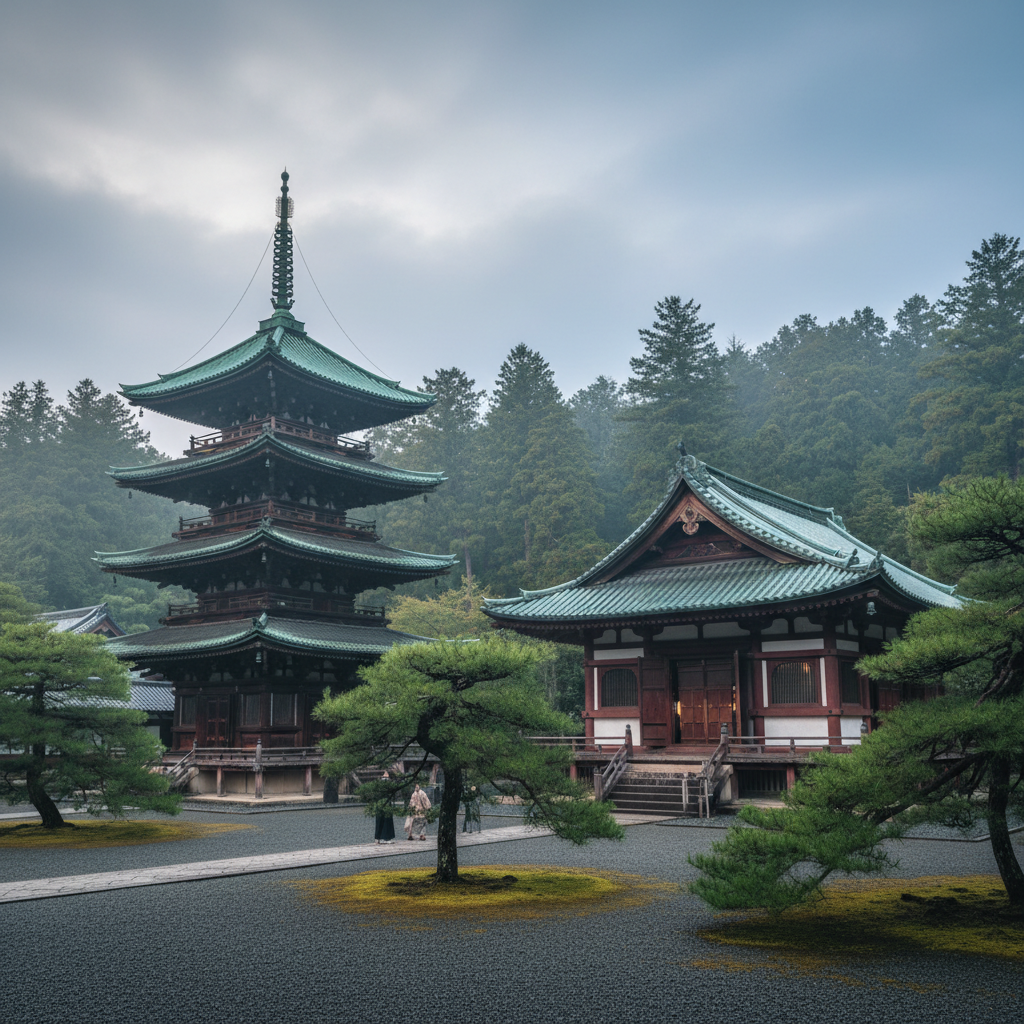
Alright, listen up, fellow adventurers and gearheads! You've seen the glossy brochures, you've ridden the bullet trains, and you've probably heard all about Japan's pristine public transport system. Efficient, yes. Convenient, absolutely. But if you’re reading this, you’re not looking for 'convenient.' You’re looking for 'unforgettable.' You’re craving 'authentic.' And for that, my friends, you need a set of keys, a full tank of premium, and the open road. Trust me on this one; I spent years behind the controls of Kintetsu trains, watching the countryside whiz by. And while I loved every second of connecting people to places, I knew, deep down, that the real magic, the true 'Secret Japan,' lay just beyond the tracks, accessible only by a vehicle with a soul.
Horyuji, Ikaruga & Ancient History – The Philosophy of Driving in Japan
Why choose a car, specifically a spirited machine like an 86 or BRZ, over Japan's legendary rail network, especially when exploring Kansai from vibrant Osaka? The answer is simple, yet profound: freedom. As a former train conductor, I observed the world through a limited pane of glass, following steel lines etched into the landscape. We whisked passengers from A to B with breathtaking precision. But what about C, D, E – the villages tucked away in forgotten valleys, the ancient shrines veiled by towering cedar forests, the panoramic vistas only revealed after a winding ascent? These are the jewels that remain stubbornly out of reach for even the most determined train traveler.
Osaka, with its electrifying energy and strategic location, is undeniably the perfect springboard for your Kansai adventures. However, relying solely on public transport transforms your journey into a series of timed connections, crowded carriages, and rigid schedules. Imagine this: you've just discovered a charming little pottery shop in an Ikaruga backstreet, or you've stumbled upon a hidden waterfall just off the main road. With a train ticket in hand, you’d have to reluctantly glance at your watch, knowing your next connection is looming. In a car? You stop. You explore. You immerse. That’s the true essence of discovery.
Driving in Japan, particularly through the ancient heartlands of Nara, is an experience that transcends mere transportation. It’s a communion with the landscape. The asphalt unfurls before you like a scroll, revealing a living canvas of history and natural beauty. You control the narrative, the pace, the soundtrack of your journey. The distinct hum of the 86’s boxer engine, the tactile precision of the manual gearbox, the grip of the tires on a perfectly banked curve – these aren't just details; they are integral components of an adventure designed to thrill all five senses. The air, crisp and clean as you climb a gentle slope; the scent of ancient timber and damp earth wafting in through an open window; the vivid greens of rice paddies giving way to the subtle ochres of an age-old temple roof – these are moments that simply cannot be replicated by staring at the back of another passenger's head on a crowded train.
The concept of 'Secret Japan' isn’t about clandestine locations known only to a chosen few. It's about experiencing the familiar in an entirely new, deeply personal way. It's about the small detours that lead to grand revelations, the unexpected encounters with local life that define a true cultural immersion. It's about feeling the pulse of the land beneath your tires, connecting with the same routes that merchants, monks, and samurai traversed centuries ago. It's a journey into the soul of Japan, guided not by a timetable, but by your own adventurous spirit and the raw, unadulterated joy of driving a finely tuned Japanese machine. Prepare to ditch the tourist traps and embrace the authentic. Prepare to drive.
Horyuji, Ikaruga & Ancient History – The 2-Day Itinerary: Deep Dive
This isn't just a trip; it's a pilgrimage. A journey back in time, framed by the exhilarating hum of your chosen steed – an 86 or BRZ – and the scent of ancient timber. Our destination: Horyuji and the surrounding Ikaruga region, a cradle of Japanese civilization, where the spirit of Prince Shotoku still whispers through the centuries. Get ready to awaken your inner explorer and feel the road come alive.
Day 1: Osaka's Urban Pulse to Ikaruga's Ancient Heart
8:00 AM: The Osaka Awakening – Engine Roar and Anticipation
The dawn breaks over Osaka, painting the city skyline in hues of soft orange and steel gray. You descend to where your chariot awaits. The 86, or its BRZ sibling, sits low and purposeful, its lines hinting at the thrill to come. Slide into the sculpted seat, grip the steering wheel, and feel the cold metal of the shift knob. A twist of the key, or push of a button, and the boxer engine barks to life with a satisfying growl – a promise of performance. The exhaust note settles into a confident thrum, vibrating subtly through the chassis. This isn't just a car; it's an extension of your intent. As you navigate the relatively quiet morning streets of Osaka, the short throws of the manual gearbox are a pleasure, each engagement a tactile connection to the machine. You feel the precise bite of the clutch, the eager surge of power as you ease onto the expressway.
8:30 AM: Expressway Escape – The Urban Blur to Rural Canvas
The urban sprawl quickly gives way to the arterial network of the Hanshin Expressway. The initial miles are a dance of merging lanes and efficient traffic flow. The 86's nimble handling makes light work of the city driving, but your eyes are already looking ahead, past the concrete jungle. As you transition onto the Higashi-Meihan Expressway and then the Nishi-Meihan Expressway heading east, the landscape begins its subtle transformation. The towering buildings recede, replaced by verdant hills and the occasional glimpse of traditional Japanese homes nestled amongst the greenery. This drive, while largely highway, is crucial. It’s the mental shift from the frenetic pace of modern Japan to the tranquil, timeless rhythm of its ancient heartland. The BRZ settles into a comfortable cruise, the cabin a cocoon against the outside world, allowing you to anticipate the wonders ahead. The straightforward path allows you to appreciate the subtle engineering of the car – its stability, its confident tracking, the way it responds to every gentle input.
9:30 AM: Arrival in Ikaruga – A Hushed Welcome
You take the Horyuji IC exit, and immediately, the atmosphere shifts. The roads become narrower, the traffic sparser, and the air, imbued with the scent of pine and ancient earth, feels cooler, older. The 86 glides through quaint streets, past traditional wooden houses with their intricate tiled roofs. There's a tangible sense of history here, a quiet reverence. You're no longer just driving; you're tracing the footsteps of millennia. Parking is surprisingly plentiful and well-signposted near Horyuji, a testament to Japan's excellent infrastructure even in historic areas. The feeling of pulling up, engine cooling with a gentle tick, and stepping out into the hushed reverence of Ikaruga is truly special. The transition from the roar of the highway to the almost sacred silence of this ancient town is a beautiful juxtaposition.
10:00 AM - 1:00 PM: Horyuji – A Tapestry of Time and Timber
Prepare to be awestruck. Horyuji isn't just a temple; it's a living, breathing museum of Japan's earliest Buddhist architecture and a UNESCO World Heritage site of unparalleled significance. Walk through the imposing Nandaimon (Great South Gate), and you're immediately transported. The sheer scale and ancient beauty are breathtaking. This temple complex, founded by Prince Shotoku in the early 7th century, houses the world's oldest surviving wooden structures. Imagine that – wood, painstakingly crafted over 1400 years ago, still standing proud.
Your first stop should be the Western Precinct (Saiin Garan). Here stands the iconic Goju-no-to (Five-storied Pagoda), a masterpiece of architectural engineering. Its towering silhouette, perfectly balanced and elegantly proportioned, dominates the sky. Spend time admiring the intricate details of its eaves and the subtle curve of its rooflines, a testament to the advanced carpentry of the Asuka period. Adjacent to it is the Kondo (Golden Hall), home to some of Japan's most precious Buddhist sculptures. Step inside (photography is usually restricted, allowing for a deeper, more personal connection) and let your eyes adjust to the dim light. The Shaka Triad, attributed to Tori Busshi, exudes a serene majesty, its gilded surfaces catching the faint light. These statues aren't just art; they are spiritual anchors, embodying the nascent Buddhism that Prince Shotoku championed.
Beyond the architectural marvels, consider the geological context. The timber used, primarily Hinoki cypress, was sourced from the abundant forests of the Kii Peninsula, a testament to the region's rich natural resources. The very ground beneath your feet has supported these structures through countless earthquakes and the relentless march of time, a silent witness to centuries of devotion. The pathways, paved with worn stone, whisper stories of pilgrims past. The air itself feels heavy with history, cool and fragrant with ancient wood. Every beam, every tile, every weathered pillar tells a story of craftsmanship, faith, and the enduring legacy of a visionary prince. Don't rush. Allow the profound peace of Horyuji to envelop you. Stroll through the corridors, observe the intricate wall paintings, and feel the spiritual weight of this extraordinary place.
1:00 PM - 2:00 PM: Ikaruga’s Local Delights – A Taste of Tradition
After such a deep immersion in history, your stomach will undoubtedly be rumbling. Ikaruga, though small, offers charming local eateries that provide an authentic taste of Nara prefecture. Head to a small, unassuming restaurant tucked away near the temple grounds. Look for a spot specializing in Kaki-no-ha Zushi – pressed sushi wrapped in persimmon leaves. This regional specialty, often featuring mackerel or salmon, has a delicate, earthy flavor imparted by the leaf, and its preservation method speaks to ancient travel traditions. Or, perhaps a simple bowl of hot Somen noodles, light and refreshing, a perfect antidote to the historical intensity. The atmosphere will be cozy, perhaps with a view of a meticulously kept garden, and the proprietor might be a gentle soul who’s run the establishment for decades. This isn't gourmet dining; it's honest, soulful food, deeply rooted in the local culture. The flavors are subtle, yet distinct, a culinary counterpoint to the visual feast of Horyuji.
2:00 PM - 4:30 PM: Beyond Horyuji – The Serene Splendor of Chuguji and Hokkiji
With renewed energy, it's time to explore Ikaruga's lesser-known, yet equally captivating, treasures. A short, pleasant drive through verdant farmland, the 86 humming contentedly, will take you to Chuguji Temple. This nunnery, originally built as a palace for Prince Shotoku's mother, is a haven of peace. Its main attraction is the Miroku Bosatsu (Bodhisattva Maitreya), a wooden statue famous for its enigmatic smile, often compared to the Mona Lisa. The statue's graceful posture and the deep, rich patina of the wood are mesmerizing. The drive there is particularly pleasant, a brief stretch of road flanked by traditional homes and small farms, allowing the BRZ to stretch its legs just a little, the scenery a blur of soft greens and browns outside the window.
Next, navigate the narrow, winding backroads to Hokkiji Temple. This temple, founded by Prince Shotoku in 686 AD, also boasts a stunning three-storied pagoda – an elegant structure standing amidst a tranquil rice paddy. The contrast of the ancient pagoda against the lush, modern agricultural landscape is striking. These roads, though not challenging, offer delightful corners and gentle undulations, allowing you to truly feel the communicative steering and balanced chassis of your 86. The engine’s note echoes gently off the surrounding fields, a symphony only a driver can truly appreciate. Geologically, these areas are part of the Nara basin, a fertile plain that has nurtured civilization for millennia. The views are pastoral and timeless, a perfect embodiment of 'Secret Japan.'
4:30 PM - 6:00 PM: Scenic Drive to Your Ryokan – Twilight and Twists
As the afternoon wanes, it's time to make your way to your accommodation. For an authentic experience, consider a traditional ryokan in a slightly more rural setting, perhaps towards the rolling hills surrounding Nara city or even within a short driving distance of Ikaruga. This drive is designed for pleasure. Ditch the main roads and seek out the smaller prefectural routes that meander through small villages and forested hills. These are the roads where the 86 truly comes alive. The precise steering, the well-damped suspension, the perfectly weighted clutch – every input translates into an immediate, gratifying response. You'll encounter gentle ascents and descents, sweeping curves, and perhaps even a short stretch of tightly wound road that demands your full attention, rewarding you with pure driving satisfaction. The sun begins its descent, casting long shadows across the landscape. The colors shift from vibrant green to deep indigo, the sky ablaze with orange and purple. The engine's growl, a low, contented purr, accompanies you, punctuated by the satisfying snick-snick of gear changes as you navigate the approaching twilight. This is more than just getting from A to B; it's an extension of the day's adventure, a chance to deepen your connection with the car and the land.
6:00 PM - 8:00 PM: Ryokan Retreat – Sensory Indulgence
Arrive at your ryokan, the car cooling with gentle metallic pings. The entrance, often marked by a traditional noren curtain, welcomes you into a world of refined tranquility. Slip into a yukata, and prepare for an evening of pure Japanese hospitality. The highlight will undoubtedly be dinner – a multi-course kaiseki meal. Imagine delicate dishes, meticulously prepared and presented like edible works of art. The flavors are a revelation: fresh seasonal vegetables, succulent local fish (perhaps ayu if you're near a river), tender wagyu beef, each bite a symphony of textures and tastes. The colors are vibrant, a visual feast. The aroma of dashi and fresh ingredients fills the air. This isn't just food; it's a culinary journey, reflecting the season and the region. Enjoy a relaxing soak in the ryokan's onsen (hot spring bath), letting the mineral-rich waters melt away any lingering tension. The feeling of the warm water, the steam rising around you, the quiet contemplation – it’s the perfect way to conclude a day of intense historical exploration and exhilarating driving.
8:00 PM Onwards: Serene Reflection
Sip a cup of green tea on your tatami mat, gazing out at the ryokan garden, perhaps illuminated by soft lanterns. The day's experiences swirl in your mind – the ancient wisdom of Horyuji, the serene smile of Miroku Bosatsu, the joy of carving through the Japanese countryside in your 86. This quiet reflection is invaluable, allowing the profound beauty and history of the day to truly sink in. The silence is broken only by the chirping of crickets, a gentle reminder that you are deeply embedded in the natural rhythms of Japan.
Day 2: Ikaruga's Hidden Gems and the Homeward Bound Drive
8:00 AM - 9:00 AM: Traditional Breakfast and Gentle Start
Wake up refreshed, the scent of the ryokan breakfast wafting through the air. A traditional Japanese breakfast awaits: grilled fish, miso soup, steamed rice, various pickled vegetables, and perhaps a delicate tamagoyaki (rolled omelet). It's a nourishing and healthy start to another day of adventure, preparing you for the road ahead. The calm beginning allows you to savor the last moments of ryokan tranquility before the engine calls.
9:00 AM - 11:30 AM: Delving Deeper into Ikaruga’s Past – Tatsuta Shrine and Horinji Temple
Today, we'll continue our exploration of Ikaruga, uncovering more layers of its ancient past. Fire up the BRZ once more; the engine responds with an eager rumble. Our first destination is Tatsuta Taisha (Tatsuta Shrine), slightly west of Horyuji. This Shinto shrine, dedicated to the gods of wind and harvest, is especially beautiful in autumn when its surrounding maples blaze with color, but captivating year-round. The approach winds through a peaceful forested area, the roads offering a few more enjoyable turns for your 86. The shrine itself is an embodiment of Shinto simplicity and reverence for nature. Its vibrant vermilion structures stand in stark contrast to the deep green of the ancient trees. The air here, particularly in the morning, is crisp and clean, carrying the scent of cedar and damp earth. Geologically, the area around Tatsuta is known for its river valleys, where the wind gods were historically appeased to ensure good harvests, a vital aspect of ancient Japanese life.
Next, a short, scenic drive through more rural landscapes brings you to Horinji Temple. While less grand than Horyuji, Horinji holds its own quiet charm and historical significance, also connected to Prince Shotoku's family. Its three-storied pagoda, rebuilt after a lightning strike in the 1940s, stands elegantly amidst rice fields, offering an incredibly picturesque scene, especially with the morning mist clinging to the distant hills. The drive between these two sites is a joy, a collection of gentle curves and straightaways where the BRZ feels perfectly planted, its steering precise and responsive. The feeling of traversing these ancient, often narrow paths, knowing that you're experiencing them with the modern dynamism of a JDM sports car, is uniquely exhilarating.
11:30 AM - 12:30 PM: A Drive to Remember – The Ikaruga Countryside Loop
Instead of rushing back to the main highway, dedicate this hour to a planned, leisurely loop through the Ikaruga countryside. Engage the 86's manual gearbox and savor every shift. Seek out the small, unnamed prefectural roads that snake through rice paddies, past bamboo groves, and alongside meandering streams. These are the roads where you truly feel the car's balance and agility. The engine hums a contented tune, the exhaust note a subtle crescendo on acceleration. The steering, direct and communicative, feeds every nuance of the road surface back to your fingertips. The geological features here are subtle: gently rolling hills, ancient riverbeds, and rich alluvial plains that have sustained agriculture for centuries. You'll witness daily Japanese life unfold – farmers tending their fields, children cycling to school, elderly neighbors chatting by their gates. This isn't a high-speed chase; it's a rhythmic dance with the landscape, a chance to truly connect with the heart of rural Japan. The vivid greens of the rice fields, the dark, rich browns of the cultivated earth, the clear blue of the sky – a painter's palette of natural beauty surrounds you.
12:30 PM - 1:30 PM: Lunch in a Hidden Gem – Unearthing Local Flavors
For lunch, let's seek out something truly off the beaten path. In a small town near Ikaruga, there might be a 'café restaurant' (often a family-run establishment serving a mix of Japanese and Western-inspired dishes) that caters almost exclusively to locals. Look for handwritten signs, a modest exterior, and perhaps a few bicycles parked outside. Inside, you might find a comforting 'teishoku' (set meal) featuring fresh local ingredients – perhaps a seasonal vegetable tempura, or a hearty ginger-pork stir-fry. The flavors will be robust, honest, and utterly delicious. It's a chance to experience authentic, everyday Japanese cuisine, far removed from tourist menus. The conversations around you will be in rapid-fire Japanese, creating an immersive, energetic atmosphere. The simple perfection of a perfectly cooked meal in an unpretentious setting is often the most memorable.
1:30 PM - 4:00 PM: The Homeward Journey – Scenic Route Back to Osaka
With a satisfied sigh, it's time to begin the return journey to Osaka. But we won't take the same highway back. Instead, let's opt for a more scenic route, perhaps taking Prefectural Route 50 and then connecting to Prefectural Route 80, which winds through some of the smaller towns and offers glimpses of the Yamato Sanzan (Three Mountains of Yamato), ancient capital sites. This route will provide a mix of gentle straights where the BRZ can cruise effortlessly and tighter sections where its inherent balance truly shines. The scenery gradually transitions from tranquil farmlands and forested hills to the increasingly dense suburbs of Osaka. You'll pass through towns with their own unique character, each offering a small window into local life. Keep an eye out for picturesque rivers and quaint bridges. The late afternoon light will cast a golden glow over the landscape, making the greens richer, the shadows longer. This is your final opportunity to savor the unfiltered joy of driving in Japan, the connection between you, the road, and the spirited machine beneath you. Each downshift, each corner apexed, is a farewell to the open road and a nod to the adventures you've just created.
4:00 PM - 5:00 PM: Re-entry into Osaka – From Ancient Echoes to Urban Roar
As you approach Osaka, the subtle hum of the countryside gives way to the familiar thrum of city traffic. The towering skyscrapers reappear on the horizon, signaling your return to modern civilization. The transition is stark but not unwelcome. The 86, which felt so at home on winding country lanes, now effortlessly navigates the urban arteries, its compact size and responsive nature making light work of city driving. You’ll feel a sense of accomplishment, a quiet triumph. You haven't just visited Horyuji; you've explored its environs, tasted its flavors, and felt its ancient pulse, all through the unique lens of a driving enthusiast. As you pull into your final destination, the engine settles into a gentle idle, the adventure etched into your memory, inextricably linked to the machine that carried you there.
Horyuji, Ikaruga & Ancient History – Expert Advice & Cultural Nuances
Driving in Japan is an absolute privilege, and to truly unlock its potential, understanding a few local nuances can elevate your journey from good to legendary. Having crisscrossed this nation countless times, and as a former conductor observing its arteries from a different perspective, I’ve picked up a few invaluable insights.
The Michi-no-Eki: Your Roadside Oasis
Forget the generic service stations of other countries. Japan’s ‘Michi-no-Eki’ (Roadside Stations) are cultural institutions, mini-destinations in themselves. They are far more than just a place to refuel and stretch your legs. Each Michi-no-Eki is a proud showcase of its local region. You’ll find meticulously clean restrooms, often with heated seats, and vending machines dispensing everything from hot coffee to local fruit juices. But the real treasure lies in their markets. Here, farmers sell their freshest produce, often picked that very morning. You’ll discover artisanal crafts, regional delicacies, and unique souvenirs you won't find anywhere else. Imagine buying a freshly baked pastry filled with local sweet potato, or a jar of homemade miso paste, directly from the people who made it. Some even have small restaurants serving delicious local dishes, a perfect opportunity to sample regional cuisine without straying far from your route. Think of them as cultural pit stops, essential for stocking up on snacks, finding unique gifts, and truly connecting with the local community. Don't just drive past; stop, explore, and indulge.
Hidden Culinary Gems: Beyond the Tourist Trail
Finding those truly authentic, off-the-beaten-path eateries is an art form. The best rule of thumb? Look for places with few tourists, or better yet, none at all. A small, unassuming noodle shop with a faded noren curtain, or a tiny izakaya (Japanese pub) with handwritten daily specials – these are often where the magic happens. Don't be intimidated by a lack of English menus; a brave point-and-order or a simple 'osusume wa nan desu ka?' (What do you recommend?) will often lead to a fantastic culinary adventure. These local spots thrive on word-of-mouth and generations of culinary tradition. The food is honest, prepared with care, and reflects the true flavors of the region. You might be the only foreigner there, but you'll be welcomed with genuine warmth, a testament to Japanese hospitality. These are the meals that become cherished memories, far more so than any Michelin-starred experience.
Driving Etiquette: The Unspoken Rules of the Road
Japanese roads are incredibly safe, largely due to a combination of meticulous road design and an ingrained culture of politeness. Observe the following, and you'll navigate like a local:
- Left is Right: Japan drives on the left side of the road, and the steering wheel is on the right. This takes a bit of adjustment for those accustomed to right-hand driving, but with a precise car like the 86/BRZ, you'll adapt quickly.
- Politeness Pays: Always yield, even when you have the right of way. A quick flash of your hazard lights for a few seconds is the universal sign of 'thank you' when someone lets you in or makes way. It’s a small gesture that goes a long way.
- Narrow Roads: Especially in rural areas and older towns like parts of Ikaruga, roads can be incredibly narrow. Take your time, be prepared to pull over to let oncoming traffic pass, and use your mirrors. If two cars meet on a very narrow road, the one with an easier spot to pull over usually does so.
- Pedestrian Priority: Pedestrians always, always have the right of way. Be extra cautious, especially in residential areas where children might be playing.
- Speed Limits: Generally 40 km/h in urban areas, 50-60 km/h on main roads, and 80-100 km/h on expressways. Japan strictly enforces speed limits, so obey them.
- Parking: Never park illegally. Japan has very strict parking enforcement. Use designated parking lots, coin parking (コインパーキング), or Michi-no-Eki.
Seasonal Considerations for Driving
- Spring (March-May): Pleasant temperatures, cherry blossoms. Roads are generally clear.
- Summer (June-August): Hot and humid, with potential for heavy rains (typhoons later in the season). Ensure your car’s AC is working. Drive cautiously during downpours.
- Autumn (September-November): Ideal driving conditions. Cool, crisp air, stunning autumn foliage (koyo). This is arguably the best time for a driving trip.
- Winter (December-February): While Kansai generally doesn't get heavy snow, mountainous routes can see snow and ice. Always check weather and road conditions. If driving in winter, ensure your rental has appropriate tires (studless tires are common) or snow chains if venturing into higher elevations. Our specific route to Ikaruga is generally snow-free, but always be aware.
Embrace these nuances, and your drive through Japan will be seamless, respectful, and deeply enriching.
Horyuji, Ikaruga & Ancient History – Detailed Logistics & Pre-Trip Tips
To truly maximize your JDM adventure through Japan’s ancient heartland, a little preparation goes a long way. Let's delve into the practicalities, ensuring your journey is as smooth and exhilarating as possible in 2026.
Navigating Japan’s Expressways: The ETC Card System
As of 2026, the Electronic Toll Collection (ETC) system is virtually indispensable for smooth expressway travel in Japan. It's akin to an automatic toll pass. Instead of stopping at toll booths, you simply drive through a dedicated ETC gate, and the toll is automatically deducted. This saves immense time and avoids the hassle of fumbling for change, especially crucial when you're focused on driving a manual transmission car. Most reputable rental companies, including those specializing in JDM cars, will offer an ETC card for rent, often for a small daily fee. Ensure you request one when booking your 86 or BRZ. The convenience it offers, particularly on a multi-day trip, is immeasurable. The sound of the ETC card reader's gentle 'ETC card ga sounyuu saremashita' (ETC card has been inserted) when you start your journey becomes a comforting signal of efficiency.
Fueling Your Journey: Gas Station Etiquette
Japan’s gas stations are generally pristine and efficient. You’ll encounter two main types: full-service (フルサービス) and self-service (セルフ). For a hassle-free experience, especially if your Japanese isn't fluent, full-service stations are recommended.
- Full-Service: An attendant will greet you. Simply say "Mantan, haioku" (満タン、ハイオク) for a full tank of high-octane (premium) gasoline, which your 86/BRZ will prefer. They'll fill your tank, clean your windows, and sometimes even empty your trash. It’s a glimpse into Japan’s famed omotenashi (hospitality).
- Self-Service: If you prefer to fill up yourself, most self-service pumps have English options on their touchscreens. Select "High Octane" or "Premium" (ハイオク), then insert your payment (credit card or cash) and start pumping. Remember to wear the provided glove!
Fuel prices are comparable to Western countries, and you'll find plenty of stations along major routes and in towns. Keep an eye on your fuel gauge, especially when venturing into more rural areas where stations might be less frequent.
Parking Like a Pro: Navigating Japan’s Spaces
Parking in Japan, particularly in cities, can seem daunting due to space constraints, but it's remarkably organized.
- Designated Parking Lots: Always use official parking lots, whether at tourist attractions, Michi-no-Eki, or your accommodation. Never park illegally, even for a moment; fines are hefty and enforcement is strict.
- Coin Parking (コインパーキング): These are ubiquitous, especially in urban areas. You drive in, a barrier or plate rises to secure your car, and you pay at a machine before exiting. Instructions usually have English options.
- Multi-Story Parking Garages: Common in cities, these can be a little tight for larger vehicles, but your compact 86/BRZ will navigate them with ease. Watch out for automated parking systems where your car is lifted and stored – a unique Japanese experience!
In rural Ikaruga, parking is generally easier to find near major attractions like Horyuji, often with dedicated, paid lots. Always budget a small amount for parking fees.
The Pure Joy of a JDM (MT) Machine: Your 86 or BRZ
If you've opted for an 86 or BRZ with a manual transmission, you're not just renting a car; you're embarking on a tactile, visceral driving experience. These cars are not about brute horsepower; they're about balance, precision, and an intimate connection between driver and machine. Driving a manual JDM sports car on Japan's perfectly paved, winding roads is an enthusiast's dream:
- Communicative Steering: Feel every ripple and texture of the road surface through the steering wheel.
- Precise Shifter: The short, crisp throws of the shifter are immensely satisfying, making every gear change a deliberate act of engagement.
- Balanced Chassis: The low center of gravity and excellent weight distribution mean these cars corner with a balletic grace, inspiring confidence on every curve.
- Engine Note: The distinct thrum of the boxer engine, especially when revved, is a symphony that complements the visual feast of the Japanese landscape.
- Heel-and-Toe: For the experienced driver, the pedal placement in these cars makes heel-and-toe downshifts a joy, perfectly matching revs and smoothing out your braking into corners.
This isn't just transport; it's a co-pilot, an extension of your adventurous spirit, designed to make every mile, every turn, an unadulterated pleasure. The feeling of perfectly executing a downshift before a scenic corner, the engine responding eagerly as you power out – this is the essence of a JDM driving adventure.
Horyuji, Ikaruga & Ancient History – Comprehensive FAQ
Planning an international driving adventure often comes with a few questions. Here are the answers to some common queries, ensuring you're fully prepared for your Japanese road trip.
What kind of driving license do I need to drive in Japan?
To drive legally in Japan, you will generally need an international driving permit (IDP) issued by a country that is a signatory to the 1949 Geneva Convention, along with your domestic driving license and your passport. It is crucial that your IDP is issued by a competent authority in your home country and is valid for the entire duration of your stay. Some countries, like Belgium, France, Germany, Monaco, Switzerland, and Taiwan, have specific agreements with Japan and may require a Japanese translation of their domestic license in addition to or instead of an IDP. Always verify the specific requirements based on your nationality well in advance of your trip. Without the correct documentation, you will not be able to rent or legally drive a car in Japan.
What about car insurance?
When renting a car in Japan, comprehensive insurance is typically included or highly recommended. This usually covers third-party liability, property damage, and often includes a basic level of collision damage waiver (CDW). However, it's wise to consider additional coverage, such as non-operation charges (NOC) which cover the rental company's loss of income if the vehicle needs repairs after an accident. Always clarify what is covered with your rental company and consider if your personal travel insurance or credit card offers any supplementary car rental coverage. Peace of mind is priceless when exploring unfamiliar roads.
I'm not confident driving a manual transmission (MT) car. Should I still rent one?
While the allure of driving a JDM MT car like an 86 or BRZ is strong, if you are not fully comfortable or proficient with a manual transmission, it's best to prioritize safety and enjoyment. Japan's roads, particularly in rural areas, can have unexpected twists and turns, and you don't want to be distracted by struggling with gear changes. Many of these excellent cars are also available with automatic transmissions (AT), which still offer immense driving pleasure and the same level of accessibility to 'Secret Japan.' If you're determined to drive an MT, consider practicing in your home country before your trip. The responsive nature of the 86/BRZ makes them relatively forgiving manuals, but confidence is key.
What are the road conditions like in winter, and do I need special tires?
While our Horyuji/Ikaruga route is generally in the Kansai region, which experiences milder winters than northern Japan, it's essential to be aware of potential winter road conditions. If you plan to travel between December and March, particularly if venturing into slightly higher elevations or specific mountain passes, you might encounter snow or ice. In such cases, rental cars are typically fitted with "studless" tires (the Japanese equivalent of winter tires). In rare heavy snowfall situations, snow chains may be required by law on certain roads. Always check local weather forecasts and road conditions before embarking on a winter drive. If in doubt, consult with your rental company; they can provide the necessary equipment or advise on alternative routes.
Horyuji, Ikaruga & Ancient History – The Final Call: Your Japanese Adventure Awaits!
You’ve seen the ancient temples, felt the subtle curves of the prefectural roads beneath your tires, and tasted the authentic flavors of a Japan rarely experienced by the casual tourist. This isn't just a fantasy; it's a meticulously crafted itinerary designed to ignite your passion for discovery and the pure, unadulterated joy of driving. From the exhilarating growl of the 86's boxer engine cutting through the morning air to the serene majesty of Horyuji's ancient timbers, every moment of this journey is an invitation to connect with Japan on a profoundly personal level.
Forget the crowded trains and predictable tours. Your adventure, your pace, your destination. This is your chance to peel back the layers of history, to chase the sunset down a winding country road, and to feel the very pulse of Japan beneath your fingertips and toes. You've heard the call of the open road, the whispers of ancient spirits, and the seductive hum of a perfectly balanced JDM machine. Now, it's time to answer.
Are you ready to carve your own path through Japan’s captivating past? Are you prepared to experience the thrill of a JDM sports car, handcrafted for driving enthusiasts, just like you? The keys to an unforgettable journey await. Make your dream a reality.
Your ultimate Japanese driving adventure begins now. Visit Omoshiro Rent-A-Car Osaka Chuo branch to reserve your performance JDM car today – whether it's a spirited 86, a balanced BRZ, or one of our other custom-tuned JDM legends. Our team, led by a former Kintetsu conductor who understands the heart of Japanese travel, is ready to fuel your passion. Don't just visit Japan; drive it.
