
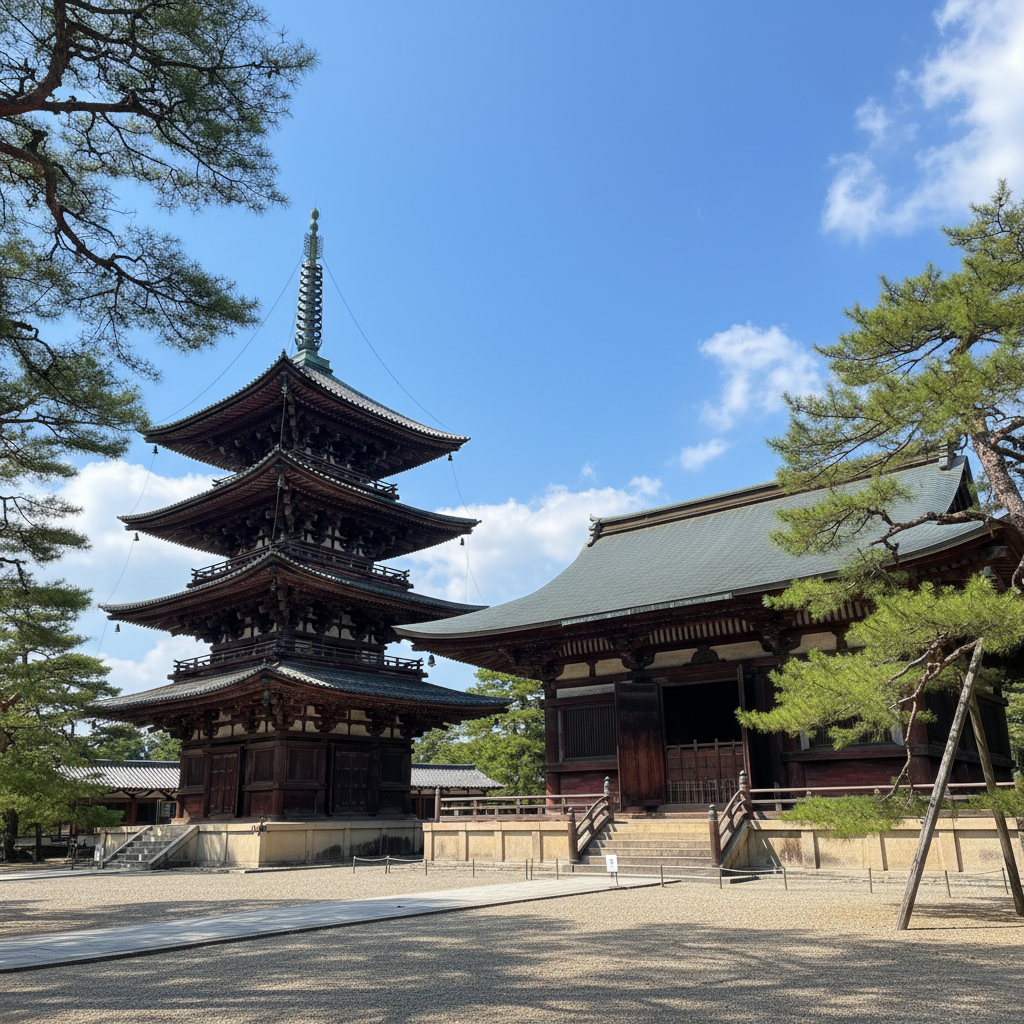
Horyuji, World's Oldest Wooden Architecture, Prince Shotoku, Nara - The Philosophy of Driving in Japan
For years, my life was dictated by the rhythmic clickety-clack of steel on steel, the precise timings of the Kintetsu railway, the constant dance between efficiency and schedules. As a train conductor, I witnessed countless journeys, connecting people to destinations with an admirable, almost poetic, precision. But even then, gazing out at the blur of verdant landscapes and distant mountains from my driver’s seat, a deeper truth whispered to me: there was a 'Secret Japan' that the rails simply could not reach. A Japan of winding backroads, of ancient hamlets nestled deep in valleys, of panoramic vistas visible only after a spirited climb, of serene temples hidden beneath canopies of ancient trees – a Japan awaiting discovery by those bold enough to take the wheel.
This is precisely why, today, I champion the freedom of the open road, especially when exploring the Kansai region from the vibrant heart of Osaka. While Japan's public transportation system is, without doubt, the envy of the world – a marvel of punctuality and convenience – it remains, by its very nature, a curated experience. It funnels you along predefined arteries, delivering you to the major hubs and well-trodden paths. And while these are undeniably magnificent, they offer only one facet of this incredibly rich nation. The true magic, the profound connection to the land and its centuries of history, often lies beyond the reach of the bullet train and the local line.
Imagine this: the intoxicating scent of damp earth after a sudden shower, the vibrant emerald of meticulously manicured rice paddies stretching to the horizon, the unexpected glimpse of a shy deer darting across a quiet country lane. These are not moments found peering through the window of a Shinkansen. These are the spontaneous gifts of a road trip, the fleeting, personal discoveries that etch themselves into your memory, transforming a simple vacation into an indelible adventure. The public transit map, for all its intricate lines, still leaves vast, beautiful blanks. It's in these blanks that 'Secret Japan' thrives, offering serene escape, authentic encounters, and breathtaking natural beauty that only the independence of a car can unlock.
And not just any car. For the true adventurer, the car becomes an extension of the journey itself. It’s the thrill of a precisely tuned engine humming beneath your feet, the tactile satisfaction of a manual gear change, the direct feedback of a chassis responding keenly to your every input as you carve through a series of sweeping curves. To navigate the subtle undulations of an ancient land in a machine built for driving pleasure – a JDM icon like the Toyota 86 or Subaru BRZ – is to truly immerse yourself. It’s a dialogue between driver, machine, and landscape, a sensory symphony where the engine’s growl harmonizes with the rustling leaves, the shifting gears mirror the changing scenery, and every turn reveals a new, breathtaking tableau.
Starting your odyssey from Osaka, the historical and cultural heart of Kansai, provides an unparalleled launchpad. This bustling metropolis, with its culinary delights and vibrant street life, offers the perfect energetic contrast before you plunge into the tranquility of ancient Nara. With a car, Osaka isn't just a starting point; it's a gateway to an entirely different dimension of Japanese travel. It grants you the sovereignty to craft your own narrative, to linger where you wish, to detour on a whim, and to truly feel the pulse of Japan beneath your tires. This isn't just about getting from point A to point B; it’s about the soul-stirring journey in between, about connecting with the very essence of a nation, one magnificent mile at a time.
Horyuji, World's Oldest Wooden Architecture, Prince Shotoku, Nara - The 2-Day Itinerary: Deep Dive
Day 1: Osaka's Pulse to Nara's Ancient Heartbeat
7:00 AM - 8:30 AM: Awakening the Machine and Leaving the Urban Embrace
The dawn breaks over Osaka, painting the city skyline with hues of soft orange and lilac. There’s an undeniable buzz in the air, a blend of anticipation and the promise of adventure. Forget the usual hustle for the morning train; today, your journey begins with the exhilarating prospect of taking the wheel. After a quick, authentic Japanese breakfast from a local convenience store – perhaps a freshly made *onigiri* paired with a piping hot can of coffee – you’ll head to collect your chariot: a sleek, responsive Toyota 86 or Subaru BRZ. The moment your hand closes around the steering wheel, the shift knob nestled perfectly in your palm, you’ll feel an immediate connection. This isn't just a car; it's a meticulously engineered instrument designed for driving pleasure, a true extension of your intent.
The rumble of the engine as it fires to life sends a shiver of excitement down your spine. With a smooth release of the clutch and a precise shift into first, you pull out onto the waking streets of Osaka. The early morning traffic is a gentle hum, allowing you to acclimate to the car's nuanced controls. The initial drive out of the city is a symphony of urban transition: the steel and glass towers gradually give way to more suburban landscapes, then to an increasingly verdant sprawl. You merge onto the Kinki Expressway, the 86/BRZ settling into a comfortable cruise. The landscape begins to transform before your eyes, the concrete jungle yielding to a patchwork of green fields and distant rolling hills. This is the liminal space, the beautiful in-between, where the echoes of urbanity fade and the whispers of ancient Japan begin to call.
8:30 AM - 10:00 AM: The Road to Ikaruga - A Driver's Prelude
As you leave the major arteries, transitioning onto Prefectural Route 25, the true driving experience begins to unfold. This isn't a race; it's a dance. The road starts to undulate, offering gentle curves and subtle elevation changes. The 86/BRZ comes alive, its perfectly balanced chassis providing sublime feedback through the steering wheel. You feel every subtle nuance of the tarmac, a direct communication between the road and your fingertips. The exhaust note, a restrained but insistent growl, hints at the car's eagerness to rev. The air, crisp and fresh, carries the scent of damp soil and distant forests, a stark contrast to the city air you just left behind. Rolling down the windows, you let the breeze invigorate your senses, a tangible reminder of the freedom you've embraced.
The winding roads leading towards Ikaruga, the serene town that guards Horyuji, are a delightful prelude. These aren't the dramatic hairpins of mountain passes, but rather a series of flowing corners that allow you to find a rhythm, to appreciate the exquisite balance and agility of your JDM machine. Each shift of the manual transmission is a deliberate act, a conscious engagement with the mechanics of the journey. The world outside slows, the frantic pace of modern life receding into the rearview mirror. You pass through small villages where time seems to have slowed, their traditional wooden houses and manicured gardens hinting at a rich, enduring history. This drive isn't just transportation; it's an immersion, a preparation for the profound historical encounter that awaits.
10:00 AM - 1:00 PM: Horyuji - Stepping into Eternity
As you approach Ikaruga, the landscape becomes imbued with a sense of reverence. The first glimpse of the imposing Horyuji complex, its ancient structures emerging from a grove of mature pines, is nothing short of breathtaking. Parking the 86/BRZ in the designated area, you step out and are immediately struck by the profound stillness. The world, for a moment, falls silent, broken only by the chirping of cicadas in summer or the rustling of leaves in autumn. The air itself feels ancient, heavy with the weight of over thirteen centuries of history.
You walk through the Nio-mon, the magnificent entrance gate, guarded by fierce wooden statues, and enter the inner sanctuary. Before you rise the majestic Kondo (Golden Hall) and the iconic Five-storied Pagoda – the world's oldest surviving wooden structures. It's a moment that transcends mere sightseeing; it's a direct communion with the past. These weren't just buildings; they were a profound statement of faith and artistic mastery, commissioned by Prince Shotoku in the early 7th century. A visionary leader, often hailed as the father of Japanese Buddhism and a key architect of early Japanese statecraft, Prince Shotoku sought to infuse his nascent nation with the spiritual and philosophical richness of continental Asia. Horyuji was his grand design, a beacon of enlightenment.
Stand before the Kondo, and marvel at the intricate joinery, the cypress wood, still robust after centuries, bearing the faint scent of its ancient origins. Imagine the artisans, their hands meticulously crafting each beam, each bracket, without the aid of nails, creating structures that have withstood earthquakes, typhoons, and the relentless march of time. Inside the Kondo, the vibrant murals and statues of Buddhist deities transport you to another era, their expressions serene, their presence palpable. Then, turn to the Five-storied Pagoda, its graceful silhouette piercing the sky. Each successive roof, slightly smaller than the one below, creates an illusion of rising lightness, culminating in the elegant spire. It’s not just an architectural marvel; it's a spiritual one, a physical manifestation of Buddhist cosmology.
Explore the Daigaran (Great Precinct), the Kodo (Lecture Hall), and the various smaller halls. The grounds are meticulously maintained, the gravel paths crunching softly underfoot, the ancient moss clinging to stone lanterns. This isn't just an archaeological site; it's a living temple, where the prayers of generations still echo in the quiet courtyards. The sheer endurance of these wooden structures is a testament to Japanese craftsmanship and a profound connection to nature, reminding us of the transient yet enduring nature of human endeavor. The weight of history here is immense, yet it feels incredibly peaceful, an anchor in the ever-shifting currents of time.
1:00 PM - 2:30 PM: A Taste of Nara's Unassuming Delights
After such a profound historical immersion, your senses will crave a different kind of nourishment. Just a short drive from Horyuji, tucked away from the main tourist paths, lies a small, unpretentious eatery – a true local gem. Forget the flashy tourist restaurants; this is where the heart of Nara's culinary tradition beats. The building itself might be unassuming, a simple wooden structure with *noren* curtains gently swaying in the breeze, but inside awaits an authentic taste experience. You might discover a place specializing in *kakinoha-zushi*, a regional specialty where sushi rice and mackerel or salmon are pressed into small rectangles and wrapped in persimmon leaves. The leaves impart a delicate, earthy fragrance to the sushi, a subtle flavor that speaks of the surrounding mountains and forests.
Or perhaps it's a humble *udon* or *soba* shop, serving steaming bowls of noodles in a rich, savory broth, topped with local vegetables or succulent *tempura*. The sound of slurping diners, the clatter of chopsticks, the warm, inviting aroma – these are the sounds and smells of authentic Japan. The flavors are clean, honest, and deeply satisfying, reflecting the local produce and time-honored cooking methods. Even with limited Japanese, a warm smile and a gesture are often enough to communicate, leading to friendly interactions with the local proprietors who take genuine pride in their craft. This isn't just lunch; it's a cultural exchange, a moment to refuel and reflect, surrounded by the quiet rhythm of local life, before embarking on the next leg of your journey.
2:30 PM - 6:00 PM: Beyond Horyuji - Chuguji, Hokkiji, and the Countryside's Embrace
With renewed energy, it’s time to delve deeper into the lesser-known historical treasures surrounding Horyuji. Your 86/BRZ feels eager, ready to explore the serene byways of Ikaruga. Just a stone's throw from Horyuji lies Chuguji Temple, a venerable nunnery. Walk through its tranquil gardens, meticulously sculpted and maintained, providing a serene backdrop for contemplation. The main hall houses a national treasure of unparalleled beauty: the Miroku Bosatsu statue. Carved from camphor wood, this Bodhisattva of the Future is renowned for its ethereal smile and graceful pose, one leg resting casually on the other, a finger lightly touching its cheek. It radiates a profound sense of peace and compassion, an artistic masterpiece that evokes a powerful spiritual resonance. The quiet reverence within these walls is a stark contrast to the grandeur of Horyuji, yet equally moving.
Next, you’ll take the 86/BRZ on a short, incredibly scenic drive through a patchwork of vibrant green rice paddies and sleepy hamlets to Hokkiji Temple. This is where the true joy of driving in rural Japan comes to the fore. The narrow, impeccably paved roads wind gently through the landscape, allowing the 86/BRZ to demonstrate its nimble handling. The engine purrs contentedly as you shift through the gears, the car responding with eager precision to every steering input. Hokkiji, less visited than its famous neighbor, offers a beautiful three-storied pagoda, standing elegantly amidst a grove of trees. It provides a peaceful contrast, a chance to appreciate ancient architecture in a more intimate, reflective setting. This temple, too, holds deep historical significance, founded by Prince Shotoku's daughter. The air here feels purer, the silence more profound, offering an opportunity for quiet reflection on the enduring legacy of this pivotal era.
As the afternoon sun begins its gentle descent, casting long shadows across the fields, it's time for the scenic route towards your accommodation in or near Nara City. Instead of the faster highways, you deliberately choose the winding prefectural roads that snake through the rural heartland. This is where the 86/BRZ truly sings. The road curves and dips, inviting you to engage fully with the driving experience. The responsive steering, the precise gear shifts, the confident grip of the tires – it’s a harmonious ballet between driver and machine. You pass through small, timeless villages, past ancient burial mounds (*kofun*) that dot the landscape, their secrets guarded by centuries of silence. The engine’s growl is your soundtrack as you ascend gentle inclines, offering glimpses of distant, mist-shrouded mountains. The light softens, painting the rice fields in hues of gold and amber. This drive is not merely a means to an end; it is an exhilarating journey of discovery, connecting you intimately with the landscape and the very soul of Japan.
6:00 PM onwards: Nara City - Deer, Dinner, and Tranquil Evenings
As the golden hour bathes the ancient city of Nara in a soft, ethereal glow, you arrive at your chosen accommodation – perhaps a traditional *ryokan* with its serene minimalist aesthetic, or a charming boutique hotel. After checking in and a refreshing moment to unwind, the allure of Nara’s unique evening atmosphere calls. A gentle stroll through Nara Park, even as dusk gathers, is a magical experience. The iconic deer, considered sacred messengers of the gods, wander freely, their silhouettes graceful against the deepening twilight. The air is cooler now, carrying the faint scent of ancient temples and blooming flowers.
For dinner, venture beyond the tourist traps. Nara offers a delightful culinary scene, blending traditional Yamato regional specialties with modern Japanese fare. Seek out a cozy restaurant specializing in *yamato nabe*, a comforting hot pot featuring local vegetables and succulent pork, simmered in a rich dashi broth. Or, if you crave something more casual, find a local *yakitori* spot, where the aroma of grilling chicken skewers fills the air, and the chatter of locals creates a vibrant, authentic ambiance. Pair your meal with local Nara sake, renowned for its crispness and depth of flavor, a perfect complement to the regional cuisine. The evening is a time for relaxation, for savoring the flavors and textures of Japan, and for reflecting on the day’s profound journey through time. If your *ryokan* offers an *onsen* (hot spring) bath, immerse yourself in its restorative waters, letting the day’s fatigue melt away, preparing for another day of exploration and exhilaration.
Day 2: Nara's Grandeur, Hidden Routes, and the Drive Back to Osaka
8:00 AM - 12:00 PM: Unveiling Nara's Grandeur and Secluded Beauty
An early start is paramount in Nara to fully appreciate its iconic sites before the crowds descend. The morning air is crisp, hinting at the adventures ahead. Your first destination is the awe-inspiring Todai-ji Temple. As you approach, the sheer scale of the Great Buddha Hall becomes evident. It stands as one of the world's largest wooden buildings, an architectural marvel that has dominated the Nara skyline for centuries. Inside, the colossal bronze Daibutsu (Great Buddha) sits in serene majesty, its presence filling the immense space. The sheer engineering feat required to construct this temple, housing such a monumental statue, speaks volumes about the ambition and devotion of ancient Japan. Take your time, walk around the statue, and feel the spiritual weight of this sacred space.
From Todai-ji, a short, scenic walk through Nara Park, past more friendly deer, leads you to Kasuga Taisha Shrine. This Shinto shrine, renowned for its thousands of vermilion-lacquered stone and bronze lanterns, is nestled deep within a primeval forest. The path leading to the main shrine is enchanting, lined with moss-covered stone lanterns, creating an almost mystical atmosphere. Here, you can truly experience the ancient syncretism of Shinto (Japan's indigenous animistic religion) and Buddhism, as both faiths have long coexisted and influenced each other. The vibrant red of the shrine buildings against the deep green of the forest is a stunning visual feast.
For a truly special view, climb the stone steps to Nigatsu-do Hall, a sub-temple of Todai-ji. Perched on the hillside, it offers panoramic vistas of Nara city, stretching out towards the distant mountains. In the soft morning light, the cityscape glistens, and the ancient temple roofs gleam. The quiet reverence of this spot, often less crowded than the main halls, allows for a moment of serene contemplation. The journey up, the ancient wooden architecture, and the breathtaking views combine to create an unforgettable experience.
To escape the bustling main areas, seek out Isuien Garden, a classical Japanese garden offering a serene oasis. This exquisite garden employs the technique of *shakkei* (borrowed scenery), incorporating the distant mountains and the roofs of Todai-ji into its meticulously designed landscape. Stroll along its paths, past tranquil ponds, carefully placed rocks, and vibrant flora. It's a perfect spot for quiet reflection, a moment of profound beauty and peaceful contemplation, allowing you to appreciate the artistry of Japanese landscape design.
12:00 PM - 1:30 PM: A Culinary Interlude in Nara's Quiet Corners
As midday approaches, it's time to discover Nara's culinary secrets beyond the main tourist arteries. Venture into the quieter side streets, where you might stumble upon a traditional *soba* restaurant, its entrance marked by a simple wooden sign and the gentle aroma of buckwheat noodles. These establishments often pride themselves on their handmade noodles and delicate broth, a perfect light and refreshing lunch. Or perhaps you'll find a charming café tucked away with a view of a hidden garden, serving freshly brewed coffee and a selection of local pastries. The focus here is on fresh, seasonal ingredients, prepared with care and precision, a reflection of Japan's deep respect for its culinary heritage. These quiet dining experiences offer a chance to observe local life, to savor the moment, and to appreciate the subtle flavors that define Japanese cuisine, far from the clamor of the main attractions.
1:30 PM - 4:00 PM: The Undulating Paths of History - Asuka Village and Tamba Highlands
With Nara's iconic sights etched into your memory, it's time to set the 86/BRZ free on the open roads once more, embarking on a journey that winds through time itself. Instead of a direct route back to Osaka, you'll delve into a region rich with even older history: Asuka Village. This area is often overlooked by first-time visitors but is absolutely crucial for understanding early Japan, predating Nara as the nation's political and cultural center. The drive itself is a delight; the roads here are less traveled, weaving through rolling hills, verdant fields, and ancient burial mounds (*kofun*). The 86/BRZ feels perfectly at home on these flowing, uncrowded roads, its balanced chassis making every curve a pleasure. You'll feel a profound sense of continuity, driving through a landscape that has witnessed the birth of a nation.
Visit the impressive Ishibutai Kofun, a massive stone tomb with megalithic chambers, a testament to the power of ancient rulers. The sheer scale of the stones used is awe-inspiring, hinting at the sophisticated engineering of a forgotten era. The gentle undulations of the Asuka landscape, dotted with ancient relics and tranquil farmlands, offer a powerful sense of timelessness. The air is clean, filled with the scent of earth and growing things. This journey isn't just about seeing; it's about feeling the deep, resonant pulse of history beneath your tires, experiencing the living legacy of a civilization in its infancy.
For the true driving enthusiast, a captivating detour awaits towards the Tamba Highlands. This region, known for its pristine natural beauty and fantastic driving roads, is a hidden gem. As you ascend, the roads become more challenging, offering exhilarating twists and turns that allow the 86/BRZ to truly shine. The precise steering, the immediate throttle response, and the satisfying engagement of the manual transmission make these mountain passes a driver's paradise. The engine's growl echoes against the dense forests of cedar and cypress, the cool, crisp air rushes through the open windows, invigorating your senses. You'll be rewarded with breathtaking vistas of mist-shrouded valleys and distant peaks, a landscape painted in myriad shades of green. Catching a fleeting glimpse of a remote, traditional Japanese village nestled in a valley, its tiled roofs glinting in the sunlight, adds to the profound sense of discovery. This is where the 86/BRZ transforms from a car into a true companion, a partner in exploration, connecting you to the raw, untamed beauty of Japan’s heartland.
4:00 PM - 6:00 PM: The Homeward Journey - A Sunset Symphony
As the afternoon wanes, it's time to begin the graceful descent and the homeward journey towards Osaka. However, this isn't merely a return; it’s a final, glorious chapter to your epic road trip. Instead of the quickest route, you choose roads that offer a spectacle as the sun dips towards the horizon. Perhaps a section of Route 24, or local roads paralleling it, offering expansive views to the west. The sky transforms into a canvas of fiery oranges, deep purples, and delicate pinks, reflecting magnificently in your rearview mirror and painting the passing landscape in warm, golden hues.
The thrill of opening up the 86/BRZ on a clear stretch of road, the engine’s song a joyful counterpoint to the quiet beauty of the setting sun, is an unforgettable sensation. The satisfaction of a perfectly executed heel-toe downshift as you approach a gentle curve, the car responding with eager precision, underscores the profound connection you’ve forged with your machine. The sense of accomplishment is immense, a quiet triumph born from shared miles and breathtaking discoveries. Gradually, the tranquil countryside begins to yield to the familiar, vibrant energy of Osaka. But as the city lights twinkle into existence, they don’t diminish the magic of your journey. Instead, they serve as a brilliant reminder of the ancient wonders and hidden paths you’ve uncovered, a testament to the transformative power of driving deep into Japan’s soul. You return not just with photographs, but with a tapestry of sensory memories, an enriched understanding of history, and the quiet satisfaction of having truly experienced 'Secret Japan' from behind the wheel of a JDM legend.
Horyuji, World's Oldest Wooden Architecture, Prince Shotoku, Nara - Expert Advice & Cultural Nuances
Embarking on a road trip in Japan, especially in a JDM manual transmission car, is an adventure in itself, but a deeper understanding of local customs and practicalities can elevate your experience from good to absolutely unforgettable. Beyond the scenic beauty and historical marvels, there's a nuanced culture of the road that, when embraced, unlocks even more profound discoveries.
First and foremost, let's talk about the ubiquitous Michi no Eki (Roadside Stations). These aren't just mere rest stops; they are vibrant cultural hubs, microcosms of the regions they inhabit. Pulling your 86/BRZ into a Michi no Eki is like stepping into a local festival. You’ll find meticulously clean restrooms, which are a given throughout Japan, but also an incredible array of local produce – often fresher and cheaper than in city supermarkets – artisanal crafts, and unique regional delicacies. Craving a specialty *mochi* from Nara? Or perhaps a rare sake brewed exclusively in the local mountains? Michi no Eki are treasure troves. They're perfect for stretching your legs, grabbing a quick, delicious snack (think local ice cream flavors like *kinako* or *matcha*, or savory grilled skewers), and truly immersing yourself in the specific culinary and agricultural heritage of that particular area. Many even boast *onsen* footbaths or small museums, making them destinations in themselves. Don't just pass them; explore them.
Finding Hidden Local Gems is an art form, one best perfected by embracing a spirit of open-minded curiosity. While guidebooks point to the major attractions, the real magic often lies off the beaten path. Keep an eye out for small, unassuming signs (even if you can’t read Japanese, a picture can tell a story) pointing down a narrow lane. These often lead to a tiny, centuries-old temple shrouded in silence, a local ramen shop overflowing with regulars, or a breathtaking, unlisted viewpoint. Don't be afraid to pull over, get out, and explore on foot. Engaging with locals, even through gestures and a few basic Japanese phrases like “*Oishii desu ne!*” (It’s delicious!) or “*Kirei desu ne!*” (It’s beautiful!), can unlock recommendations for the best hidden *sushi* spot or the most stunning sunset vista that no online guide could ever reveal. Trust your instincts; sometimes the most rewarding discoveries are found when you simply let the road guide you.
When it comes to Driving Etiquette, Japan's legendary politeness extends to its roads. Patience, respect, and meticulous adherence to rules are paramount. Japanese drivers are generally calm and courteous. Give way to pedestrians, even if you have the right of way. Always come to a complete stop at stop signs – even if the road appears empty, a momentary pause is expected and observed. Speed limits, especially on local roads and in residential areas, are strictly enforced, often by cameras, so maintain a vigilant eye on your speedometer. Don't tailgate; a safe following distance is always maintained. Flashing your high beams or honking your horn is generally considered aggressive and should be avoided unless absolutely necessary for safety. Lane discipline is excellent, and drivers rarely weave. Embrace this calm and orderly approach, and your driving experience will be smooth and enjoyable, enhancing your connection to the culture rather than disrupting it.
Finally, for Navigation, while modern GPS systems are remarkably accurate and often offer English interfaces, a basic understanding of Japanese road signs can be invaluable. Major destinations are typically signposted in both Japanese and romaji (English letters), but smaller, local roads may only have Japanese. That being said, the GPS in your 86/BRZ rental will be your most reliable companion. Be aware that Japanese streets often lack names, so navigation typically relies on landmark addresses or phone numbers. And remember, unlike some countries, driving under the influence of alcohol, even a small amount, is strictly prohibited and carries severe penalties. Always designate a sober driver. By understanding and respecting these nuances, you not only ensure your safety but also enhance your immersion in the unique and wonderful experience of driving through Japan.
Horyuji, World's Oldest Wooden Architecture, Prince Shotoku, Nara - Detailed Logistics & Pre-Trip Tips
As you plan your unforgettable JDM adventure through Japan’s ancient heart, understanding the logistical intricacies of driving in this captivating country is key. Think of it as mastering the next level of a perfectly crafted manual transmission car – a few essential tips and you’ll be shifting smoothly through your journey, feeling exhilarated by every mile.
Let’s talk about the Current Traffic Situation (circa 2026). Japan’s road infrastructure is phenomenal, meticulously maintained and expansive. However, like any developed nation, peak hours can see congestion. When departing from Osaka, especially on weekdays between 7:00 AM and 9:30 AM, or returning in the late afternoon/early evening (4:30 PM to 7:00 PM), major expressways like the Kinki Expressway or Meishin Expressway can get heavy. My advice, honed from years of navigating Kansai: plan your city-to-city transfers for mid-morning or early afternoon. Rural roads, particularly those winding through Nara, Asuka, and the Tamba Highlands, are generally much clearer, offering uninterrupted stretches for you to truly enjoy the dynamic capabilities of your 86/BRZ. Always factor in a little extra time for unexpected scenic detours – those are often where the best memories are made!
An absolute game-changer for expressway travel is the ETC (Electronic Toll Collection) Card. Imagine gliding through toll gates without fumbling for cash or waiting in line – that's the magic of ETC. These cards, available for rent with your vehicle, are automatically read by overhead sensors as you pass through dedicated ETC lanes, deducting the toll seamlessly from a linked account. It’s not just about convenience; it dramatically reduces travel time on toll roads and eliminates any potential language barrier confusion at manual booths. Every rental vehicle I provide comes with the option of an ETC card, and I cannot stress enough how essential it is for a stress-free journey, allowing you to focus on the road and the scenery, not on yen coins.
Navigating Japanese Gas Stations is another small adventure. You’ll primarily encounter two types: full-service and self-service. Full-service stations are a delightful experience in customer care. A friendly attendant will direct you, pump your gas, often clean your windows, check your tires, and even guide you back onto the road with an enthusiastic wave. For these, the key phrases are simple: “*Mantan onegaishimasu*” (full tank, please) and “*Regular*” (unleaded gasoline) or “*Hai-oku*” (premium unleaded). Most stations accept major credit cards, but it’s always wise to have some cash on hand. Self-service stations are clearly marked, and while the touchscreens can be in Japanese, most have an English option. It’s an efficient process once you get the hang of it, often slightly cheaper too. Regardless of type, Japanese gas stations are impeccably clean and well-maintained.
When it comes to Parking Tips, urban centers like Nara City will have numerous coin-operated parking lots (marked with a blue 'P' symbol). They are usually multi-story or underground, very efficient, and clearly display their rates. Always ensure you park in a designated spot and pay attention to time limits or specific parking restrictions. In rural areas and at most major temples and shrines (like Horyuji or Todai-ji), ample dedicated visitor parking is available, sometimes for a small, reasonable fee. Avoid parking on narrow residential streets or blocking any pathways, as this is highly frowned upon and can result in fines or towing.
And now, the heart of the matter for any true enthusiast: the Exhilaration of Driving a JDM (Manual Transmission) Car, specifically an 86 or BRZ. This isn’t merely transportation; it’s an integral, vibrant part of your Japanese adventure. The 86/BRZ, with its perfectly balanced chassis, responsive steering, and a manual gearbox that clicks into place with satisfying precision, is designed for the driver. On the winding roads leading to Horyuji, or the more challenging ascents into the Tamba Highlands, this car comes alive. You feel every nuance of the tarmac, every shift of weight, every precisely executed corner. The crisp exhaust note, the tactile feedback through the gear lever, the direct connection to the road – it’s a symphony of mechanical poetry. This isn't just about speed; it's about engagement, about becoming one with the machine and the ancient landscape unfolding around you. Each downshift into a hairpin, each smooth acceleration out of a curve, is a moment of pure, unadulterated driving joy. It transforms the journey from a passive observation into an active, thrilling participation, connecting you to Japan’s spirit in a way no train ever could. It’s a testament to the fact that some of life’s greatest adventures are truly best experienced through the lens of a perfectly tuned JDM legend.
Horyuji, World's Oldest Wooden Architecture, Prince Shotoku, Nara - Comprehensive FAQ
Navigating a new country, especially behind the wheel, often brings a host of questions. Here’s a comprehensive FAQ to put your mind at ease and ensure a smooth, enjoyable journey through Japan.
Q: What do I need to drive legally in Japan?
A: To legally drive in Japan, you need an International Driving Permit (IDP) issued under the 1949 Geneva Convention. You must carry your IDP, your valid driving license from your home country, and your passport at all times. Please note that an IDP issued under other conventions (like Vienna 1968) is not recognized in Japan. Ensure your IDP is issued by an authorized organization in your home country and is valid for the duration of your stay. For certain countries like Switzerland, Germany, France, Belgium, Monaco, and Taiwan, a Japanese translation of your domestic license is required instead of an IDP, along with your original license and passport. Always check the specific requirements for your nationality before traveling.
Q: Is rental car insurance mandatory, and what kind should I get?
A: Yes, basic liability insurance is legally required and included in your rental. However, I highly recommend opting for comprehensive insurance. This typically covers collision damage waiver (CDW) and personal injury, significantly reducing your financial liability in case of an accident. Always read the terms and conditions carefully to understand deductibles and exclusions. Peace of mind on the road is invaluable.
Q: I’m not very experienced with manual transmission (MT) cars. Should I be worried about driving an 86/BRZ?
A: While the 86/BRZ is a performance car, it’s also known for its user-friendliness and forgiving nature, making it an excellent choice even for those less practiced with MT. Japanese roads are exceptionally well-maintained, and traffic flow is generally smooth and orderly. If you're a bit rusty, I recommend spending some time practicing in a quiet area outside the city before tackling more challenging routes. The joy of truly connecting with the car through a manual gearbox on Japan's scenic roads is an experience worth embracing. The 86/BRZ will enhance your drive, not hinder it.
Q: What are the winter driving conditions like, especially in the Nara region?
A: While Nara typically experiences milder winters compared to northern Japan, light snowfall is possible, especially in higher elevations or during colder snaps (December to March). If you plan to travel during winter, it's crucial to inquire about snow tires (studless tires) or tire chains. Rental companies can usually provide these for an additional fee. Major roads are generally well-plowed and maintained, but preparedness is key if you venture into mountainous areas. Always check local weather forecasts before setting out.
Q: Are road signs difficult to understand for non-Japanese speakers?
A: Thankfully, no. Major road signs, especially on expressways and leading to popular tourist destinations, are usually bilingual (Japanese and English/romaji). Speed limits, warning signs, and navigational directions are often conveyed through internationally recognized pictograms. While some local signs might only be in Japanese, your GPS system (which will likely have an English interface) will be your most reliable guide.
Horyuji, World's Oldest Wooden Architecture, Prince Shotoku, Nara - The Final Call: CTA
You’ve journeyed through the annals of time, driven the winding roads where ancient history whispers through the trees, and felt the exhilarating pulse of Japan’s heartland beneath the tires of a JDM legend. You've uncovered the profound legacy of Prince Shotoku, stood in awe before Horyuji, the world's oldest wooden architecture, and tasted the authentic flavors of Nara's hidden corners. This isn't just a trip; it's a sensory tapestry woven from the thrill of the drive, the silence of ancient temples, and the vibrant hues of Japan's ever-changing landscape.
Are you ready to carve your own path through Japan's ancient heart? To feel the pulse of history beneath your tires and the spirit of adventure in your soul? To truly unlock the 'Secret Japan' that waits beyond the well-trodden paths? Then it’s time to stop dreaming and start driving. As a former Kintetsu conductor who now runs a specialized JDM rental car service, I can tell you that the right car transforms a trip into an epic saga.
Our fleet, featuring meticulously maintained manual transmission beauties like the Toyota 86 and Subaru BRZ, is waiting to be your chariot through time and scenic wonder. Each vehicle is not just a car; it's a meticulously tuned instrument designed to connect you to the road, the culture, and the thrill of Japan. We understand the adventurer's spirit, the enthusiast's desire for genuine driving pleasure, and the traveler's yearning for authentic discovery. Don't settle for the ordinary. Choose the extraordinary. Your ultimate Japanese road trip begins with us. Visit Omoshiro Rent-a-Car Osaka Chuo today and let us help you plan the adventure of a lifetime. The open road, ancient wonders, and the unforgettable roar of a JDM legend are calling.
