
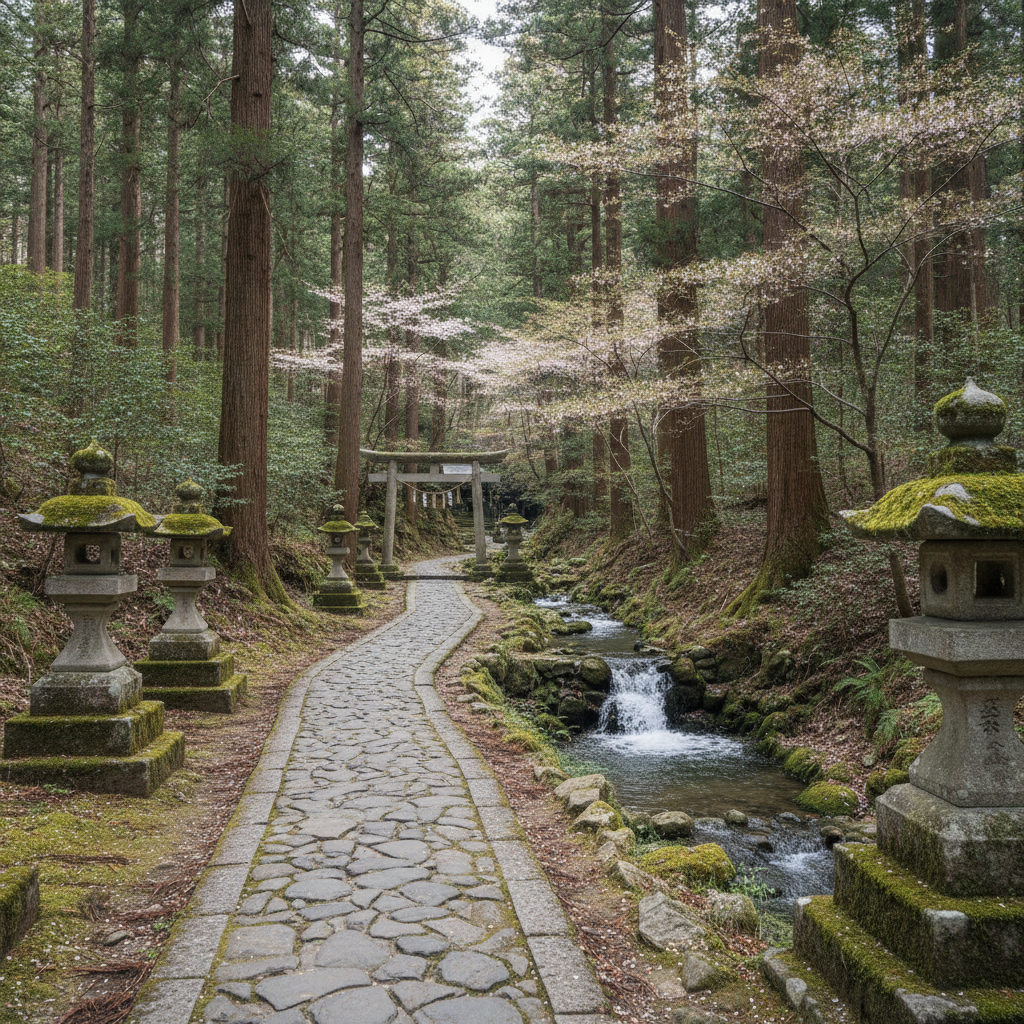
奈良穴場スポット, 隠れた名所, 地域密着, 秘境-The Philosophy of Driving in Japan
For years, my life was defined by the rhythmic hum of steel on steel, the precise schedule of the Kintetsu Line, and the panoramic views fleetingly glimpsed through a conductor's window. I spent countless hours ushering passengers across the Kansai region, a silent observer of Japan's incredible efficiency. And while Japan's public transportation system is, without question, a marvel of modern engineering—a testament to punctuality and interconnectedness—it presents a paradox for the true adventurer: the very efficiency that defines it also dictates your journey, confines your exploration, and ultimately, conceals the nation's most profound secrets.
As a former train conductor, I speak from a place of deep respect for rail travel. It connects megacities with seamless grace, a ballet of steel and speed. Yet, the Japan I truly fell in love with, the Japan that now forms the bedrock of my life’s passion, is a Japan untouched by station platforms and ticket gates. It is the Japan of ancient, winding roads that snake through mist-shrouded mountains, of sun-drenched coastal routes that hug the wild Pacific, and of secluded villages nestled in valleys so deep they seem to exist outside of time itself. This is the “Secret Japan,” and it is utterly inaccessible by train.
Imagine setting out from the vibrant, pulsating heart of Osaka, not bound by timetables, but by the sheer exhilaration of a journey defined solely by your desires. Kansai, with Osaka as its dynamic pivot, is an unparalleled starting point for such an expedition. To its north, west, and south lie landscapes of staggering diversity: from the rugged, primeval forests of the Kii Peninsula to the serene, undulating hills of Nara’s interior, far beyond the well-trodden paths of its famous deer park. These are the realms where the spirit of “local Japan” truly thrives, where hidden gems lie scattered like forgotten pearls, waiting to be discovered by those willing to chase the horizon.
And what better chariot for this quest than a finely tuned JDM icon, a machine engineered for the very joy of driving? Forget the bland utility of a rental car – picture yourself behind the wheel of a Toyota 86 or a Subaru BRZ. This isn’t just transportation; it’s an extension of your will, a partner in your adventure. The precise steering, the taut suspension, the eager rev of the boxer engine as you carve through a mountain pass – these aren't features, they're invitations to a dialogue between driver and road. The car becomes a key, unlocking vistas and experiences that remain stubbornly veiled to those confined to the rails. It’s the difference between merely seeing Japan and truly feeling it, between observing a landscape and becoming an intimate part of its unfolding story. This is the philosophy that guides us: to drive is to discover, to truly experience Japan's hidden pulse, one exhilarating curve at a time.
奈良穴場スポット, 隠れた名所, 地域密着, 秘境-The 2-Day Itinerary: Deep Dive

Prepare yourself, for this is not merely a trip; it is an odyssey into the soul of Japan, a pilgrimage of asphalt and adrenaline designed to reveal the Nara you never knew existed. Our chariot: the agile, spirited Subaru BRZ (or its equally thrilling sibling, the Toyota 86), a car purpose-built for the winding roads and breathtaking vistas that lie ahead. This 2-day itinerary, meticulously crafted, will take you from the urban pulse of Osaka to the ancient, mist-shrouded valleys of Nara’s secluded heart, far beyond the famous temples and playful deer.
Day 1: Unearthing the Sacred South – From Urban Roar to Mountain Whisper
09:00 – 10:00 AM: The Great Escape from Osaka
The moment of truth. You’re settled into the low-slung bucket seat of the BRZ, the leather-wrapped steering wheel a tactile promise of adventure. The urban sprawl of Osaka quickly recedes in your rearview mirror as you merge onto the Kinki Expressway. Here, the BRZ hints at its prowess – the direct throttle response, the firm yet compliant ride, a prelude to the symphony of speed and precision that awaits. The initial highway stretch is a necessary transition, a moment to acclimatize to the car's eager nature, the boxer engine offering a low, guttural growl that promises excitement. This isn't just about getting somewhere; it's about the joyous departure, the anticipation building with every kilometer.
10:00 – 11:30 AM: Carving Through the Foothills – Towards Yoshino's Embrace
As you exit the highway and transition to Route 169, the landscape begins its dramatic transformation. The concrete gives way to verdant hills, the flat urban grid replaced by undulating terrain. This is where the BRZ truly comes alive. The roads here are a tantalizing mix of sweeping bends and tighter corners, perfectly suited to the car's balanced chassis. You’ll feel the immediate, communicative feedback from the steering wheel as you navigate the initial ascent towards the Yoshino region. The air grows crisper, imbued with the scent of cedar and damp earth. This isn’t the Yoshino of cherry blossom fame, but its deeper, wilder kin, a gateway to the Kii Mountains. It’s a driver’s paradise, an asphalt ribbon meticulously laid out for automotive delight, inviting you to explore the limits of adhesion and your own driving skill within responsible boundaries.
11:30 AM – 12:30 PM: Tenkawa Village – A Glimpse of Pristine Japan
Deep within the mountains, after a particularly exhilarating stretch of road that demands your full attention, lies Tenkawa Village. This is a place where time seems to slow, where the crystal-clear waters of the Tenkawa River gurgle over ancient stones, creating a constant, soothing melody. Park your BRZ and take a moment to breathe in the élan of this pristine sanctuary. The village is tiny, its wooden houses clinging to the mountainside, their weathered facades whispering tales of centuries past. From my days on the Kintetsu, I’ve seen countless towns, but the profound quiet of a place like Tenkawa, so far removed from the clamor of the tracks, truly resonates. Walk along the riverbank, feel the cool mountain breeze, and let the serenity wash over you. It’s a sensory reset, a preparation for the deeper mysteries of the region.
12:30 PM – 01:30 PM: Culinary Delights at a Local “Shokudo”
Lunch in Tenkawa is an experience in authentic regional flavors. Seek out a small, unassuming “shokudo” (local diner), identifiable by the steam rising from its kitchen and the few local cars parked outside. Here, the menu often revolves around fresh river fish like ayu (sweetfish), grilled to perfection, or hearty mountain vegetable dishes (sansai) that reflect the bounty of the surrounding forests. Imagine the delicate crispness of grilled ayu, its subtle sweetness complementing the earthy tang of locally foraged ferns. The rice, often grown with pure mountain water, is exceptionally fluffy and fragrant. This is food born of the land, honest and unpretentious, a welcome contrast to the often-homogenized offerings of city restaurants. It’s a taste of “local Japan” in its purest form, fueling your spirit for the afternoon’s adventure.
01:30 PM – 03:00 PM: Dorogawa Onsen – Sacred Waters and Ancient Paths
Just a short, spirited drive from Tenkawa, still deep within the mountain folds, lies Dorogawa Onsen. This historic hot spring town has long been a spiritual retreat, particularly for pilgrims of the Shugendo ascetic mountain religion. The approach itself is mesmerizing, the BRZ hugging tight curves as the valley narrows further, revealing the traditional wooden architecture of the onsen district. Park your car and explore on foot. The air is thick with the scent of sulfur and cedar, a heady mix that speaks of healing and history. The small, family-run onsen here are true hidden gems. Step into the warm, mineral-rich waters of a local bathhouse. The feeling of the water on weary muscles after a morning of spirited driving is pure bliss, a therapeutic immersion that rejuvenates not just the body, but the soul. The experience is deeply personal, a connection to an ancient tradition of purification and reflection.
03:00 PM – 04:30 PM: Ryusenji Temple – Gateway to Omine-san
Following your onsen immersion, drive the short, winding road to Ryusenji Temple, one of the most significant sites for Shugendo practitioners. Nestled amidst towering cedars, this ancient temple serves as the gateway to the sacred Mount Omine, a UNESCO World Heritage site and a place of profound spiritual energy. The grounds are incredibly serene, almost otherworldly. Walk through the ornate gates, past the “Fudo-san” waterfalls where ascetics once performed austerities. The vivid vermillion of the temple buildings stands in striking contrast to the deep emerald of the surrounding forest. The BRZ sits quietly in the parking lot, a modern marvel juxtaposed against millennia of spiritual devotion. It’s a humbling experience, a reminder of the enduring power of nature and faith in Japan. The very air here feels charged with history and reverence, a powerful, silent presence.
04:30 PM – 06:00 PM: The Ascent to Totsukawa – A Geologist's Dream
As the afternoon light begins to lengthen, prepare for one of the most geologically fascinating and exhilarating drives of the trip: the journey further south into the vastness of Totsukawa Village. This is where the Kii Mountains reveal their true, rugged grandeur. The BRZ will sing on these roads, a symphony of its boxer engine echoing off rock faces and through dense forest tunnels. You’ll navigate challenging inclines and descents, a continuous dance between accelerator and brake, the precise gearbox (especially if you’re in an MT) making every shift a satisfying click. The geological formations here are dramatic: ancient, folded strata, sheer cliffs, and valleys carved by eons of tectonic activity and erosion. The road itself is a testament to human ingenuity, clinging precariously to the mountainside in places, offering breathtaking – and sometimes dizzying – panoramic views of untouched wilderness. Keep an eye out for glimpses of the Totsukawa River, a powerful force of nature carving its way through the landscape.
06:00 PM – 07:00 PM: Check-in at a Secluded Ryokan
Your destination for the night is a traditional *ryokan* or *minshuku* tucked away in the deep mountains of Totsukawa, far from any major towns. These establishments are often family-run, offering a warm, authentic Japanese welcome. Parking the BRZ for the night feels like returning a trusted steed to its stable after a day’s epic journey. The quiet of the mountains at dusk is profound, broken only by the chirping of cicadas and the distant rush of a river. Sink into the embrace of traditional Japanese hospitality, the smell of tatami mats and cypress wood filling the air. This isn’t a luxury hotel; it’s an immersion into local culture, a direct connection to the heart of rural Japan.
07:00 PM – 08:30 PM: “Kaiseki” Dinner – A Feast of Mountain Bounty
Dinner at your ryokan will be an unforgettable *kaiseki* experience, a multi-course culinary journey celebrating the region’s bounty. Expect dishes featuring locally sourced ingredients: mountain vegetables like *konnyaku* and *shiitake* mushrooms, freshwater fish from the clean rivers, and perhaps some exquisite local Nara beef. Each plate is a miniature work of art, designed to appeal to all five senses. The delicate flavors of grilled river fish, the earthy richness of a vegetable tempura, the subtle sweetness of a homemade *kuzu* (arrowroot) dessert – every bite tells a story of the surrounding mountains. The presentation is as important as the taste, a visual feast of vibrant colors and intricate arrangements. Sharing a meal like this, surrounded by the quietude of the mountains, is a profound cultural experience, a moment of deep connection to Japan’s culinary heritage.
08:30 PM onwards: Stargazing and Mountain Serenity
After dinner, step outside. Far from city lights, the night sky over Totsukawa is a breathtaking spectacle. Thousands of stars, normally invisible, blaze with incredible clarity against the velvet blackness. The air is cool and crisp, carrying the scents of pine and damp earth. The only sounds are the rustling of leaves and the distant murmur of the river. This is the true meaning of seclusion, a chance to reconnect with nature and oneself. Reflect on the day's incredible journey, the joy of driving the BRZ through such magnificent landscapes, and the profound beauty of Japan's hidden corners. The silence is golden, a perfect end to an extraordinary day.
Day 2: Bridges to the Past – Return Via Ancient Paths and Scenic Plateaus
08:00 AM – 09:00 AM: Traditional Japanese Breakfast & Departure
Awake to the gentle sounds of the ryokan and the inviting aroma of a traditional Japanese breakfast. Expect a spread of steamed rice, miso soup, grilled fish, various pickles (tsukemono), and perhaps a local specialty. It’s a light yet satisfying meal, perfectly balanced to prepare you for another day of exploration. After checking out, the BRZ awaits, its engine eager for the roads ahead. There's a different kind of excitement today, a readiness to explore new paths and revisit familiar ones with fresh eyes. From my conductor's perspective, the discipline of a scheduled breakfast gives way to the freedom of the open road, a truly liberating feeling.
09:00 AM – 10:30 AM: Tanize Suspension Bridge – A Leap of Faith Over the River
Our first destination for Day 2 is one of Totsukawa’s most iconic, yet still largely hidden, landmarks: the Tanize Suspension Bridge. This engineering marvel, stretching an incredible 297 meters (over 970 feet) across the Totsukawa River, is not for the faint of heart. It sways precariously as you walk, 54 meters (177 feet) above the emerald green waters below. The drive to the bridge is another delight for the BRZ, a series of tight corners and short straights leading you through dramatic river gorges. Parking at the base, you’ll feel the thrill before you even step onto the wooden planks. The geology here is striking, with sheer rock faces plunging into the river, a testament to the immense erosive power of water. Crossing the bridge is an exhilarating experience, a true “secret Japan” adventure that combines stunning views with a rush of adrenaline. From the middle, gaze down at the powerful current, a reminder of nature’s untamed beauty.
10:30 AM – 12:30 PM: The “Okuyamato” Route – Untouched Wilderness Driving
Now, we veer off the more conventional roads onto what I affectionately call the “Okuyamato” (Deep Yamato) route – a network of lesser-known prefectural roads that offer the most immersive driving experience. This leg of the journey is pure magic for the BRZ. Imagine miles of uninterrupted winding asphalt, shrouded by ancient cypress and cedar forests, the sunlight dappling through the canopy. The BRZ’s taut chassis and precise steering come into their own here, allowing you to dance through corners with effortless grace. The engine’s crisp bark on downshifts, the satisfying click of the manual gearbox (if you chose it), the intoxicating scent of damp earth and pine – it’s a symphony for the senses. You’ll pass tiny, forgotten hamlets, terraced rice fields clinging precariously to steep hillsides, and perhaps even spot wild deer or monkeys darting through the undergrowth. This is Japan untamed, a landscape that has largely resisted the march of modernity, offering a profound sense of connection to the land and its timeless rhythms. It’s a meditation in motion, a deep dive into the natural heart of Nara.
12:30 PM – 01:30 PM: Riverside Lunch at a Hidden “Teahouse”
As you emerge from the deepest forests, you’ll stumble upon a charming, almost-hidden eatery along a smaller tributary of the Totsukawa River. It might be a simple “teahouse” (chaya) that also serves light meals, or a modest family-run restaurant. Here, the focus is on simplicity and freshness. Perhaps a bowl of warm somen noodles, hand-pulled and served chilled with a delicate broth, or a local specialty like “meharizushi” – rice balls wrapped in pickled mustard greens, a delicious and portable snack perfect for adventurers. The sound of the flowing river provides a natural soundtrack to your meal, and the views are often spectacular, a panorama of verdant mountains. It’s a chance to savor the quiet beauty of rural Japan, a moment of peaceful respite before the final leg of your journey.
01:30 PM – 03:00 PM: Soni Highland – A Kansai Secret Plateau
Leaving the deep south, we begin our northern trajectory back towards Osaka, but not without another breathtaking detour. Navigate the BRZ through more exhilarating roads towards Soni Highland, often referred to as “Kansai’s Akiyoshidai” but far less known to international tourists. This vast, undulating plateau, covered in golden Susuki grass (Japanese pampas grass), offers a starkly different landscape from the dense forests and deep valleys you’ve explored. The drive up is a rewarding climb, the BRZ’s engine responding with eager enthusiasm. Once at the top, park and take a walk. The expansive views are truly panoramic, stretching to the distant mountain ranges. The golden hues of the grass, especially in the late afternoon sun, create an ethereal, almost otherworldly atmosphere. In spring and summer, it's a vibrant green, but autumn transforms it into a sea of shimmering gold. It’s a perfect spot for photography, a chance to stretch your legs and absorb the scale of Japan’s natural beauty. The feeling of freedom here, standing atop a vast, open landscape with your spirited JDM waiting, is simply unparalleled.
03:00 PM – 05:00 PM: The Road Back – Reflecting on the Journey
The final leg of our journey takes us from the serene heights of Soni Highland back towards the bustling outskirts of Osaka. The roads gradually widen, the curves become less dramatic, and signs of civilization become more frequent. This is a time for reflection. The BRZ, having performed flawlessly through every winding pass and challenging ascent, now cruises confidently. The boxer engine settles into a comfortable rhythm. As I once watched the landscapes change from my conductor’s cabin, now you observe the seamless transition from ancient wilderness to modern infrastructure, but with a profound difference: you’ve experienced every inch of it, every scent, every sound, every subtle shift in terrain, from behind the wheel. The journey isn’t just about the destinations; it’s about the freedom of the road, the connection with your car, and the unforgettable memories forged in Nara’s hidden heart. The satisfaction of a truly accomplished road trip, one that transcended the ordinary, fills you as the Osaka skyline reappears on the horizon.
05:00 PM – 06:00 PM: Arrival Back in Osaka & Farewell to the BRZ
With a sense of accomplishment and a heart full of memories, you navigate the final stretches of highway back into Osaka. The city, vibrant and energetic, feels different now, viewed through the lens of your recent adventure. Returning the BRZ is a bittersweet moment. You’ve pushed its limits (responsibly, of course), reveled in its agility, and relied on its performance to unlock a truly unique Japan. The car isn't just a rental; it's been your trusted companion on an extraordinary expedition. As you step out, you carry with you not just photographs, but the lingering scent of mountain air, the echo of the engine’s song, and the indelible imprint of Nara’s secret shores – experiences no train journey could ever hope to deliver. You’ve not just traveled; you’ve discovered, driven, and truly lived the hidden heart of Japan.
奈良穴場スポット, 隠れた名所, 地域密着, 秘境-Expert Advice & Cultural Nuances
Venturing beyond the well-worn tourist trails requires more than just a spirited JDM like the BRZ; it demands an understanding of Japan’s unique roadside culture and local customs. As someone who's crisscrossed this archipelago countless times, and whose former profession offered an intimate view of its meticulous organization, I can offer insights that will enrich your deep dive into Secret Nara.
The “Michi-no-Eki” Culture: More Than Just a Rest Stop
Forget the mundane highway service stations you might know. Japan’s “Michi-no-Eki” (Roadside Stations) are cultural oases, especially vital when exploring rural areas. They are hubs of local life, where you can stretch your legs, use impeccably clean restrooms, and – most importantly – immerse yourself in regional specialties. Imagine pulling up in your BRZ, its engine cooling, and stepping into a vibrant marketplace. You’ll find freshly harvested local produce, unique snacks and sweets (often seasonal and exclusive to that specific Michi-no-Eki), artisanal crafts, and sometimes even hot spring footbaths or small museums. They’re a window into the micro-cultures of each region. Always stop, explore, and sample. It's not just a break from driving; it's an integral part of the discovery, a chance to support local communities and taste truly authentic Japan.
Hunting for Hidden Culinary Gems: Where the Locals Eat
In the secluded valleys of Nara, the best food rarely comes with neon signs or English menus. To find true hidden culinary gems, look for the establishments frequented by locals – often humble, unassuming *shokudo* (diners) or small, family-run restaurants tucked away on side streets. My advice: trust your senses and observe. Look for a modest exterior with a few older cars parked outside, perhaps a “noren” (traditional curtain) hanging at the entrance, and the inviting aroma of simmering broth or grilling fish wafting out. These are the places where grandmothers have perfected recipes over generations. Expect dishes focused on seasonal, regional ingredients: freshwater fish from mountain rivers, wild mountain vegetables (*sansai*), locally farmed rice, and perhaps specialty items like *kakinoha sushi* (sushi wrapped in persimmon leaves) or delicate *kuzu* (arrowroot starch) desserts unique to Nara. Don't be afraid to point or use simple phrases like “osusume wa nan desu ka?” (What do you recommend?). The warmth of the hospitality and the genuine flavors will be your reward.
Navigating the Nuances: Expert Driving Precautions in Rural Japan
Driving a performance car like the 86/BRZ on Japan’s thrilling roads requires awareness. While the asphalt is generally excellent, rural roads, especially in mountain regions like those in Southern Nara, present unique challenges:
- Narrow Roads & Blind Corners: Many paths are barely wide enough for two cars, and some are single-lane, particularly in deep valleys. Exercise extreme caution on blind corners. The Japanese often use their horn (a quick “beep”) before entering tight, unsighted bends to alert oncoming traffic. Adopt this habit – it’s a sign of courtesy and safety.
- Wildlife: Deer, wild boar, and monkeys are prevalent in rural areas, especially at dawn and dusk. Stay vigilant, particularly on isolated stretches.
- Speed Limits: Rural speed limits are often lower than you might expect (e.g., 30-40 km/h). Respect them. This isn’t about pure speed; it’s about the dance through the corners. Japan values safety above all.
- Respecting Locals: If a local driver is behind you and appears to want to pass, find a safe spot to pull over briefly and let them by. They know these roads intimately.
- Mountain Weather: Weather can change rapidly in the mountains. Fog, sudden downpours, or even unexpected snow (in colder months) can occur. Drive defensively and be prepared to adjust your plans.
By embracing these cultural nuances and exercising common sense, your deep dive into Nara's hidden gems in a BRZ will be not only exhilarating but also respectful and profoundly rewarding.
奈良穴場スポット, 隠れた名所, 地域密着, 秘境-[Detailed Logistics & Pre-Trip Tips]
Beyond the exhilaration of the open road, a successful driving adventure in Japan – particularly with a specialized machine like the 86 or BRZ – hinges on understanding the practicalities. From my unique vantage point, having navigated Japan’s intricate transport systems both on rail and by road, I offer these crucial tips for your 2026 driving expedition.
Traffic & Navigation in 2026: Smooth Sailing Beyond the City
While urban centers like Osaka can still see their share of rush hour congestion (typically 7-9 AM and 5-7 PM), once you’re beyond the city limits and heading into the rural heartlands of Nara, traffic significantly thins out. The roads we’ll be exploring are often remote, making for an unencumbered driving experience. Navigation is straightforward with modern smartphone apps (Google Maps or Waze work excellently) and in-car navigation systems (often available in English). Ensure your phone is fully charged or you have a car charger – it’s your primary co-pilot for finding those hidden spots and navigating tight mountain roads where cell signal might be intermittent.
The ETC Card System: Your Gateway to Seamless Toll Roads
An ETC (Electronic Toll Collection) card is an absolute necessity for any extensive road trip in Japan. Trying to pay cash at every toll booth is a cumbersome process that breaks the flow of your journey. With an ETC card, you simply drive through designated ETC gates, and the tolls are automatically billed. It’s efficient, swift, and essential for maintaining the rhythm of a spirited drive in your 86/BRZ. Always confirm your rental comes equipped with an ETC card or offers one as an add-on. This small detail dramatically enhances your driving pleasure, allowing you to focus on the road and the breathtaking scenery rather than fumbling for change.
Mastering the “Mantan”: Japanese Gas Station Etiquette
Fueling up in Japan is generally easy, but knowing a few key phrases can make the experience smoother. When you pull into a gas station (gasorin sutando), if it’s full-service, a polite attendant will greet you. Simply say “Mantan onegaishimasu!” (mah-n-tahn oh-neh-guy-shee-mahs), which means “Please fill it up!” For the 86/BRZ, you’ll likely need “High-Octane” fuel (Hai-oku), though “Regular” (Regyurā) is also commonly available. You can specify by adding “Hai-oku de mantan onegaishimasu.” If it’s a self-service station (serufu sutando), the pumps are usually clearly marked with fuel types. Payment is typically credit card or cash. Remember to check if your rental car has the fuel cap on the left or right – a small detail that saves a moment of confusion!
Parking Prowess: Finding Your Spot in Secluded Japan
Parking in rural Japan is generally far less stressful than in major cities. Most Michi-no-Eki offer ample free parking. At smaller temples, shrines, or local eateries in secluded areas, you’ll often find designated (and free) parking lots, though they might be small. In tiny villages, discreetly parking on a quiet side street is sometimes acceptable, but always be mindful not to obstruct traffic or local residents. When staying at a ryokan or minshuku, confirm parking availability in advance; it's almost always provided. The key is to be observant and respectful of local signage and practices. A compact car like the 86/BRZ makes navigating tight spots and smaller parking areas much easier, adding to its appeal for this kind of adventure.
The JDM (MT Car) Driving Experience: A Symphony of Control
For the true enthusiast, driving a JDM with a manual transmission (MT) like the 86/BRZ on Japan’s winding roads is an unparalleled joy. It’s more than just a means of transport; it’s a mechanical ballet, a direct conversation between you and the road. The satisfaction of perfectly timed heel-and-toe downshifts before a tight hairpin, the precise engagement of the clutch, the eager climb of the tachometer as you exit a corner – these are the moments that truly define the “Secret Japan” driving experience. The lightweight, rear-wheel-drive platform of the 86/BRZ offers sublime balance and exceptional feedback, transforming every curve into an engaging challenge, every straight into an invitation to feel the engine’s spirit. It's a driving purity often lost in modern automatic vehicles, and it elevates this adventure from a mere road trip to an unforgettable, tactile immersion.
奈良穴場スポット, 隠れた名所, 地域密着, 秘境-[Comprehensive FAQ]
Navigating an international driving adventure naturally brings questions. Here are clear, concise answers to common concerns, ensuring your journey through Nara's hidden gems is as smooth as the asphalt on a mountain pass.
Do I Need an International Driving Permit (IDP) to Drive in Japan?
Absolutely. To drive legally in Japan, you need an International Driving Permit (IDP) issued under the 1949 Geneva Convention. This must be presented along with your valid domestic driver's license and your passport. Without all three, you cannot drive. Please ensure your IDP is issued by an authorized organization in your home country and is valid for the duration of your stay. Check the list of contracting countries to the 1949 Geneva Convention to confirm eligibility – most major nations are signatories. It’s a non-negotiable requirement for your safety and legal compliance.
What About Insurance?
Reputable rental companies in Japan, especially those specializing in performance vehicles, typically include comprehensive insurance coverage in their rental packages. This usually covers third-party liability, property damage, and often provides options for reducing your deductible (Collision Damage Waiver - CDW). Always review the insurance terms and conditions carefully before signing. Understanding what’s covered will provide peace of mind as you carve through those exhilarating mountain roads in your 86/BRZ.
I'm Nervous About Driving a Manual Transmission (MT) Car in Japan. Any Tips?
It's completely normal to feel a little apprehension, especially if you're not used to MT cars or driving on the left side of the road. However, the Toyota 86 and Subaru BRZ are incredibly forgiving and engaging cars to drive. Their precise clutches and smooth gearboxes make shifting a joy. Focus on smooth, deliberate movements rather than hurried ones. Japanese roads, even in rural areas, are generally well-maintained, reducing unexpected challenges. Remember, this isn’t a race; it’s an opportunity to connect with the machine and the road. Take your time, enjoy the feedback from the car, and let the mechanical symphony enhance your adventure. If it's been a while, perhaps practice a bit before your trip.
What Are Winter Driving Conditions Like in Nara's Hidden Areas?
While most of Nara Prefecture experiences relatively mild winters, the mountainous regions – particularly the Yoshino, Tenkawa, and Totsukawa areas – can receive significant snowfall from late December through March. Roads can become icy or snow-covered. If you plan to visit during these months, it is absolutely essential to check local weather and road conditions beforehand. Moreover, you must ensure your rental car is equipped with winter tires (studless tires, or “snow tires”). Reputable rental providers can arrange this, but it’s crucial to request them in advance. Never attempt to drive on snowy or icy mountain roads without appropriate tires – safety is paramount.
奈良穴場スポット, 隠れた名所, 地域密着, 秘境-The Final Call: CTA
You’ve envisioned it now: the crisp mountain air filling your lungs, the verdant landscapes unfolding before you, the precise steering of a JDM legend guiding you through hidden valleys and over exhilarating passes. You've seen the ancient whispers in secluded temples, tasted the authentic flavors of mountain villages, and felt the raw, untamed heart of Nara beating beneath your tires. This isn't just a vacation; it's a profound journey of discovery, a testament to the fact that Japan's deepest charms are often found far beyond the reach of conventional travel, waiting patiently for those bold enough to seek them out.
The freedom to stop at a breathtaking viewpoint, to chase a distant waterfall, to stumble upon a local festival – these are the privileges of the open road, amplified by the connection you forge with a machine engineered for pure driving pleasure. The Toyota 86 or Subaru BRZ, with its balanced chassis, eager engine, and direct feedback, transforms every kilometer into a memorable experience, not just a transition. It's the perfect companion for an adventure that combines adrenaline with introspection, speed with serenity.
If this vision of untamed beauty, winding roads, and mechanical symphony stirs your adventurer’s spirit, then the next step is clear. To truly unlock this unparalleled Japanese adventure, you need the right machine – a perfectly maintained, exhilarating JDM like the Toyota 86 or Subaru BRZ. When you're ready to trade crowded trains for open roads and well-trodden paths for hidden trails, your journey begins with us. Discover the ultimate driving experience and book your adventure at Omoshiro Rent-a-Car Osaka Chuo branch. Your secret Japan awaits.
