
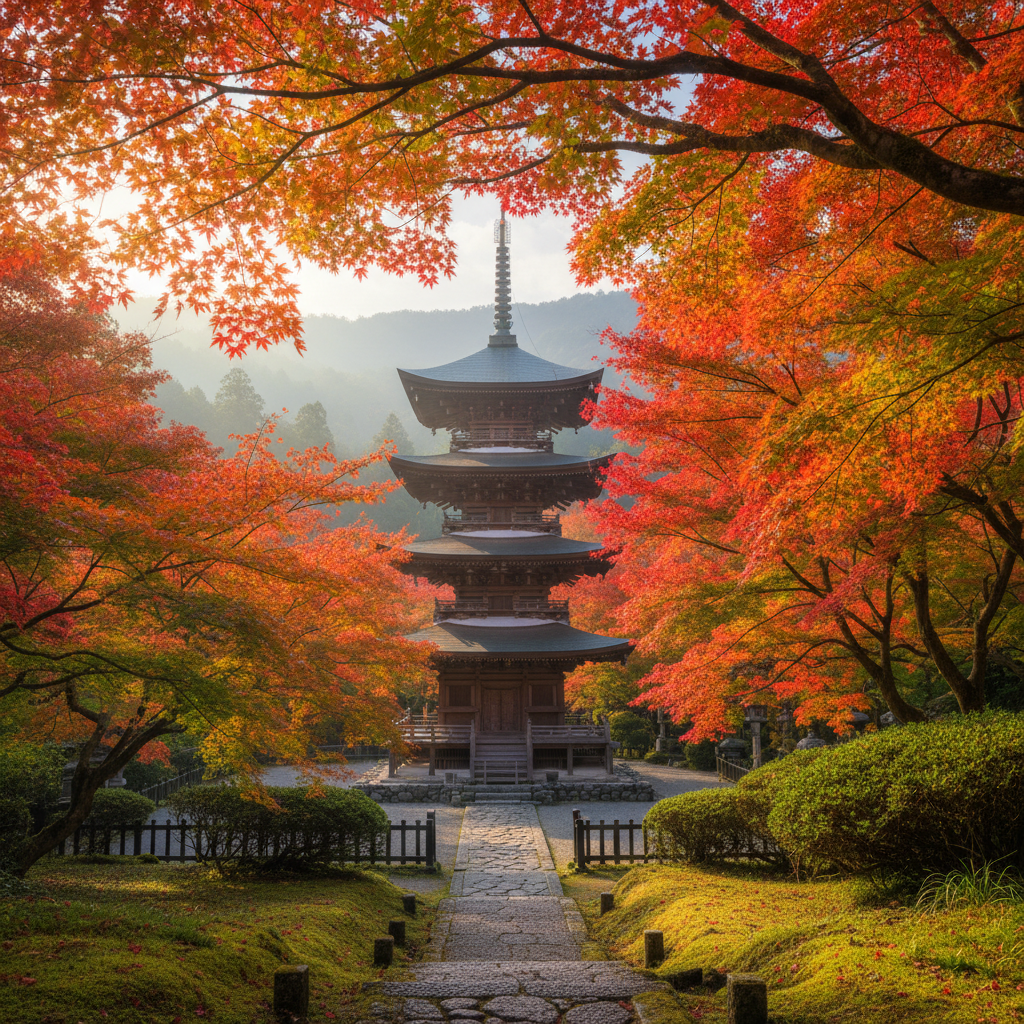
Mount Tanzan, Autumn Leaves, 13-Story Pagoda, Kemari, Fall – The Philosophy of Driving in Japan
For years, I navigated the intricate web of tracks that crisscross Japan, a Kintetsu train conductor guiding passengers through the heart of Kansai. I saw the rhythm of the rails, the precision of schedules, the seamless flow of modern Japan. But from that vantage point, I also glimpsed something more profound: the tantalizing edges of a Japan the trains simply couldn't touch. A Japan whispered about in hushed tones, a land of ancient secrets, breathtaking vistas, and roads carved by the very spirit of adventure. This, my friends, is the philosophy that drives me now, literally. It’s why I traded the conductor’s uniform for the driver’s seat, and why I implore you to do the same.
You see, public transport in Japan is a marvel – efficient, punctual, and utterly remarkable. For bustling cities and well-trodden paths, it’s unbeatable. But for the discerning traveler, the one tired of the same old guide-book recommendations, the one whose soul yearns for the scent of autumn leaves on a mountain breeze, the one who dreams of an exhaust note echoing through ancient valleys – the train simply won't suffice. From my years of driving across this magnificent archipelago, from Hokkaido’s snowy peaks to Kyushu’s volcanic landscapes, I've come to understand that true discovery in Japan lies beyond the station platforms.
Consider Osaka, your vibrant gateway to the Kansai region. It's a city of boundless energy, culinary delights, and captivating history. Most visitors use it as a hub for day trips by train to Kyoto, Nara, or Kobe. And while those journeys are pleasant, they are, by their very nature, structured, constrained. You are a passenger, not an explorer. But step into the cockpit of a performance machine like a Subaru BRZ or a Toyota 86, and Osaka transforms from a mere launchpad into the starting line of an epic adventure. The city's pulse fuels your departure, and the open road beckons, promising unfettered freedom.
This isn't just about reaching a destination; it's about the journey itself. It's about the exhilaration of carving through winding mountain passes, the thrill of discovering a secluded shrine nestled deep within a cedar forest, the serendipity of stumbling upon a local artisan’s workshop untouched by mass tourism. This is what I call “Secret Japan” – a tapestry of experiences woven into the very fabric of the landscape, accessible only to those willing to take the wheel. The train tracks follow the path of least resistance, connecting population centers. But the roads, oh, the roads! They dance with the terrain, climb to panoramic viewpoints, and dive into forgotten hamlets where time seems to stand still. They lead you to places like Mount Tanzan, a jewel of autumn splendor and historical significance, where the public bus schedules are sparse, and the sheer joy of the drive is an integral part of the pilgrimage. Driving allows you to dictate your own rhythm, to pause when a cascade of crimson maples catches your eye, to linger when a particularly inviting roadside stand appears, to simply exist in the moment, fully immersed in the ever-unfolding beauty of rural Japan. This isn't just a trip; it's an intimate conversation with the soul of Japan, a dialogue best held with your hands on the wheel and the horizon calling.
Mount Tanzan, Autumn Leaves, 13-Story Pagoda, Kemari, Fall – The 2-Day Itinerary: Deep Dive

Prepare yourselves, adventurers, for an odyssey that will redefine your perception of Japan. This isn't a mere tour; it's an immersion, a visceral connection to history, nature, and the exhilarating spirit of the open road. Our chariot? A finely tuned Toyota 86 or Subaru BRZ, a machine designed for pure driving pleasure, ready to sing its Boxer engine symphony through the mountains of Nara. We're chasing the intoxicating allure of Mount Tanzan in its full autumnal glory, seeking the grandeur of the 13-Story Pagoda, the ancient echoes of Kemari, and the vibrant palette of fall.
Day 1: Osaka to the Heart of Yamato – Chasing Crimson and Gold
08:00 AM – The Grand Departure from Osaka: Engine Roar and Anticipation
The morning air in Osaka is crisp, alive with the city’s burgeoning energy. You stand before your chosen steed – an 86 or BRZ, its sleek lines glinting under the pale morning sun. The moment you slip into the low-slung seat, the world outside fades, replaced by the intimate embrace of the cockpit. The tactile pleasure of the steering wheel, the satisfying click of the seatbelt, the ergonomic placement of the pedals – every detail speaks of precision. Twist the key, or push the start button, and the Boxer engine awakens with a guttural growl, a promise of the adventure to come. This isn't just a car; it's an extension of your spirit, a partner in discovery. As you navigate out of the urban labyrinth, the city gradually recedes in your rearview mirror, giving way to the promise of open roads. The initial highway stretches offer a chance to familiarize yourself with the car, its responsive steering, and the smooth power delivery. A sense of liberation washes over you as the concrete jungle yields to verdant landscapes.
09:30 AM – Highway Hypnosis and the Gateway to Nara
The drive along the expressways, though swift, is never mundane. The Japanese highway system, a testament to engineering prowess, guides us seamlessly towards Nara Prefecture. The initial roar of the urban commute smooths into a rhythmic hum as the Boxer engine cruises effortlessly. Look out for the subtle shifts in the landscape; the buildings thin out, giving way to rolling hills and expanses of rice paddies, often dotted with traditional farmhouses. This transition is a psychological reset, shedding the city's intensity for the serene beauty of the countryside. Feel the car breathe, the wind whispering past the windows, hinting at the crisp mountain air ahead. The 86/BRZ, with its balanced chassis and eager handling, makes even highway cruising an engaging experience, a prelude to the thrilling twisties to come.
10:30 AM – The Winding Ascent: A Symphony of Engine and Autumn
As we exit the main highway and begin our ascent into the mountainous heart of Nara, the real joy of driving a JDM legend truly begins. The roads narrow, shedding their multi-lane formality for the intimate embrace of tree-lined passes. The 86/BRZ comes alive here. Each curve is an invitation, each gradient a challenge met with responsive power. The steering, so direct and communicative, feeds every nuance of the tarmac back to your fingertips. This isn't about speed; it's about flow, about dancing with the road. The exhaust note, a deeper, more resonant baritone now, echoes off the ancient cedars and vibrant maples that flank our path. The scenery outside transforms into a kaleidoscope of autumnal hues: fiery reds, brilliant oranges, golden yellows, and deep russets, punctuated by the stoic greens of evergreen forests. The air, cool and fresh, carries the scent of damp earth and decaying leaves, a primal perfume of the fall season. You'll feel the G-forces gently shift with each well-executed turn, the perfect balance of the car a constant reassurance. This is the journey I dreamed of as a conductor, the one I knew existed beyond the rigid lines of the railway map.
12:00 PM – Arrival at Tanzan Shrine & A Culinary Prelude: Local Delights
After a exhilarating drive, we arrive at the foothills of Mount Tanzan, its slopes already ablaze with autumn's fire. The sheer beauty is breathtaking. Before immersing ourselves in the shrine's wonders, a vital refueling is in order. We'll seek out a humble, family-run eatery nestled near the base, perhaps one known only to locals. Imagine a steaming bowl of Nyumen (warm Somen noodles) or freshly made Kakinoha-zushi (sushi wrapped in persimmon leaves), a regional specialty. The warmth of the food, the robust flavors of local ingredients, are a perfect antidote to the crisp mountain air and a delicious preparation for the historical journey ahead. The conversation in these small establishments, though minimal, is often punctuated by the clatter of bowls and the murmur of local dialect, providing an authentic taste of Japanese hospitality.
01:00 PM – Tanzan Shrine: A Historical and Architectural Masterpiece Amidst Fiery Foliage
Stepping out of the car, the air is alive with the scent of ancient wood and damp earth, mingling with the subtle spice of fall leaves. Tanzan Shrine, or Tanzan Jinja, is not merely a destination; it is a portal to Japan’s foundational history. Dedicated to Fujiwara no Kamatari, a central figure in the Taika Reform of 645 AD, this shrine is where he and Prince Naka no Oe (later Emperor Tenji) secretly plotted the reform that would reshape Japan’s political landscape. Walk through the imposing Rōmon gate, and you're instantly transported back to the 7th century. The intricate carvings, the aged wood, the sheer scale of the architecture – it all speaks of an era of profound change and spiritual devotion. But it is in autumn that Tanzan Jinja truly reveals its ethereal beauty. The vast grounds are transformed into a living tapestry of color, a riot of crimson, gold, and amber that seems to set the very air alight. The main hall, or Honden, with its vibrant vermilion pillars and graceful eaves, stands in stark contrast to the verdant and now fiery backdrop. Each step on the gravel paths crunches rhythmically, a meditative sound accompanying your journey through history.
01:30 PM – The Iconic 13-Story Pagoda: A Testament to Timeless Beauty
The undisputed crown jewel of Tanzan Shrine, and perhaps all of Nara's autumnal beauty, is the stunning Jūsan-jū-no-tō – the only surviving wooden 13-story pagoda in Japan. Standing majestically amidst the fiery maples, its architectural grace is simply unparalleled. Built in 1532, this pagoda is a magnificent example of traditional Japanese craftsmanship, its intricate tiers reaching skyward, seemingly piercing the canopy of autumn leaves. From the various vantage points within the shrine grounds, you'll find countless opportunities to photograph its slender elegance framed by explosions of red and orange. The light filters through the leaves, dappling the pagoda in shifting patterns of gold. Imagine the skilled hands that crafted each tier, each delicate wooden join, without the aid of modern tools. The geological stability of this mountain terrain has allowed such a structure to stand for centuries, a silent witness to countless autumns. Take your time here. Circling the pagoda, you’ll discover new angles, new ways the light plays upon its ancient surface, and new reasons to marvel at its enduring beauty. The silence, broken only by the rustling leaves and the distant chirping of birds, is profound, inviting contemplation.
02:30 PM – The Echoes of Kemari: An Ancient Imperial Pastime
Beyond the architectural marvels, Tanzan Shrine offers a glimpse into a unique aspect of ancient Japanese court culture: Kemari. This aristocratic football-like game, played to keep a deer hide ball aloft without letting it touch the ground, has been performed here for centuries. The shrine features a dedicated Kemari field, an open space where these elegant demonstrations, often performed by Shinto priests in traditional Heian-period attire, take place during special festivals, particularly in autumn. Even if you don't witness a live performance, standing on the perimeter of the field, you can almost hear the soft thud of the ball, the rustle of silk robes, and the hushed cries of the players. It’s a vivid reminder of the shrine’s deep connection to imperial history and the refined pastimes of Japan’s nobility. This blend of spiritual devotion, political intrigue, and elegant sport makes Tanzan Shrine truly unique, a place where history isn't just told, but felt in the very air you breathe.
04:00 PM – Serene Descent and Ryokan Retreat: A Mountainous Haven
As the afternoon wanes and the sunlight softens, casting long shadows through the autumnal forests, we'll begin our gentle descent from Tanzan Shrine. The drive to our selected ryokan or charming inn in the immediate vicinity is short but equally scenic. These accommodations, often tucked away in serene mountain settings, offer a stark contrast to city hotels. The 86/BRZ, having proven its prowess on the winding ascents, now offers a smooth, controlled descent, its precise braking and engine response making the drive effortless. The crisp air of the mountains invigorates the senses as you pull into the welcoming embrace of your inn. Expect a traditional Japanese room with tatami mats, futon bedding, and perhaps a private outdoor hot spring bath, or rotenburo, overlooking a cascade of autumn foliage. The tranquility is palpable, a perfect balm after a day of historical exploration and exhilarating driving.
06:00 PM – Kaiseki Ryori: A Culinary Masterpiece for the Senses
The evening culminates in an exquisite experience of Kaiseki Ryori, a multi-course traditional Japanese dinner. This isn’t just food; it’s art. Each dish, meticulously prepared and elegantly presented, is a celebration of seasonal ingredients, particularly those found in the local Nara mountains in autumn. Imagine delicate slices of local venison, perhaps grilled with a hint of mountain herbs, or freshly foraged mushrooms in a delicate broth. The vibrant colors of the food will mirror the autumn leaves you admired all day. The texture of perfectly steamed rice, the subtle sweetness of seasonal root vegetables, the umami richness of a clear soup – every bite is a revelation. The quiet ambiance of the ryokan, the attentive service, and the exquisite flavors create a deeply immersive cultural experience. Pair it with a local sake, brewed with pure mountain water, and you have a symphony for the palate. This is a moment to savor, to reflect on the day's discoveries, and to anticipate the adventures of tomorrow.
08:30 PM – Stargazing and Serenity: The Mountain's Embrace
After dinner, take a moment to step outside. Away from the city lights, the mountain night sky is a canvas of unparalleled beauty. The stars, sharper and more numerous than you’ve ever seen, pierce the inky blackness. The cool, clean air, carrying the faint scent of pine and damp earth, is incredibly refreshing. There’s a profound sense of peace in these mountains, a timeless quietude broken only by the chirping of crickets or the gentle rush of a distant stream. This is a moment to simply exist, to let the stillness of nature wash over you, and to feel truly connected to the ancient land around you. The world of exhaust notes and winding roads may be temporarily paused, but the spirit of discovery continues, even under a blanket of a million stars.
Day 2: Deeper Nara Exploration – Hidden Trails and Scenic Homeward Bound
08:00 AM – Sunrise Splendor and Traditional Breakfast
Wake to the soft glow of a mountain sunrise, painting the sky in hues of pastel pink and gold. The air is even crisper than yesterday, invigorating your senses. A traditional Japanese breakfast awaits, often a wholesome spread of grilled fish, miso soup, fluffy rice, pickles, and local vegetables. It’s a lighter, healthier start to the day, preparing you for another day of exploration. Sip on hot green tea, enjoying the view from your window or balcony, perhaps overlooking a mist-shrouded valley where the autumn colors are particularly vivid. The quiet rhythm of the ryokan, the sounds of nature just outside, reinforce the sense of calm and rejuvenation.
09:30 AM – The Uncharted Path: Hidden Viewpoints and Local Crafts
Today, our 86/BRZ will take us further into the less-trodden paths around Mount Tanzan. While the shrine is the main draw, the surrounding area is replete with smaller, often overlooked treasures. We’ll seek out an obscure mountain pass, perhaps one only known to local hikers or the elderly residents of the scattered hamlets. These roads, though sometimes narrower and more challenging, are where the 86/BRZ truly shines. Its nimble chassis and precise handling make navigating tight switchbacks a joy. The engine, eager to respond to every throttle input, sings its high-revving song as you power out of corners. Imagine pulling over at a seemingly random spot only to discover a breathtaking panorama: a valley blanketed in autumn colors, with distant peaks piercing the horizon, perhaps a wispy cloud lingering in the depths. We might stumble upon a small, family-run craft shop specializing in Yoshino cedar products, or a tiny temple almost consumed by ancient forest, its moss-covered stones whispering tales of centuries past. These are the moments of true discovery, the serendipitous encounters that only a self-driven journey can provide.
12:00 PM – Lunch in a Hidden Village: Authentic Flavors
Our drive will lead us to a small, unassuming village, far from the tourist throngs. Here, we'll find a local restaurant that serves hearty, unpretentious fare, often based on seasonal ingredients harvested from the surrounding mountains and fields. Perhaps a simple yet incredibly flavorful dish of soba (buckwheat noodles) with wild mushroom tempura, or a regional stew slow-cooked with root vegetables. The proprietor, usually an elderly couple, will offer warm hospitality, a genuine smile transcending any language barrier. The flavors here are honest, authentic, and deeply satisfying, providing a true taste of rural Japan. This is more than just a meal; it’s an immersion into the everyday life and culinary traditions of a community sustained by the land.
01:30 PM – The Scenic Route Homeward: Michi no Eki Discovery
With our hearts full of discovery and our appetites satisfied, we begin the return journey towards Osaka, but not without one more adventure. We'll take a different route, one that promises more scenic beauty and, crucially, a stop at a renowned Michi no Eki (Roadside Station). These aren't your typical highway rest stops; they are vibrant community hubs. The drive there will be a continuous feast for the eyes, the 86/BRZ gliding through valleys still vibrant with autumn’s embrace, the engine’s gentle purr a comforting soundtrack. The roads here might open up slightly, allowing for a more flowing, rhythmic drive, where you can feel the car's stability and composure at speed. At the Michi no Eki, you'll discover a treasure trove of local produce, artisanal crafts, and regional delicacies. Sample freshly baked goods, pick up some unique souvenirs, or simply enjoy a premium coffee while admiring the surrounding landscape. These stations are a testament to Japan’s dedication to supporting local communities and providing travelers with a taste of each region's unique offerings. It’s a perfect pause, a bridge between the wild beauty of the mountains and the urban pulse of Osaka.
04:00 PM – The Bittersweet Return to Osaka: Memories Etched in Chrome
As the sun begins its descent, casting a warm, golden glow over the western horizon, we'll find ourselves back on the expressways leading into Osaka. The transition back to city driving is a stark reminder of the unique journey you've just undertaken. The exhilaration of the mountain passes, the serene beauty of Tanzan Shrine, the vibrant autumn leaves, the ancient whispers of Kemari – all these memories are now deeply etched into your mind. The 86/BRZ, your faithful companion, has proven itself not just as a means of transport, but as an integral part of the adventure, its performance and character enhancing every moment. As you navigate the familiar urban sprawl, a sense of accomplishment settles in. You haven't just visited Japan; you've experienced it, intimately, passionately, on your own terms. The journey may be ending, but the spirit of discovery, the thrill of the drive, will undoubtedly linger long after the engine is turned off.
Mount Tanzan, Autumn Leaves, 13-Story Pagoda, Kemari, Fall – Expert Advice & Cultural Nuances
Venturing beyond the well-worn tourist paths requires a little insider knowledge, a few seasoned tips to truly unlock the magic of Japan’s hidden gems. As someone who has spent years on these roads, both as a rail operator observing the landscape and now as a proprietor of JDM driving experiences, I can tell you that the true flavor of Japan lies in its nuances.
Embrace the 'Michi no Eki' Culture
Forget everything you think you know about rest stops. Japan’s Michi no Eki, or Roadside Stations, are cultural institutions in themselves. They are far more than just a place to refuel or stretch your legs. Each Michi no Eki is a microcosm of its surrounding region, showcasing local pride and produce. You'll find hyper-fresh, often organic, vegetables and fruits harvested that very morning from nearby farms. Artisanal crafts unique to the area – think intricately carved wooden goods, delicate ceramics, or locally woven textiles – are readily available. Many Michi no Eki also boast incredible local eateries, serving regional specialties that you won't find in urban restaurants. This is where you can truly sample the authentic flavors of the countryside. Stop at one, chat (even with gestures!) with the friendly vendors, and pick up some edible souvenirs. It's an essential part of the Japanese road trip experience, offering a tangible connection to the local community.
Seek Out Hidden Culinary Gems
While guidebooks will point you to popular restaurants, the real culinary treasures in Japan are often tucked away, unassuming and frequented solely by locals. In the areas around Mount Tanzan, look for small, family-run eateries that might not even have an English menu. Don't be intimidated; a friendly smile and a pointing gesture can often lead to the most memorable meals. These places specialize in home-style cooking, using ingredients from their own gardens or local purveyors. The flavors are honest, unpretentious, and deeply satisfying. Ask locals for recommendations – a nod and a polite "Oishii tabemono wa doko desu ka?" (Where is delicious food?) can work wonders. You might end up in a tiny soba shop with noodles hand-made daily, or a cozy cafe serving a regional dessert found nowhere else. These are the moments that elevate a trip from sightseeing to genuine cultural immersion.
Driving Etiquette and Road Savvy for the Discerning Driver
Driving in Japan, especially outside the major cities, is largely a pleasant experience. The roads are impeccably maintained, and drivers are generally courteous. However, a few nuances are worth noting for the international adventurer behind the wheel of an 86 or BRZ:
- Speed Limits: Respect them. Japanese speed limits (often 40-60 km/h on regular roads, 80-100 km/h on expressways) are enforced. While the 86/BRZ invites spirited driving, remember that these are public roads.
- Lane Discipline: Keep left. Japan is a left-hand drive country. On multi-lane roads, faster traffic generally uses the right lane for passing.
- Mountain Roads: The winding roads around Mount Tanzan are glorious, but also demand respect. Be mindful of blind corners, occasional wildlife (deer, monkeys), and slow-moving local vehicles. Use your engine braking (a joy in an MT 86/BRZ!) to manage descents and save your brakes. The exhilaration comes from smooth, precise inputs, not reckless speed.
- Parking: In rural areas, parking is generally easier to find than in cities. Look for designated parking lots at shrines, temples, and Michi no Eki. Always pay attention to signs; some smaller spots may be reserved for residents.
- The Thrill of the 86/BRZ: These cars are designed for engagement. Feel the road through the steering wheel, listen to the engine, anticipate the next turn. It's about becoming one with the machine and the environment. This isn't a commute; it's a conversation between you, the car, and the stunning Japanese landscape. Savor every shift, every corner, every crisp exhaust note echoing through the valleys.
By embracing these cultural nuances and driving tips, your journey through Japan’s autumn wonderland will be not just a trip, but an authentic, deeply enriching experience, perfectly complemented by the freedom only a JDM car can provide.
Mount Tanzan, Autumn Leaves, 13-Story Pagoda, Kemari, Fall – Detailed Logistics & Pre-Trip Tips
Embarking on a JDM driving adventure in Japan requires a bit of preparation to ensure a seamless and exhilarating experience. As your guide, and as someone who lives and breathes Japanese roads, let me walk you through the essential logistics for your 2026 autumn escapade to Mount Tanzan.
Navigating Japan’s Roads in 2026: Traffic & Tolls
Japan’s infrastructure is world-class, but like any developed nation, traffic can be a factor. In 2026, you can expect major city expressways around Osaka to be busy during peak commuting hours (roughly 7-9 AM and 5-7 PM). However, once you venture out into Nara Prefecture and towards Mount Tanzan, traffic thins considerably, especially on the more scenic, winding mountain roads. Weekends and national holidays, particularly during peak autumn foliage season (late October to early December for this region), will see increased domestic tourism. Planning your departures early in the morning on these days can help you beat the rush and enjoy emptier roads.
The Essential ETC Card: Your Gateway to Smooth Travel
Toll roads are prevalent in Japan, offering fast and efficient travel between regions. While you can pay cash at toll booths, an ETC (Electronic Toll Collection) card is an absolute game-changer. It allows for seamless, non-stop passage through toll gates, saving you time and hassle. Think of it as Japan's version of E-ZPass or FasTrak. When renting your 86 or BRZ, ensure you opt to rent an ETC card along with the vehicle. The rental company will provide a card that slots into a dedicated reader in your car. Toll fees are then aggregated and typically settled upon return of the vehicle. This small addition makes a monumental difference to your driving enjoyment, keeping the flow uninterrupted and your focus on the road ahead.
Fueling Up: A Unique Japanese Experience
Japanese gas stations are incredibly efficient and customer-service oriented, often offering full-service refueling, especially in rural areas. Here’s a quick guide to what you’ll encounter:
- Fuel Types: You’ll primarily need “Regular” (レギュラー – Regyura) or “High Octane” (ハイオク – Hai-oku). For performance cars like the 86 or BRZ, I always recommend High Octane to get the best performance and engine health. Diesel (軽油 – Keiyu) is for diesel vehicles only.
- The “Mantan” Moment: When you pull up to a pump, an attendant will usually greet you. Simply roll down your window and say “Mantan, Hai-oku onegaishimasu” (満タン、ハイオクお願いします – “Full tank, high octane, please”). If you just need a certain amount, indicate the value (e.g., “San-zen en, Hai-oku onegaishimasu” – 3,000 yen, high octane, please).
- Service with a Smile: Attendants will often clean your windows and ask if you need to dispose of any trash. It’s a level of service you might not expect elsewhere, reflecting the renowned Japanese hospitality. Don’t be surprised if they efficiently guide you out of the station after you’ve paid.
Parking Prowess: Navigating Shrine & Rural Lots
Parking at major tourist sites like Tanzan Shrine typically involves designated, often paid, parking lots. These are usually well-signed. In smaller towns or at less-frequented shrines, you might find free parking, sometimes just a gravel patch. Always look for parking signs (駐車場 – Chushajo) and be mindful of any fees. For your 86/BRZ, its compact size and excellent maneuverability make parking a breeze, even in tighter spots. Just remember to always park respectfully and within marked lines.
The Unparalleled Thrill of JDM (MT) Driving
This is where the true magic happens. Driving an 86 or BRZ with a manual transmission isn't just about getting from A to B; it's an intimate dance between man and machine. The feeling of the short-throw shifter clicking precisely into gear, the nuanced engagement of the clutch, the instant response of the naturally aspirated Boxer engine as you perfectly rev-match a downshift into a corner – these are the sensations that elevate a road trip into an art form. The 86/BRZ, with its low center of gravity, perfectly balanced chassis, and communicative steering, is designed to make you feel every inch of the road. It's an extension of your body, responding instantly to your inputs. On the winding roads leading to Mount Tanzan, you won't just be driving; you'll be experiencing the road, the car, and the stunning Japanese landscape in a way that an automatic transmission simply cannot replicate. It’s pure, unadulterated driving joy, a connection to the machine that is becoming increasingly rare in today's automotive world. Embrace it, master it, and you'll find an even deeper appreciation for your Japanese adventure.
Mount Tanzan, Autumn Leaves, 13-Story Pagoda, Kemari, Fall – Comprehensive FAQ
As an experienced Japan traveler and JDM enthusiast, I understand you might have some practical questions before embarking on this epic journey. Let’s address some of the most common concerns:
Q: What documents do I need to drive in Japan?
A: To legally drive in Japan, you will need three essential documents: your valid international driving permit (IDP) issued under the 1949 Geneva Convention, your original driving license from your home country, and your passport. Please ensure your IDP is valid for the entire duration of your stay. It’s crucial to understand that Japan does not recognize IDPs issued under other conventions (like the 1968 Vienna Convention) or national driving permits alone. Always carry all three documents with you while driving. Without them, you cannot rent a car or legally drive in Japan.
Q: What about insurance for the rental car?
A: Comprehensive insurance is not just recommended; it’s practically essential for peace of mind. Reputable rental agencies in Japan, including ours, typically offer various insurance packages, often including basic compulsory liability insurance. I strongly advise opting for the fullest coverage available, often called 'Collision Damage Waiver' (CDW) or a similar comprehensive package, which helps reduce your deductible in case of an accident. Always clarify what is covered, any exclusions, and the deductible amount before you sign your rental agreement. Driving without adequate insurance can lead to significant financial liability.
Q: I’m nervous about driving a manual transmission (MT) car in Japan. Should I still consider it?
A: Absolutely! While it's true that automatics are more common globally, driving a manual transmission 86 or BRZ in Japan's scenic mountain passes is an experience you simply shouldn't miss. If you're comfortable with MT, even if it's been a while, the precise, engaging nature of these cars will quickly rekindle your love for stick shift. The short throws, the responsive clutch, and the direct connection to the engine make every gear change a pleasure. If you're a novice, a brief refresher might be wise, but I encourage you to embrace the challenge. The reward is an unparalleled driving immersion, a feeling of being truly connected to the road that an automatic simply cannot replicate. It's a key part of the JDM driving adventure.
Q: What are the road conditions like in autumn, and what about winter?
A: In autumn, particularly in the Nara region where Mount Tanzan is located, road conditions are generally excellent. The weather is typically cool and dry, perfect for spirited driving. The main concern might be falling leaves, which can become slippery when wet, so exercise caution, especially on shaded corners. For winter travel, conditions can change significantly. While our itinerary focuses on autumn, it's vital to be aware that mountainous regions can experience snow and ice from late November through March. If you plan a winter trip, always check local road conditions before departure. Our rental cars are equipped with appropriate tires for varying seasons, but safety is paramount, and snow tires or chains may be necessary in heavy snow areas. We prioritize your safety and will always advise on the best equipment for the conditions.
Mount Tanzan, Autumn Leaves, 13-Story Pagoda, Kemari, Fall – The Final Call: CTA
You’ve traversed ancient paths, felt the pulse of history beneath your tires, and witnessed autumn’s masterpiece painted across the slopes of Mount Tanzan. You’ve heard the eager song of the 86 or BRZ’s Boxer engine echo through cedar forests and along winding roads that public transport simply cannot reach. This isn't just a fantasy; it's a tangible, exhilarating reality waiting for you. The freedom to chase the perfect view, to savor a local delicacy in a hidden village, to explore at your own pace – this is the essence of a true Japanese adventure, a secret Japan revealed only to those bold enough to take the wheel.
As a former Kintetsu conductor, I understood the constraints of the railway lines. As a JDM enthusiast and now a rental car proprietor, I know the boundless liberation of the open road. I’ve meticulously crafted this itinerary, drawing on years of experience, to offer you more than just a trip; I offer you an unforgettable story. A story written on asphalt, painted with autumn leaves, and powered by the heart of a JDM legend.
Don't just dream of this adventure; make it happen. Your perfectly maintained, custom-tuned Toyota 86 or Subaru BRZ, complete with a thrilling manual transmission, awaits. To transform this vivid itinerary into your personal memory, to truly unlock the Secret Japan that lies beyond the train tracks, visit us. Your ultimate JDM driving adventure begins with a simple click. We at Omoshiro Rent-A-Car Osaka Chuo are ready to hand you the keys to your next great Japanese odyssey. The road calls. Answer it.
