
Kushimoto, Wakayama - The Philosophy of Driving in Japan
For years, I wore the sharp uniform of a Kintetsu Railway conductor. I spent my days watching the emerald landscapes of the Kansai region streak past the train cabin windows, locked precisely to the cadence of steel wheels on iron rails. Trains in Japan are legendary—punctual to the second, smooth, and hyper-efficient. But as a railway conductor, I learned a quiet truth that most travelers never realize: trains only show you the spine of Japan. They take you where millions have already trod, along rigid lines carved through valleys, bypassing the wild, breathing heart of the country that exists just beyond the station platform.
When I traded the conductor's pocket watch for the steering wheel of a sports car, my perspective on Japanese travel transformed entirely. I began exploring the country via its legendary mountain passes, coastal routes, and rural arterial roads. Today, running a specialized Japanese Domestic Market (JDM) sports car rental business right here in Osaka, I share that revelation with travelers from all across the globe.
To truly experience Japan—what I call "Secret Japan"—you need control over your own trajectory. You need to break free from rigid train timetables, step past the crowded tourist corridors of Kyoto and Dotonbori, and take the helm of a machine built for driving pleasure.
The Kansai region, with Osaka as its pulsating nucleus, offers a stark, beautiful contrast. Within thirty minutes of leaving Osaka’s neon-drenched concrete grid, you can find yourself carving through dense cedar forests or tracing the rugged contours of raw coastlines. Nowhere is this transformation more profound than the journey down the Kii Peninsula to Kushimoto in Wakayama Prefecture—the southernmost point of Japan's main island of Honshu.
Public transport can technically get you down toward Wakayama, but it confines you to coastal express trains that peer at the ocean from afar, missing the dramatic ridge-line roads, the hidden fishing coves, and the secluded coastal vantage points where the Pacific Ocean crashes violently against millennia-old rock formations. To feel the soul of this land, you need a driver’s car—specifically, a light, naturally aspirated, rear-wheel-drive masterpiece like the Subaru BRZ.
The BRZ is not about mind-numbing straight-line speed; it is an instrument of precision. With its ultra-low center of gravity, flat-four boxer engine, and intuitive manual transmission, the BRZ communicates every millimeter of the tarmac directly to your fingertips. As you drop down into its low-slung bucket seats, shift into first gear, and point the nose south from Osaka toward Kushimoto, you aren't just taking a trip—you are engaging in a sensory dialogue with the Japanese landscape.

Kushimoto, Wakayama - The 2-Day Itinerary: Deep Dive
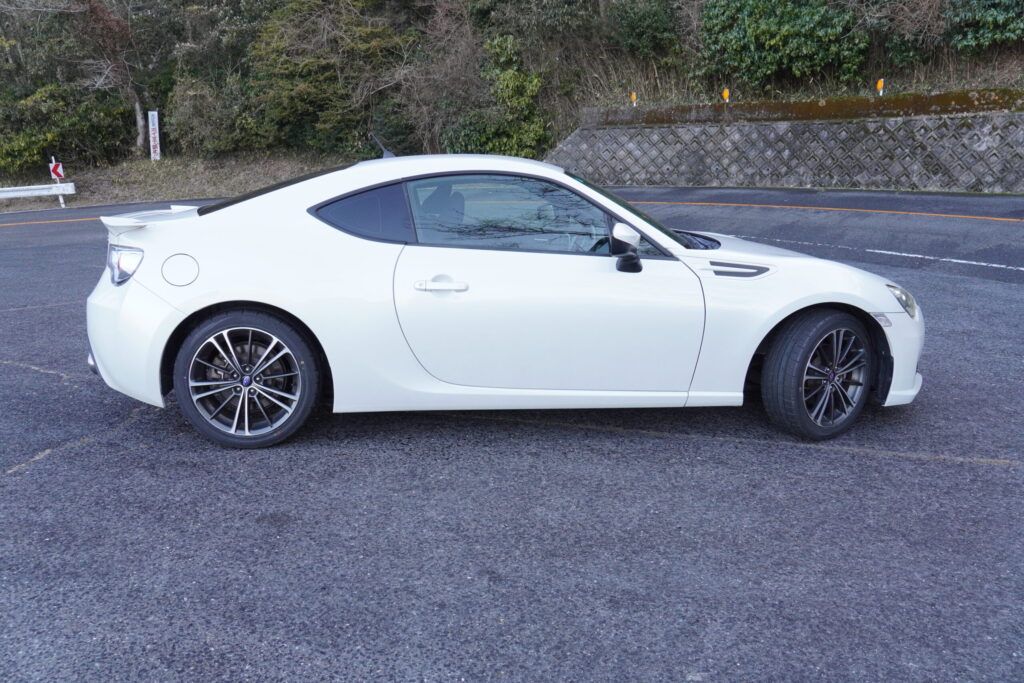
This ultimate two-day road trip takes you from the bustling metropolis of Osaka all the way to the raw edge of Honshu: Kushimoto, Wakayama. Every hour is dialed in to offer the perfect balance of challenging driving roads, breath-taking coastal scenery, local culinary stops, and deep historical resonance.
DAY 1: OSAKA TO KUSHIMOTO
[07:00] Osaka Departure ➔ [08:30] Yuasa Soy Sauce ➔ [10:30] Shirahama Coastal Drive ➔ [12:30] Lunch at Katsuura ➔ [14:30] Hashagui-iwa Rocks ➔ [16:30] Cape Shionomisaki Sunset

DAY 2: KUSHIMOTO TO OSAKA VIA KOYASAN
[08:00] Oshima Island ➔ [10:30] Kumano Nachi Taisha ➔ [13:00] Ryujin Skyline Drive ➔ [15:30] Koyasan Exploration ➔ [19:00] Return to Osaka
Day 1: The Descent to the Edge of Honshu
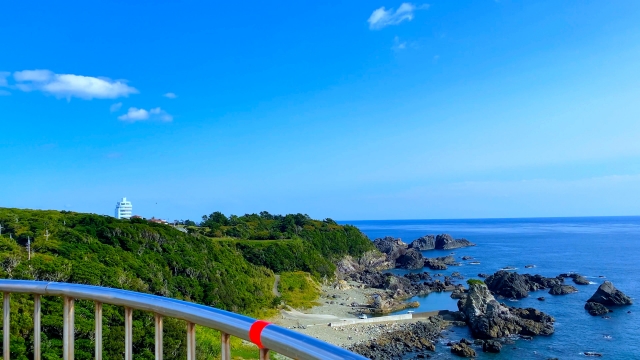
07:00 AM – Departure from Central Osaka: The Urban Breakout
The morning sun begins to reflect off Osaka’s glass skyscrapers as you fire up the 2.4-liter boxer engine of the Subaru BRZ. The rich, mechanical rumble echoes off the surrounding buildings. Leaving early is vital to beat the morning commuter rush on the Hanshin Expressway. You slide into the crisp gear selector, dip the heavy clutch, and slot into first gear. As you navigate the urban arteries heading south onto the Hanwa Expressway (E26/E42), the city fades behind you in a blur of concrete pillars and overpasses.
Within forty minutes, the residential suburban sprawl gives way to the rolling green foothills of Wakayama Prefecture. The air crispens, changing from city smog to the clean scent of pine and ocean moisture coming off the coast.
08:30 AM – Yuasa: The Birthplace of Soy Sauce & Historic Streetscapes
Route: Hanwa Expressway to Yuasa IC
Your first stop takes you off the main highway into Yuasa, a quiet coastal town steeped in maritime trade history. Yuasa is celebrated across Japan as the birthplace of soy sauce (shoyu), dating back to the Kamagata monk era in the 13th century.
Parking the low-slung BRZ near the preserved historic district, you walk through narrow lanes lined with black-slatted wooden machiya houses. The deep, rich aroma of fermenting soybeans and roasted wheat fills the morning air. Visit the historic Kaducho Soy Sauce Brewery, where master brewers still age soy sauce in massive cedar vats using techniques untouched for over 170 years.
- Sensory Note: Taste a drop of authentic unpasteurized raw soy sauce—salty, complex, and filled with deep umami notes completely unlike commercial varieties.
- Driving Check: As you pull out of Yuasa, take National Route 42 (Kinan Highway). Here, the coastal twists begin. Feel the electric power steering of the BRZ lighten as you flow through sweeping left-and-right curves alongside the sparkling Kii Channel.
10:30 AM – The Shirahama Coastal Route: Sandstone Bluffs & Ocean Spray
Route: Route 42 South to Shirahama Coastal Loop
Leaving Yuasa, bypass the modern inland expressway and stick to the coastal roads leading into Shirahama. The BRZ thrives here. Third gear, 4,000 RPM—the boxer engine sings as you clip the apexes of gently winding coastal asphalt.
Your route hits Senjojiki ("Thousand Tatami Mats"), a massive plateau of soft, multi-layered sandstone carved into otherworldly steps by centuries of pounding Pacific waves. Park the BRZ in the coastal lot, where the stark blue background highlights the sharp lines and sculpted arches of the car's bodywork.
Just two minutes south lies Sandanbeki Cliffs—a sheer 50-meter-high wall of basalt cliff facing the ocean head-on. Walk down to the edge and listen to the thunderous roar of waves crashing into the subterranean sea caves below, once used as a hidden sanctuary by the legendary Kumano Navy during the Heian period (794–1185).
12:30 PM – Seafood Lunch at South Kishu's Ports
Route: Route 42 continuing South toward Susami and Kushimoto
As you press further south, the road clings tighter to the mountain cliffs on your left while the vast expanse of the Pacific opens wide on your right. This section of Route 42 is a driver's dream: wide asphalt, clear sightlines, banked corners, and minimal traffic outside of peak holiday seasons.
Pull into a seaside Shokudo (local eatery) along the Susami coastline. Wakayama's southern waters are warmed by the Kuroshio Current, bringing an incredible abundance of fresh pelagic marine life.
- The Meal: Order Katsuo no Tataki (seared skipjack tuna). Freshly caught that morning, the fish is seared over roaring rice straw flames right before your eyes, crisping the exterior skin while leaving the inside cool, red, and buttery. Served simply with sliced garlic, spring onions, and a splash of fresh ponzu made from local Wakayama yuzu citrus.
02:30 PM – Hashigui-iwa Rocks: Geology Marvel of Kushimoto
Route: Route 42 directly into Kushimoto Town
Arriving in Kushimoto, you encounter one of Japan’s most extraordinary natural geological formations: Hashigui-iwa Rocks.
Rising abruptly from the ocean in a near-perfect straight line toward Oshima Island, this row of approximately 80 jagged, pillar-like rock formations stretches for nearly 850 meters. According to local folklore, the legendary Buddhist monk Kobo Daishi (Kukai) attempted to build a bridge from Kushimoto to Oshima Island overnight after being challenged by an ogre. When the ogre mimicked a rooster's crow to trick Kukai into believing morning had come, Kukai abandoned the task, leaving only these massive stone bridge piers behind.
Geologically, these pillars are the result of quartz-porphyry dykes intruding into softer mudstone layers millions of years ago. As the sea eroded the softer surrounding rock, only these hardened volcanic pillars remained.
- Photo Opportunity: Park your Subaru BRZ in the public coastal bays opposite Hashigui-iwa. The contrast between the car's sleek, modern Japanese engineering and the ancient, jagged rock spires standing against the roaring ocean backdrop makes for an unforgettable image.
04:30 PM – Cape Shionomisaki: Standing at Honshu's Edge for Sunset
Route: Prefectural Road 41 (Shionomisaki Loop)
From Hashigui-iwa, take the narrow, winding loop road leading up to Cape Shionomisaki—the undisputed southernmost point of Japan’s main island of Honshu (Latitude 33°26' N).
The drive up the cape is technical and tight. The BRZ’s short wheelbase and precise pedal placement allow for effortless heel-and-toe downshifts as you drop down into second gear for tight hairpin bends, soaring upward through dense groves of subtropical broadleaf trees.
When you reach the top, the forest opens into a massive, sloping green lawn (Shionomisaki Wind Park) that runs straight into the Pacific Ocean. Towering above the coast stands the white-painted Shionomisaki Lighthouse, built in 1878 by British engineer Richard Henry Brunton.
- The Experience: Stand at the edge of the cliff as the sun drops toward the horizon. Because there is no land mass directly south between here and the Antarctic ice sheets, the horizon curves visibly before your eyes. The ocean turns from brilliant turquoise to deep violet, painted in golden light as the sun dips below the Pacific line.
- Dinner & Rest: Head into Kushimoto town for the evening. Dine on fresh Katsuura bluefin tuna and local Kue (longtooth grouper) hotpot, then check into a local seaside Ryokan (traditional Japanese inn) featuring natural onsen hot springs fed by geothermal waters heated by the volcanic belt of the peninsula.

Day 2: The Sacred Peaks & The Ultimate Mountain Pass
08:00 AM – Sunrise at Oshima Island & Kushimoto Ohashi Bridge
Route: Kushimoto Ohashi Bridge to Oshima Island Loop
Wake up early to the smell of ocean brine. Fire up the BRZ and head east across the Kushimoto Ohashi Bridge—a dramatic, high-sweeping loop bridge structure that connects the mainland to Oshima Island.
Driving up the spiral ramp of the bridge in the morning light feels like taking off in an aircraft. Below you, local fishing boats carve white wakes across the calm, mirror-like bay waters. Once on Oshima Island, the roads narrow into classic Japanese Toge (mountain pass) lanes—single-and-a-half vehicle width, lined with mossy stone walls and overhanging bamboo foliage.
Visit the Turkish Memorial Museum on the eastern tip of Oshima. In 1890, the Ottoman frigate Ertuğrul sank off these treacherous, reef-strewn shores during a typhoon. The local villagers of Kushimoto braved the violent storm to rescue 69 Turkish sailors, cementing a deep, historic bond between Japan and Turkey that endures to this day.
10:30 AM – The Sacred Ascent: Kumano Nachi Taisha & Nachi Falls
Route: Route 42 North to Prefectural Road 46 (Nachi Mountain Pass)
Leaving Oshima, turn the BRZ back north toward Nachikatsuura and begin ascending into the sacred Kii Mountain Range along Route 46.
This road climbs aggressively into the clouds. The pavement winds tighter and tighter as cedar trees grow taller, blocking out the sun and creating an eerie, mystical atmosphere. The Subaru BRZ comes alive in these conditions. The tight chassis layout gives you total feedback, letting you place the front tires with millimeter accuracy along the narrow asphalt ribbon.
Your destination is Kumano Nachi Taisha, part of the sacred UNESCO World Heritage site Sacred Sites and Pilgrimage Routes in the Kii Mountain Range. Here, mountain worship, Shintoism, and Buddhism have intertwined for over a millennium.
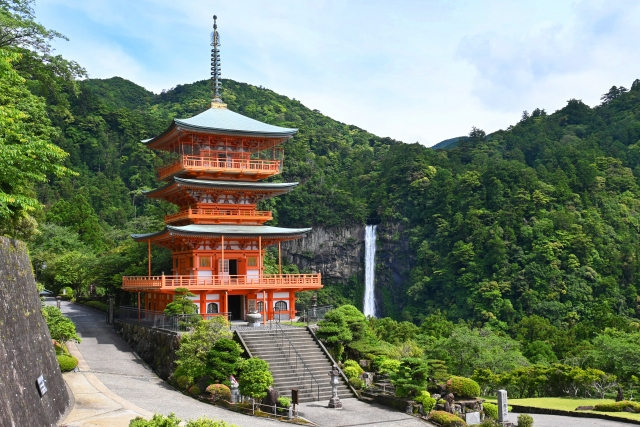
- The Sight: Stand at the iconic view point showing the three-story red pagoda of Seiganto-ji Temple, framing Nachi Falls (Nachi no Taki) in the background. Dropping 133 meters in a single unbroken sheet of water, Nachi Falls is the tallest single-drop waterfall in Japan and has been worshipped as a deity (kami) since ancient times. The sound of thunderous falling water echoes through the misty mountain air, carrying a palpable sense of spiritual weight.
01:00 PM – The Ultimate Driver’s Playground: The Ryujin Skyline
Route: Route 31 to Route 371 (Koya-Ryujin Skyline)
Now comes the absolute climax of the road trip for any true driving enthusiast: National Route 371, globally known among Japanese car enthusiasts as the Koya-Ryujin Skyline.
This 42-kilometer stretch of alpine ridge-line road was originally constructed as a toll road before being made free to the public. Running along the crest of the mountains at elevations between 800 and 1,300 meters above sea level, the Ryujin Skyline is regarded as one of the top five driving roads in all of Japan.
[Ryujin Onsen] ➔ 42km of Alpine Crest Curves (Route 371) ➔ [Mount Koya Summit]
- The Drive: This is pure, unadulterated automotive therapy. The road offers a relentless sequence of medium-speed sweeping bends, tight double-apex turns, cambered crests, and dramatic altitude changes.
- Vehicle Performance: In a high-horsepower, heavy vehicle, this road can wear down brakes and tires quickly. But in the lightweight, nimble BRZ, it is pure rhythm. Double-clutch, heel-and-toe downshifts from 4th gear to 3rd, set the weight on the front outer tire, feel the mechanical limited-slip differential lock subtly as you hit the gas on exit, and let the engine rev freely to its 7,500 RPM redline.
- Sensory Experience: The windows down, the cold alpine air rushes through the cabin, rich with the pine scent of the high forest. To your left and right, the mountain drops off into vast, endless green valleys wrapped in soft white sea clouds.
03:30 PM – Koyasan: The Sacred Mountain Monastery City
Route: Koya-Ryujin Skyline North Termination
The Ryujin Skyline brings you directly into Koyasan (Mount Koya), a high mountain basin surrounded by eight peaks resembling an eight-petaled lotus flower. Founded in 816 AD by Kobo Daishi, Koyasan is the world headquarters of the Shingon sect of Esoteric Japanese Buddhism.
Park your car and walk through Okunoin, the vast, quiet sacred cemetery where Kobo Daishi rests in eternal meditation. Over 200,000 ancient moss-covered stone stupas, tombs, and statues sit beneath giant cedar trees that have stood for more than 800 years. The absolute silence here, broken only by the caw of crows and the footfalls of pilgrims dressed in white, provides a profound, meditative contrast to the adrenaline of the Ryujin Skyline drive.
05:00 PM – The Final Descent: Route 480 to Osaka
Route: Route 480 down to Hanwa Expressway back to Central Osaka
As dusk approaches, drop down from the high mountain sanctuary via Route 480. The road features modern, wide double-lane downhill tunnels mixed with smooth hairpins that give one last taste of Wakayama’s mountain pass culture.
Rejoining the Hanwa Expressway at Katsuragi, cruise comfortably back toward Osaka. The bright neon lights of the city gradually emerge on the horizon, welcoming you back from the quiet wilderness of the southern cape.
Kushimoto, Wakayama - Expert Advice & Cultural Nuances
Driving through rural Japan is an incredible experience, but understanding local driving etiquette and cultural infrastructure will elevate your trip from good to unforgettable.
1. The Magic of Japan’s Michi-no-Eki (Roadside Stations)
Forget dirty highway service plazas. Japan’s Michi-no-Eki (Roadside Rest Stops) are regional cultural destinations in their own right. Created to promote local economies and support long-distance travelers, these stops are absolute must-visits during your drive to Kushimoto.
- Michi-no-Eki Susami: Located right off Route 42 along the southern coast, this station features its own sea turtle research display, an oceanfront viewing deck, and a market selling fresh seafood caught that morning by local fishermen.
- Michi-no-Eki Hashigui-iwa: Situated directly in front of the legendary rock spires, this is the perfect spot to grab local snacks like Mikan (satsuma mandarin) soft-serve ice cream—a regional specialty of Wakayama, which produces some of the sweetest citrus fruit in Japan.
- Pro Tip: Michi-no-Eki stations feature free, immaculately clean public restrooms, local maps, fresh seasonal agricultural produce, and regional souvenirs (omiyage) that you cannot purchase anywhere else in Japan.
2. Etiquette on Narrow Mountain Passes (Toge)
When driving legendary routes like the Koya-Ryujin Skyline or local roads on Oshima Island, you will inevitably encounter single-lane sections with passing places (Waikei).
- Yielding: If a local driver in a small Kei-car (yellow license plate) approaches from the opposite direction, the vehicle closest to a passing turnout should slow down or pull over to let the other pass. A quick hazard light blink (1-2 flashes) is the universal Japanese sign of saying "Thank you."
- Local Pace: Local delivery trucks and elderly residents know these roads intimately. If someone catches up behind your sports car, do not feel pressured to drive beyond your skill level. Simply signal left, pull into the next turnout or bus stop, and let them pass cleanly.
3. Hidden Gastronomy Away from Tourist Hubs
While cities like Osaka and Tokyo feature world-class dining, rural Wakayama offers farm-to-table and ocean-to-table dining that is unmatched in freshness and value.
- Mehari-zushi: A traditional food of the Kii Peninsula woodcutters and farmers. It consists of warm rice wrapped tightly in pickled mustard leaves (takana), often seasoned with soy sauce or filled with salted plum. Portable, delicious, and deeply authentic.
- Kue (Longtooth Grouper): Known as the "phantom fish" due to how difficult it is to catch, this deep-sea fish is prized for its rich, gelatinous skin and tender white meat. Kushimoto is one of the few places in Japan where sustainable aquaculture and skilled local anglers make fresh Kue accessible to visitors.
Kushimoto, Wakayama - Detailed Logistics & Pre-Trip Tips
Planning a smooth Japanese road trip in 2026 requires understanding a few key technical logistics, especially when operating a sports car equipped with a manual transmission.
1. Toll Roads, Navigation, and the ETC System
Japan’s expressways are immaculate, safe, and fast—but almost all major highways are toll roads operated by NEXCO.
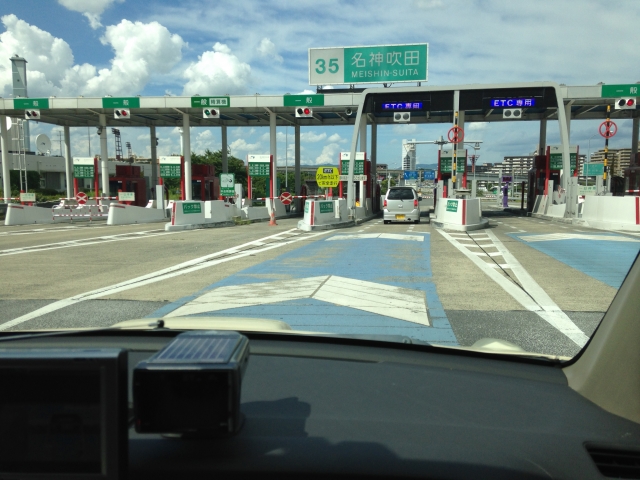
- ETC (Electronic Toll Collection) Card: When renting your car, always request an ETC card. This smart card slots directly into a dedicated reader hidden inside the glovebox or center console of your rental car.
- How it Works: As you approach highway toll gates, look for the purple "ETC Only" lanes. Slow down to 20 km/h; the gate barrier will scan your card wirelessly and lift automatically without requiring you to stop or pay cash. The total toll balance is calculated electronically and paid at the rental desk when you return the vehicle.
- Navigation: While Google Maps works well in urban areas, Japanese car navigation systems use MapCodes or Telephone Numbers. Entering the telephone number of a destination (like a specific Michi-no-Eki or hotel) into the dashboard unit is often the fastest, most precise method for local navigation in rural areas where English street names do not exist.
2. Fueling Up: Navigating Japanese Gas Stations
Gas stations (Gasorin Stand-o) in Japan operate smoothly once you understand the basic terminology and workflow.
+--------------------------------------------------------+
|              JAPANESE FUEL TERMINOLOGY                 |
+--------------------------------------------------------+
| High-Octane Premium (Yellow Handle) | ハイオク (Hai-oku)  |
| Regular Gasoline    (Red Handle)    | レギュラー(Regurā) |
| Diesel Fuel         (Green Handle) | 軽油    (Keiyu)    |
+--------------------------------------------------------+
- Fuel Type for JDM Sports Cars: Vehicles like the Subaru BRZ require High-Octane Premium Fuel (Hai-oku). Never put regular fuel in a high-compression performance engine.
- Full Service vs. Self Service:
- At a Full Service station, staff will guide you into the bay with vocal calls. Roll down your window and say: "Hai-oku, Mantan, Keshu de" (High-octane, full tank, paying with credit card). The staff will fuel the car, clean your windshield with a damp towel, and hold traffic to help you safely exit onto the main road.
- At a Self Service (Serufu) station, select your payment method on the touch screen, tap the yellow icon for Hai-oku, select Mantan (Full Tank), insert your card or cash, touch the static electricity discharge pad before opening the gas cap, and fuel the car.
3. Parking Etiquette & Ground Clearance
- Reversing In: In Japan, it is standard cultural practice to back into parking spaces. This keeps parking lots organized, safe, and allows for clear forward visibility when pulling back out onto busy streets.
- Low Clearance Warning: The Subaru BRZ is a low-slung sports car. When parking near concrete wheel stops (Chokko), be mindful of front bumper clearance. Stop slightly short of hitting the concrete block to avoid scuffing the underside of the front air dam or splitter.
4. The Thrill of the Manual JDM Experience
Driving a manual JDM sports car through the Japanese countryside is an immersive tactile experience. The mechanical linkage of the BRZ’s 6-speed transmission offers a crisp, satisfying "click-clack" feel with every gear change. Negotiating coastal curves and high mountain passes requires engagement from both your hands and feet. Matching your engine revs on downshifts while entering a sharp mountain hairpin turn provides a level of connection to the machine and the road that no automatic transmission or train ticket can ever duplicate.
Kushimoto, Wakayama - Comprehensive FAQ
Q1: What specific driver's license documentation do I need to rent and drive a car in Japan?
To legally drive in Japan, you must present two primary documents alongside your passport upon vehicle pickup:
- Your original, valid driver's license from your home country.
- A valid International Driving Permit (IDP) issued strictly under the 1949 Geneva Convention on Road Traffic.
- Crucial Note: IDPs issued under the 1926 Paris Convention, 1943 Washington Convention, or 1968 Vienna Convention are NOT accepted in Japan.
- Specific Country Exceptions: Drivers holding licenses from Switzerland, Germany, France, Belgium, Monaco, or Taiwan cannot use an IDP. Instead, you must present your original home license accompanied by an Official Japanese Translation issued by the Japan Automobile Federation (JAF) or your respective embassy/consulate in Japan.
- Always ensure you secure your correct permit or translation before departing your home country, as rental agencies in Japan are bound by strict federal law and cannot release a vehicle without valid documentation.
Q2: Is insurance included, and how does coverage work for rental vehicles?
Legitimate rental agencies provide full coverage packages including Collision Damage Waiver (CDW) and Non-Operation Charge (NOC) protection. This ensures that in the unlikely event of an accident or minor scratch, your financial liability is capped or fully covered, giving you complete peace of mind while navigating narrow rural mountain passes.
Q3: I haven't driven a manual transmission vehicle in a while. Is driving an MT sports car in Japan difficult?
Japan is one of the easiest and most courteous countries in the world to drive in. Japanese drivers are exceptionally patient, traffic moves in an orderly fashion, and road signage is clear, using international standard symbols alongside English text. Modern sports cars like the Subaru BRZ feature modern driver assists, including Hill Start Assist, which automatically holds the brake for two seconds when starting on an incline, completely eliminating the fear of rolling backward on steep mountain roads.
Q4: What are the road conditions like in Wakayama, and do I need winter tires?
Along the southern coastal areas around Kushimoto, the climate remains mild year-round thanks to the warm Kuroshio Current, making normal summer tires perfectly suitable for coastal driving even in winter. However, if you plan to traverse high mountain passes like the Koya-Ryujin Skyline between late December and early March, road surfaces can experience sub-zero temperatures, black ice, or snowfall. If traveling during these months, always check local weather forecasts or ask your rental agency about seasonal winter tire availability.
Kushimoto, Wakayama - The Final Thoughts
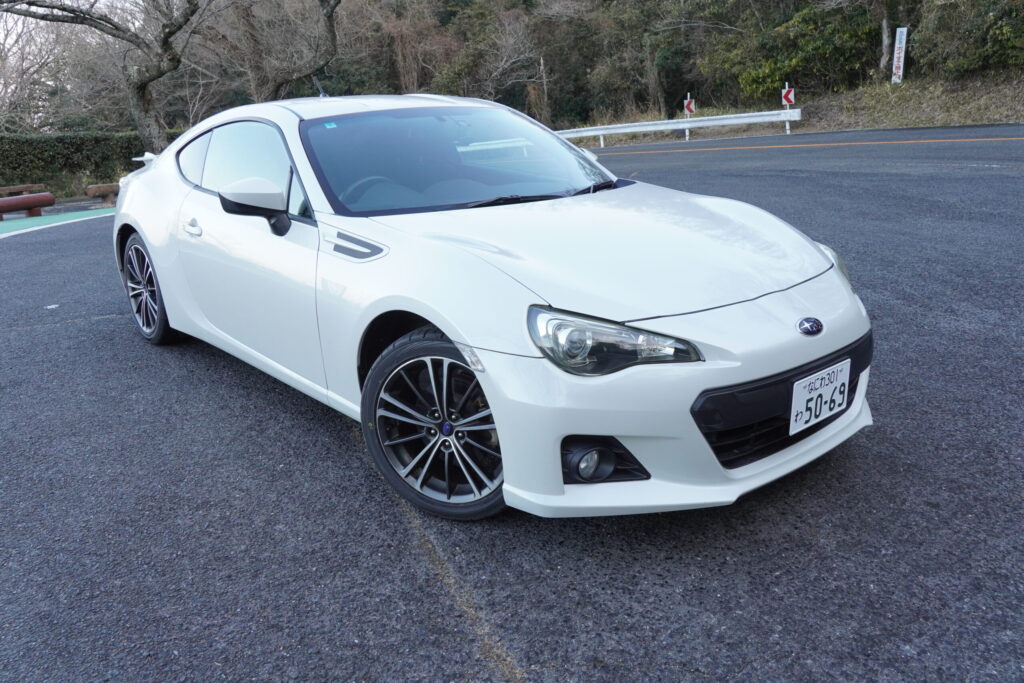
Japan is a country of breathtaking hidden layers, but those layers remain invisible to travelers locked into rigid train cars and crowded group tour buses. The true soul of the Japanese landscape—the roaring Pacific surf crashing against ancient quartz pillars at Kushimoto, the cool pine air whipping through your windows along the high ridges of the Koya-Ryujin Skyline, and the absolute freedom to stop at any roadside fishing village or mountain shrine whenever inspiration strikes—belongs exclusively to those who take the wheel.
The southern cape of Wakayama is waiting for you. It is a land sculpted by subterranean volcanic fires, shaped by centuries of sacred tradition, and laced together by some of the absolute finest driving roads on planet Earth. All that is missing is a driver who appreciates the art of the journey.
When you land in Osaka, bypass the standard public transport queues. Head straight over to Omoren Osaka Central (おもしろレンタカー大阪中央店).
As Osaka’s premier destination for Japanese Domestic Market (JDM) sports car rentals, we specialize in delivering perfectly maintained, enthusiast-focused driver's cars—including the legendary manual Subaru BRZ and Toyota 86. Our English-speaking team understands what passionate drivers are looking for: clear local route advice, seamless ETC card setups, flexible booking options, and vehicles prepared to the absolute highest mechanical standards.
Turn the key, drop into gear, and forge your own path to the southern edge of Honshu. Your ultimate Japanese road trip begins the moment you step up to our desk.
Book your Subaru BRZ at Omoren Osaka Central today, and discover the Secret Japan that lies beyond the end of the rails.